

Yardtally is reader-supported. Some links on this page are affiliate links. As an Amazon Associate, Yardtally earns from qualifying purchases. See our Affiliate Disclosure.
Learning how to clean gutters properly is one of those home maintenance tasks that’s easy to put off and expensive to ignore. I’ve dealt with the consequences of clogged gutters firsthand — water backing up behind the fascia, a downspout that was completely blocked with compacted debris, and a basement corner that started getting damp before I connected the dots. The fix was straightforward once I understood the full sequence. The problem was I’d been doing a half job — clearing the obvious debris but skipping the steps that actually matter.
This guide covers the complete process — the right tools, the correct sequence, what to inspect while you’re up there, and how to know how often your specific yard actually needs it.
What’s in This Guide
- Why Gutter Cleaning Matters More Than Most Homeowners Think
- When to Clean Your Gutters
- What You’ll Need
- How to Clean Gutters — Step by Step
- Gutter Guards — Are They Worth It?
- What Happens When You Don’t Clean Gutters
- How to Extend Downspouts If They’re Too Short
- FAQ
Why Gutter Cleaning Matters More Than Most Homeowners Think
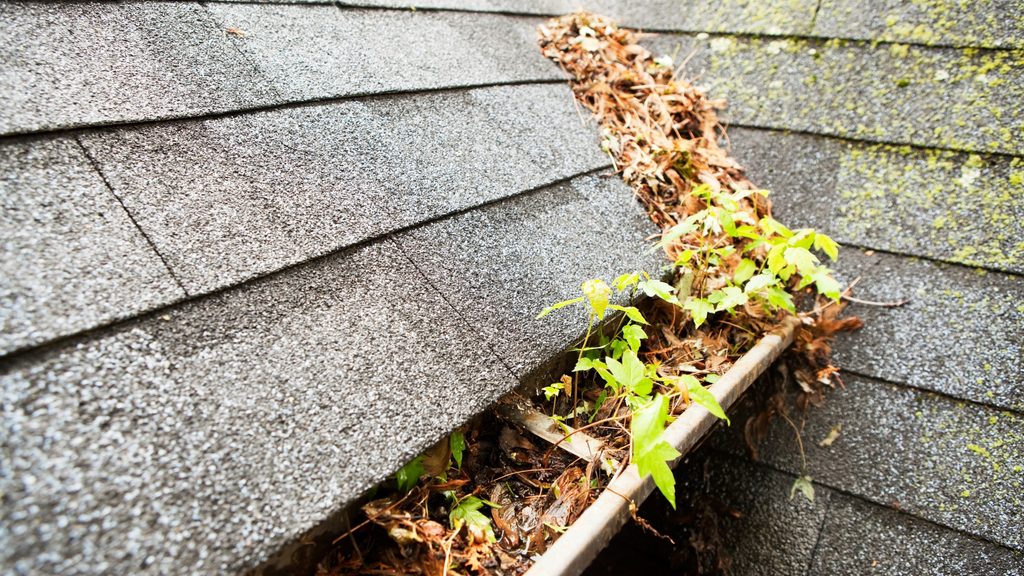
Gutters exist to move water away from your foundation, fascia, and siding. When they’re clogged, water has nowhere to go — it backs up, sits against the fascia board, works under the shingles at the roofline, and eventually finds its way into the structure. The damage that results — rotted fascia, water-stained siding, foundation moisture problems — takes months or years to develop and costs far more to repair than the cleaning that would have prevented it.
The other thing most homeowners don’t think about: clogged gutters are heavy. A section of gutter packed with wet leaves and debris weighs significantly more than it was designed to hold. Over time, that weight pulls on the hangers and can cause gutters to sag, pull away from the fascia, or separate at the joints. I had one section that started angling inward — not because of age, but because it had been packed with debris long enough to bend the hanger.
When to Clean Your Gutters
The standard advice is twice a year — late spring after trees finish seeding and late fall after leaves are done dropping. That’s the right baseline, but the actual frequency depends on your property:
Few or No Nearby Trees
Twice a year is adequate — spring and late fall. Even without heavy leaf drop, gutters accumulate shingle grit, dirt, and windblown debris that eventually restricts flow.
Deciduous Trees Nearby
Two to three times a year. Oak and maple trees drop not just fall leaves but spring seed pods, tassels, and helicopters that pack into gutters just as effectively as autumn leaves. A spring cleaning after the seed drop and a fall cleaning after leaf drop — with a third check if needed — is the right schedule.
Pine or Evergreen Trees Nearby
Three to four times a year. Pine needles shed year-round, mat together when wet, and compact into a dense mass that’s harder to remove than leaves. If you have mature pines overhanging or near your roofline, quarterly cleaning is worth considering.
The right time to clean in fall is after the leaves are done dropping — not before. Cleaning in early October in Indiana is wasted effort if the trees don’t finish dropping until mid-November. Wait until you’re confident the bulk of the fall drop is done before doing the final clean of the year.
What You’ll Need
You don’t need much, but what you do need matters for safety and efficiency:
A stable ladder rated for your weight plus gear — don’t use a flimsy step ladder for gutter work. A telescoping ladder with built-in stabilizers is the smarter choice over a traditional extension ladder for most homeowners. It’s significantly lighter, repositions in seconds as you work along the roofline, and stores flat in a closet or slides into a car trunk — no wrestling a 20-foot aluminum ladder in and out of the garage every time. The stabilizers keep the ladder away from the gutter itself so you’re not resting your weight on what you’re trying to clean.
Work gloves — gutters contain decomposing organic matter, shingle grit, and sometimes bird or rodent nests. Heavy rubber-coated gloves protect your hands and give you grip.
A gutter scoop or garden trowel — purpose-made gutter scoops are plastic and conform to the gutter profile, which makes them faster than a garden trowel. Either works.
A bucket with a hook — hang it from the ladder so you’re not dropping debris on the ground or making constant trips down the ladder.
A garden hose with a spray nozzle — for flushing after scooping. A pressure washer is overkill and can damage gutter joints and seals; a standard hose with a nozzle set to a firm stream is all you need.
A telescoping ladder is lighter and easier to reposition than a traditional extension ladder — and it stores flat when you’re done. Pair it with a separate ladder standoff that hooks over the top rung to keep the ladder away from the gutter so you’re not resting weight against it while you work.
How to Clean Gutters — Step by Step
Step 1 — Set Up the Ladder Safely
Position the ladder at the far end of a gutter run — away from the downspout — so you’ll be working toward the downspout as you move along. The ladder should sit on firm, level ground. Use a ladder standoff so the rails rest against the exterior wall rather than the gutter itself. Never lean a ladder against a gutter — the weight will dent it and can pull it away from the fascia.
Always have someone present when you’re working on a ladder. Gutter work puts you at a significant height and the work involves moving along the roofline repeatedly — it’s not a solo project where it’s safe to proceed with no one aware you’re up there.
Step 2 — Scoop Out the Debris
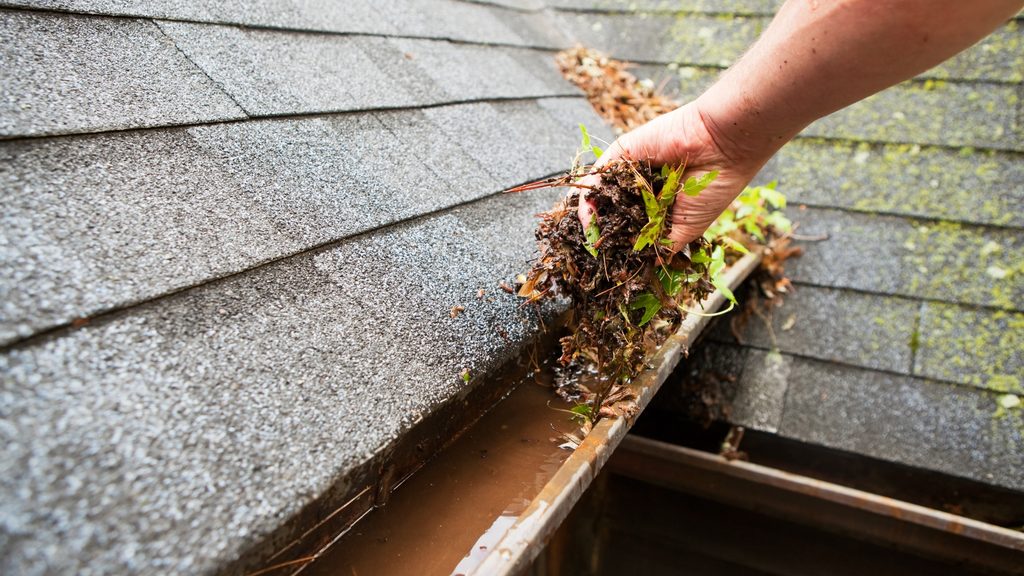
Start at the far end of the run and work toward the downspout. Use your scoop or trowel to remove the bulk of the debris into your bucket — don’t try to flush debris toward the downspout with the hose before scooping, as compacted debris will just clog the downspout outlet.
Work in sections, moving the ladder every 3 to 4 feet rather than reaching far to either side. Overreaching from a ladder is how falls happen. Keep your hips between the rails at all times and take the extra minute to move the ladder rather than stretching.
Step 3 — Flush with the Hose
Once the bulk of debris is scooped out, flush the gutter section with the hose starting at the far end and working toward the downspout. This does two things: it removes the fine debris and shingle grit that the scoop leaves behind, and it tells you whether the gutter is draining properly. Watch the water move — it should flow smoothly toward the downspout without pooling. Any section that holds water indicates the gutter has sagged and lost its pitch.
Step 4 — Clear the Downspouts
This is the step most DIY gutter cleaners skip, and it’s the one that actually causes the worst problems. A clear gutter trough with a clogged downspout accomplishes nothing — the water backs up just the same.
Insert the hose into the top of the downspout and run it at full pressure. If water backs up rather than running through, the downspout is clogged. A plumber’s snake threaded down the downspout from the top is the most reliable way to clear a blockage. For compacted debris in the elbow at the bottom, disconnect the elbow and clear it by hand before reconnecting.
A drain snake handles downspout clogs that the hose can’t shift — thread it in from the top and work it through the obstruction.
Step 5 — Inspect While You’re Up There
The cleaning is done — but you’re already on the ladder, which is the hardest part. Take five extra minutes to check the things that are easy to miss from the ground:
Check the gutter pitch. Water should flow toward the downspout, not pool in the middle. A section that’s sagging has probably lost a hanger — look for missing or pulled-out hangers and reattach or replace them.
Check the fascia behind the gutter. The fascia board should be dry and solid. If it’s soft, stained, or shows visible rot, that’s a sign water has been backing up behind the gutter. Address the fascia before the next season or the damage will accelerate.
Check the joints and seams. Gutter sections connect with overlap joints sealed with gutter sealant. If a joint is leaking — look for staining on the exterior wall directly below — clean and reseal it with gutter sealant from inside the gutter.
Check the downspout connection. The downspout should be firmly attached to the exterior wall with brackets and should discharge at least 4 to 6 feet from the foundation.
Gutter sealant applied to leaking joints from inside the gutter trough is a 10-minute fix that prevents the water damage that happens behind the seam.
Gutter Guards — Are They Worth It?
Gutter guards reduce cleaning frequency but don’t eliminate it. The marketing claim that guards make gutters maintenance-free is not accurate — fine debris like shingle grit, pine needles, and seed pods gets through or accumulates on top of most guard systems. What guards do well is significantly reduce the volume of large debris that enters the gutter, which reduces how often you need to clean and makes the cleaning faster when you do.
Micro-mesh gutter guards are the most effective type — they keep the most debris out while still allowing water through. Foam inserts and plastic snap-on guards are cheap but the least effective and tend to become debris-catchers themselves over time.
If your gutters are under heavy deciduous trees and you’re cleaning three or four times a year, guards are worth considering. If you’re cleaning twice a year and the process takes an hour, guards probably don’t pencil out versus the installation cost.
What Happens When You Don’t Clean Gutters
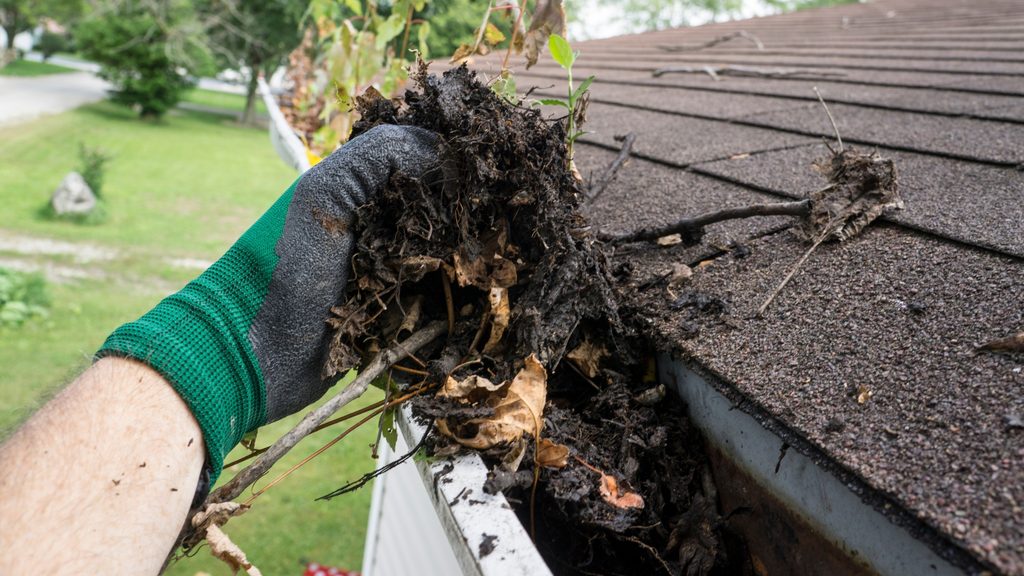
The damage from neglected gutters develops slowly, which is why it’s easy to rationalize skipping a cleaning. Here’s the progression:
Year one of neglect: gutters clog, water overflows during rain events. Mostly cosmetic — water runs down the siding instead of through the downspout.
Year two to three: standing water in the gutter trough creates ideal conditions for mosquitoes, wood rot on the fascia, and in cold climates, ice dams that can work under the shingles. The weight of packed debris starts pulling on hangers.
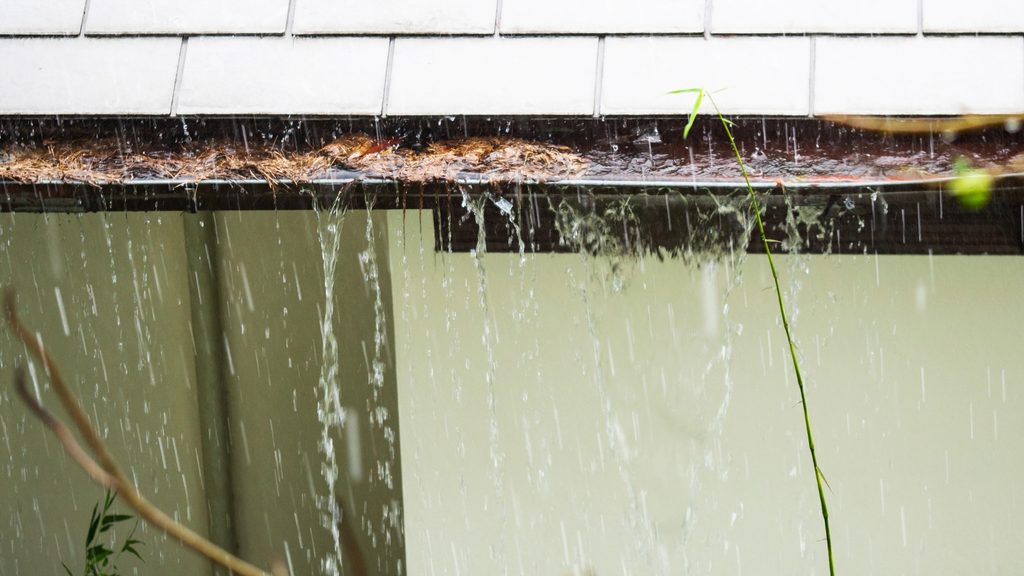
Year three to five: fascia rot progresses to the point where gutters need to be removed for repair. Water that’s been finding its way behind the siding starts affecting the sheathing. Foundation moisture issues develop in low spots where overflow has been hitting consistently.
I had to replace a 12-foot section of fascia board on my house because I let a particularly heavy debris year go one season too long. The gutter cleaning that would have prevented it took about 20 minutes. The fascia repair cost significantly more than that in materials and time.
How to Extend Downspouts If They’re Too Short
While you’re doing your inspection, check where your downspouts terminate. The discharge point should be at least 4 to 6 feet from the foundation — ideally further if your yard is flat. If downspouts are terminating close to the house, water is pooling against the foundation whether you can see it or not.
Flexible accordion extensions are the cheapest and fastest fix — they attach to the existing downspout and direct water further from the house. For a more permanent solution, a buried non-perforated pipe with a pop-up emitter carries water all the way to a proper discharge point in the yard. Our guide on how to extend downspouts away from your house covers all four extension options from simplest to most permanent.
Frequently Asked Questions About How to Clean Gutters
How often should gutters be cleaned?
Twice a year is the baseline — late spring after trees finish seeding
and late fall after leaves are done dropping. Adjust based on your
trees: deciduous trees nearby (oak, maple) warrant two to three times
per year because of spring seed pod drop in addition to fall leaves.
Pine trees shed needles year-round and pack gutters faster than leaves
do — quarterly cleaning is worth considering if mature pines overhang
or are close to your roofline. The timing within fall matters too: wait
until you’re confident the bulk of the leaf drop is done before doing
the final clean of the year, or you’ll be back up again a week later.
What is the best tool to clean gutters?
A plastic gutter scoop and a garden hose with a spray nozzle handle
95 percent of residential gutter cleaning. The scoop removes the bulk
of debris without scratching the gutter surface. The hose flushes fine
debris and shingle grit and confirms the gutter is draining correctly.
A telescoping ladder with a separate ladder standoff gives you safe
working height and keeps the ladder away from the gutter itself. For
downspout clogs that the hose can’t shift, a drain snake is the right
tool. Avoid pressure washers — they’re too aggressive for most gutter
joints and seals and can force water under shingles at the roofline.
How do I unclog a downspout?
Start with the hose at full pressure inserted into the top of the
downspout. If water backs up rather than running through, the clog
is confirmed. A drain snake threaded in from the top works through
most compacted debris blockages. For clogs in the elbow at the bottom
where the downspout redirects away from the house, disconnect the
elbow fitting, clear it by hand, and reconnect. After clearing, flush
with the hose again to confirm water flows freely all the way through
and out the discharge end.
Can I clean gutters from the ground?
Yes — gutter cleaning wands attach to a garden hose and curve up
into the gutter trough, allowing you to flush debris from ground
level. Wet/dry vacuum attachments with curved extensions do the
same for scooping. Ground-level cleaning is safer than ladder work
and adequate for gutters with light to moderate debris. The limitation
is downspouts — you can’t effectively clear a clogged downspout from
the ground, and you can’t do the Step 5 inspection (fascia, hangers,
joint seals) without getting up there. For a full clean and inspection,
ladder work is required at least once a year.
What are the signs that gutters need cleaning?
Water overflowing over the front edge during rain — the most obvious
sign. Plants or weeds growing out of the gutter trough — debris has
been sitting long enough for seeds to germinate. Sagging sections —
the weight of packed wet debris is pulling on the hangers. Staining
on the exterior wall directly below a gutter section — water has been
overflowing consistently in the same spot. Water pooling near the
foundation after rain when downspouts appear to be working — a clogged
downspout is redirecting water to the ground right at the house rather
than carrying it away. Any of these signs means the cleaning is overdue
and the problem has already been developing for some time.