
Yardtally is reader-supported. Some links on this page are affiliate links. As an Amazon Associate, Yardtally earns from qualifying purchases. See our Affiliate Disclosure.
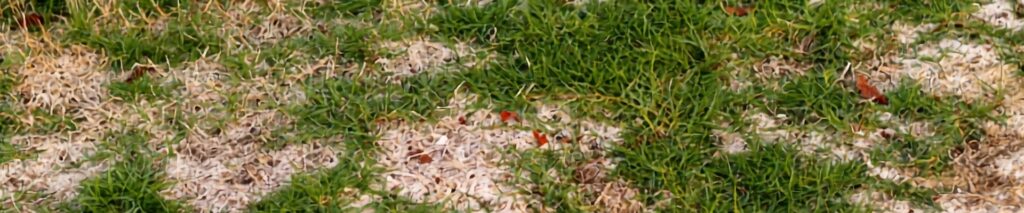
Grass turning brown even though I water it is one of the most frustrating problems a homeowner can face — and you’re probably not doing as much wrong as you think. On cool-season lawns like tall fescue, Kentucky bluegrass, and perennial ryegrass, browning in July and August is one of the most common and most misunderstood problems homeowners run into.
The frustrating part is that watering more doesn’t always fix it, and sometimes it makes things worse. This guide walks you through diagnosing exactly what’s happening in your yard, in the order a lawn pro would check — so you can stop guessing and treat the real cause.
What’s in This Guide
- First, Is Your Lawn Actually Dying — or Just Dormant?
- You Might Be Watering Wrong, Not Too Little
- Mowing Mistakes That Quietly Cause Browning
- When It’s Not You: Grubs, Disease, and Heat Zones
- What to Do Right Now (and What to Wait On)
- What You’ll Need for the Job
- The Bottom Line
- FAQ
First, Is Your Lawn Actually Dying — or Just Dormant?
Before you do anything else, find out whether that brown grass is dead or simply asleep. Cool-season grasses have a built-in survival trick: when the heat climbs and moisture drops, they go dormant on purpose, shutting down top growth to protect the crown and roots. Dormant grass looks dead, but it isn’t — and dumping water on a lawn that’s just resting won’t turn it green overnight.
Use the tug test. Grab a handful of brown blades and pull. If the grass resists and stays rooted, it’s most likely dormant or drought-stressed, and it will recover. If it pulls out easily with little or no root, that patch is either dead or being eaten from below (more on grubs shortly). A dormant lawn typically takes three to four weeks of consistent watering to green back up — so patience matters as much as water.
You Might Be Watering Wrong, Not Too Little
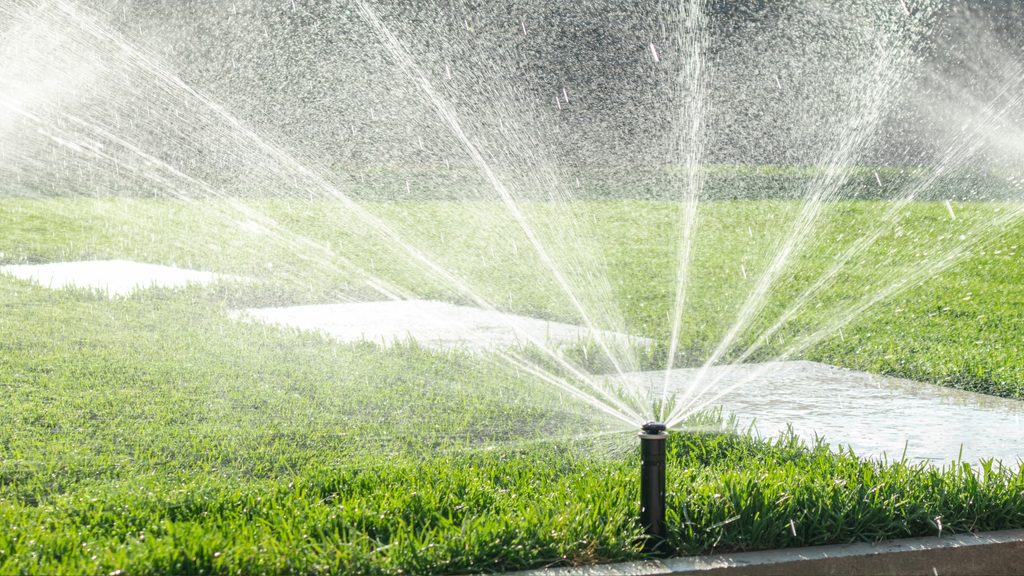
Here’s the twist most people miss: grass turning brown even though I water it is often a watering-technique problem, not a watering-amount problem. Short, daily sprinkles feel productive, but they only wet the top inch of soil. That trains your grass to grow shallow roots that bake the moment the surface dries out — the opposite of what you want in a Midwest summer.
Cool-season lawns want about one to two inches of water per week, delivered deep and infrequent — two soakings a week beats seven light ones every time. Water early in the morning, between 6 and 10 a.m., so less is lost to evaporation and the blades dry before evening (wet overnight grass invites fungus). To check your depth, push a screwdriver into the soil after watering; it should slide in easily to about six inches. If it stops short, you’re not watering long enough. If you’d rather not guess, a soil moisture meter reads the depth for you and takes the mystery out of whether you’ve watered enough.
Mowing Mistakes That Quietly Cause Browning
Your mower might be part of the problem. Two habits do the most damage in summer. First, cutting too short: scalping a stressed cool-season lawn exposes soil, cooks the roots, and invites weeds. Keep your mower high — around three to three and a half inches — so the taller blades shade the soil and hold moisture. Second, dull blades: a dull blade tears grass instead of slicing it, and those shredded tips turn brown within a day, giving the whole lawn a scorched cast even when it’s perfectly healthy underneath.
Follow the one-third rule, too: never remove more than a third of the blade height in a single mow. If the lawn got away from you, raise the deck and bring it down over two passes a few days apart instead of scalping it all at once. And if your lawn is already deep in drought stress, skip the mow entirely until it recovers — cutting stressed grass just adds insult to injury.
When It’s Not You: Grubs, Disease, and Heat Zones
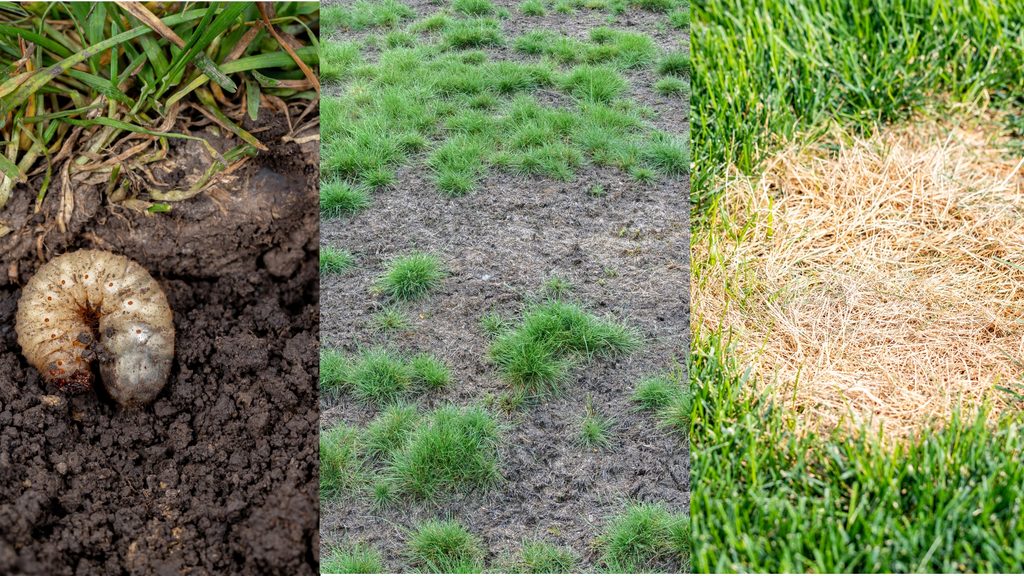
Sometimes grass turning brown even though you water it has nothing to do with your watering at all. If patches of grass pull up easily in loose sheets — like lifting a rug — you may have grubs feeding on the roots below. Late summer is prime grub-damage season, and because the lawn is already stressed and brownish, the damage often goes unnoticed until it spreads. Dig into the top inch or two of soil at the edge of a brown patch and look for the small white C-shaped larvae.
A few is normal; a dozen or more per square foot means it’s time to treat. If the grubs are actively feeding right now, a fast-acting grub killer like Ortho BugClear knocks them down within a day or two. If you’re past the worst of it or want to stop next year’s round before it starts, a season-long grub preventer like GrubEx is the standard choice — apply it and water it in.
Fungal disease is another summer culprit, especially in humid Indiana stretches. Brown patch and dollar spot show up as circular dead spots that can run together, and they’re often made worse by evening watering and too much nitrogen. Finally, don’t overlook heat zones: the strips of lawn along your driveway, sidewalk, or patio brown first and recover last, because the concrete radiates heat and dries the soil faster. That browning is usually just geography, not a lawn-wide emergency.
What to Do Right Now (and What to Wait On)
If your diagnosis points to dormancy or drought, the fix is simple discipline: water deep and early, twice a week, and give it three to four weeks. If it points to grubs or disease, treat that specific problem rather than blanketing the whole yard. But here’s the most important thing for a cool-season lawn in midsummer — resist the urge to “fix” it with fertilizer or new seed right now. Heavy nitrogen in July heat burns stressed grass, and seed sown in summer usually cooks before it establishes.
The real repair window for cool-season lawns is fall. Cooler nights and reliable moisture make September and October the ideal time to overseed thin areas, topdress with quality soil, and let your lawn rebuild density before winter. If you’re planning to topdress or fill low spots, our topsoil calculator takes the guesswork out of how much you’ll need, and if you’re building or refreshing garden beds alongside the renovation, the raised bed soil calculator does the same for bed volume.
What You’ll Need for the Job
You don’t need a garage full of gear to diagnose and fix a browning lawn — just a few basics that take the guesswork out of it. Start with a soil test kit, so you can rule out pH and nutrient problems before you spend money on treatments that won’t help. A soil moisture meter makes the screwdriver test foolproof, giving you a real reading instead of a guess about how deep your water is reaching.
If grubs turn out to be the culprit, a season-long grub control product stops the damage and prevents next year’s round. And if inconsistent watering is your real issue, a simple hose timer solves it by making deep, early-morning watering automatic instead of something you have to remember.
The Bottom Line
Grass turning brown even though you water it almost always comes down to one of five things: it’s dormant and just needs patience, you’re watering shallow instead of deep, you’re mowing too short or with a dull blade, grubs or disease have moved in, or the heat along your hardscape is doing what heat does. Work through them in order, treat the real cause, and save the big fixes for fall. Your cool-season lawn is tougher than it looks right now — most of it will bounce back.
Planning more yard projects while you’re out there? Our gravel calculator can help if you’re sorting out edging, pathways, or drainage around the lawn — one less thing to guess at.
Frequently Asked Questions About Grass Turning Brown While Watering
Why is my grass brown after watering every day?
Daily watering is often the cause of browning rather than the cure.
Short, frequent waterings only wet the top inch of soil, which trains
grass to grow shallow roots near the surface. Those shallow roots
dry out within hours of watering, keeping the grass perpetually
stressed even though you’re watering every day. Switch to two deep
waterings per week — enough to reach 6 inches into the soil — and
the grass will develop deeper, more resilient roots that can handle
gaps between waterings. A soil moisture meter or the screwdriver test
(push it 6 inches into the ground; it should slide easily) tells you
whether you’re actually reaching the root zone.
How do I know if my brown grass is dead or dormant?
The tug test is the fastest way to tell. Grab a handful of brown grass
and pull firmly. If it resists pulling and the crowns — the tan or
white base of each grass plant — are firm and intact, the grass is
dormant. If it pulls out easily with no resistance and the crowns are
absent or black and mushy, the grass is dead. A second method: water
a small test area consistently for two weeks. Dormant grass produces
green shoots within 14 days. No new growth after two weeks of consistent
watering confirms the grass is dead in that area and needs reseeding.
Can brown grass from heat turn green again?
Yes — if it went dormant rather than died. Cool-season grasses like
Kentucky bluegrass and tall fescue go dormant in summer heat as a
survival mechanism, turning brown but keeping the crown and root system
alive. When temperatures drop in fall and rainfall returns, dormant
grass greens back up without any intervention — typically within two
to four weeks. The key is patience: a dormant lawn in July doesn’t
need emergency treatment, it needs consistent moderate watering and
time. Dead areas from grub damage, disease, or severe drought won’t
recover on their own and require reseeding in fall.
What is the best time to water grass to prevent browning?
Early morning — between 6am and 10am is ideal. Morning watering
minimizes evaporation loss (the sun hasn’t heated the soil yet),
gives the water time to soak to root depth before peak afternoon
heat, and allows the grass blades to dry before evening. Wet grass
overnight significantly increases the risk of fungal disease, which
is itself a cause of browning. Avoid midday watering, which loses
a significant portion to evaporation before it reaches the root zone.
If early morning watering isn’t possible, late afternoon (4 to 6pm)
is acceptable — enough drying time before dark.
Why is my grass brown only in certain spots?
Patchy browning rather than overall browning usually points to a
specific localized cause rather than a watering or heat issue.
Common causes of patchy browning: grub damage (check for the spongy
mat that lifts easily and white larvae underneath), fungal disease
(circular dead spots with a defined edge, often getting larger),
dog urine (dead center ring with a dark green fertilized perimeter),
heat zones along pavement (concrete and asphalt radiate heat that
bakes the adjacent turf), and irrigation gaps (sprinkler heads that
don’t overlap adequately leave dry strips). Each requires a different
fix — diagnosing the pattern tells you which one you’re dealing with.
Sources & further reading
Source: Purdue University Turfgrass Science — Summer Stress: explains how cool-season grasses like Kentucky bluegrass enter summer dormancy — turning brown without dying — and resume normal growth once rainfall returns.