
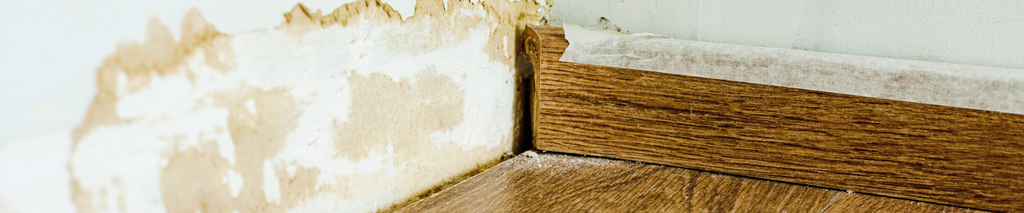
Yardtally is reader-supported. Some links on this page are affiliate links. As an Amazon Associate, Yardtally earns from qualifying purchases. See our Affiliate Disclosure.
Knowing how to check for water damage before it spreads is one of the most valuable things a homeowner can do — because water damage rarely announces itself. It hides behind walls, under floors, and above ceilings for months before it becomes visible, and by the time you see it, the repair bill is already significant. This guide walks through every major area of the house where water damage shows up first, what to look for in each one, and what to do when you find it.
WHAT’S IN THIS GUIDE
- What Causes Water Damage
- Tools for Checking Water Damage
- Walls and Ceilings
- Floors
- Basement and Crawl Space
- Bathroom and Kitchen
- Attic and Roof
- Exterior
- How to Find Hidden Water Damage
- What to Do When You Find Water Damage
- Frequently Asked Questions
What Causes Water Damage
Most home water damage comes from one of four sources: plumbing failures, appliance leaks, roof or window infiltration, and foundation or drainage problems. Plumbing failures — burst pipes, failed supply lines, pinhole leaks — are the most sudden and the most destructive. Appliance leaks from washing machines, water heaters, refrigerators, and dishwashers tend to be slower and often go undetected for weeks or months. Roof and window infiltration lets water in during rain or snow melt. Foundation and drainage issues push groundwater into basements and crawl spaces from below.
Understanding the source matters because it changes where you look and what you find. A stain on the ceiling directly below a bathroom points to a plumbing issue. A stain on an exterior wall after rain points to infiltration. A damp basement after a heavy rain but no visible leak points to drainage. The location and timing of the damage are your first diagnostic clues. Source: PuroClean — How to Check for Water Damage
Tools for Checking Water Damage
You don’t need professional equipment to do a thorough water damage inspection, but a few basic tools make the job significantly more effective.
A moisture meter is the single most useful tool for detecting hidden water damage. It measures the moisture content of wood, drywall, and other materials without damaging them. Dry wood typically reads 6–12% moisture content — anything above 16% indicates a problem, and readings above 20% mean active moisture that will likely lead to mold if not addressed. A good moisture meter costs $20–$40 and pays for itself the first time it finds a hidden leak.
A flashlight is essential for checking dark spaces — under sinks, in crawl spaces, inside cabinet bases, and along the edges of attic insulation. A bright flashlight reveals water stains, efflorescence, and discoloration that’s invisible in normal room lighting.
A smartphone with a camera is useful for photographing anything suspicious so you can track whether it’s getting worse over time. Date-stamp your photos.
Walls and Ceilings
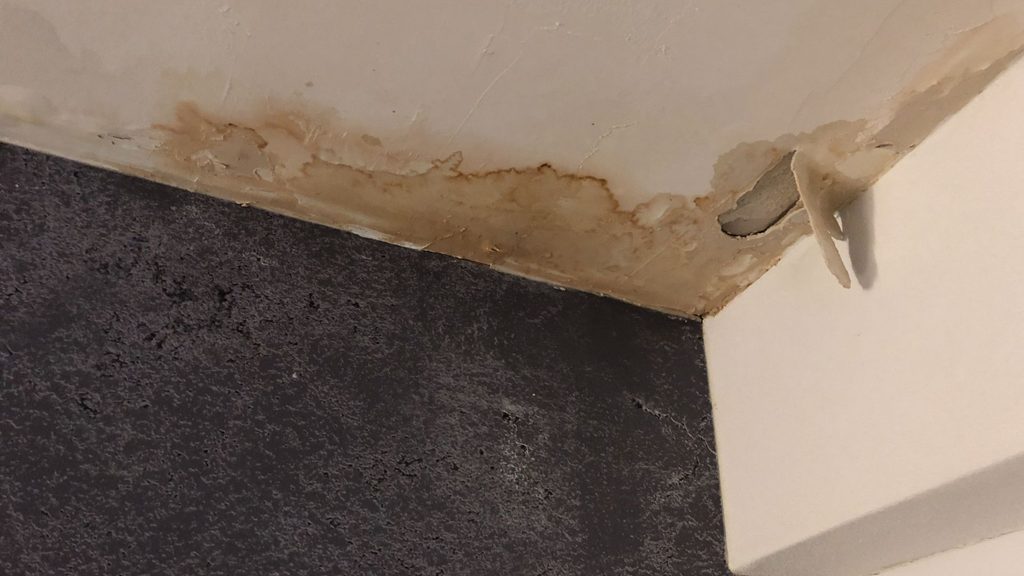
Walls and ceilings are where water damage most often becomes visible first. Start by scanning every ceiling in the house for brown, yellow, or rust-colored stains. Fresh water stains tend to be lighter and have a defined ring around the edge — this ring forms as the water dries and leaves mineral deposits behind. Older stains are darker and may have multiple rings, indicating repeated wetting and drying cycles.
Check walls along exterior edges, around windows, and directly below bathrooms or kitchen areas on upper floors. Signs to look for include bubbling or peeling paint, soft or spongy drywall, visible warping, and any discoloration that wasn’t there before. Press gently on any suspicious area — drywall that’s been wet will feel soft or give slightly under pressure. Source: BrokerLink — Signs of Water Damage in Walls and Ceilings
A recently painted room with no apparent reason for the fresh paint is worth investigating further — especially in a home you’re buying. Sellers sometimes paint over water stains to conceal them. Check those areas with a moisture meter before accepting the paint job at face value.
What the stain location tells you
A stain in the center of a ceiling typically points to a plumbing leak from the floor above. A stain along an exterior wall or near a window suggests infiltration from outside. A stain at the top of an interior wall near the roofline points to the attic or roof. Knowing the source is more important than treating the stain — painting over water damage without fixing the source guarantees the problem comes back.
Floors
Water-damaged floors give themselves away in several ways. Wood and laminate flooring will buckle, cup, or warp when it absorbs moisture — look for planks that are higher in the center (cupping) or edges that are lifted (crowning). Both indicate the floor has gotten wet from below or been exposed to prolonged moisture. Soft or spongy spots underfoot are a serious sign that the subfloor has absorbed water.
Tile floors are less obvious but not immune — check for tiles that sound hollow when tapped, grout lines that are cracking or pulling away from the tile, or tiles that have shifted position. These all suggest moisture has gotten under the tile and is affecting the substrate.
Carpet that smells musty — even after cleaning — almost always has a moisture problem underneath it. Pull back a corner and check the pad and subfloor. A wet or stained pad, or a subfloor with dark discoloration, means the carpet needs to come up and the subfloor needs to be dried and treated before new flooring goes down. Source: Elite Inspections — How to Spot Water Damage
Basement and Crawl Space
Basements and crawl spaces are the most common location for water damage in homes with foundations, and they’re also the most often ignored. Start by looking for efflorescence — a white, powdery residue on concrete or block walls. Efflorescence is mineral deposits left behind when water moves through concrete and evaporates on the surface. It’s not structurally dangerous on its own but it’s a clear sign that water is moving through your foundation wall.
Look for cracks in the foundation, particularly horizontal cracks in block walls or stair-step cracks in the mortar joints — these indicate lateral pressure from water-saturated soil and should be evaluated by a structural engineer. Vertical cracks in poured concrete are more common and less serious but still worth monitoring.
Check for standing water or a wet floor, especially after rain. A sump pump that runs constantly or cycles frequently is telling you it’s working hard to keep up with groundwater. Check the discharge line to make sure it’s directing water well away from the foundation. In a crawl space, look for wet or stained vapor barrier, damaged insulation, and any wood that appears dark or soft. Dark or soft wood in a crawl space almost always means rot, and rot means moisture has been there long enough to cause structural damage.
Bathroom and Kitchen
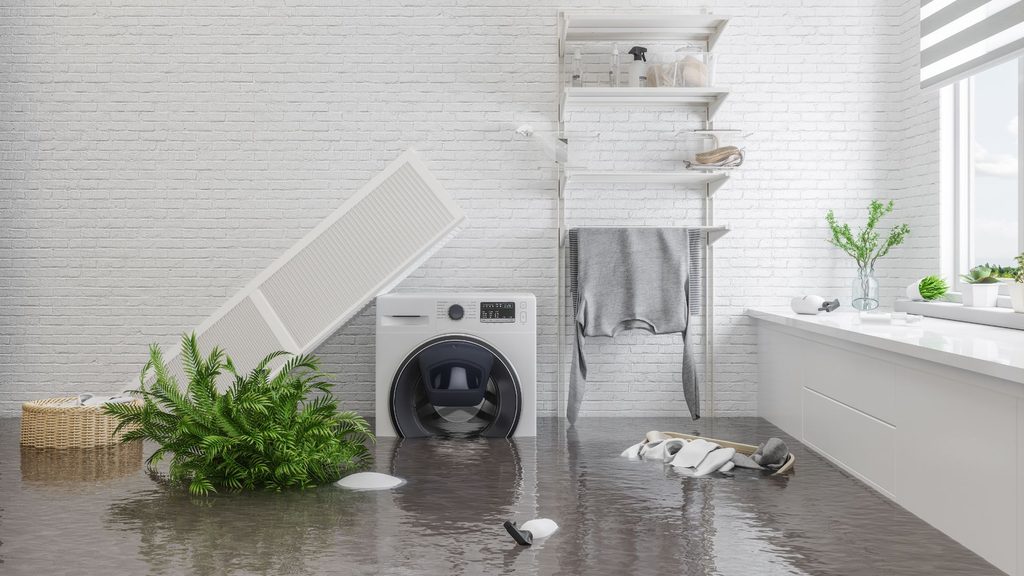
Bathrooms and kitchens account for a significant share of residential water damage because they concentrate plumbing, water use, and moisture in a small area. Under the sink is the first place to check — open the cabinet and look at the bottom of the cabinet, the wall behind the pipes, and the pipes themselves. Water stains on the cabinet floor, swollen particleboard, or discoloration on the wall behind the drain pipe all indicate a slow leak.
Around toilets, check the floor at the base. A toilet that rocks slightly when you sit on it may have a failed wax ring, which allows sewer water to seep under the floor with every flush. Soft flooring around the toilet base, or discoloration on the ceiling below a second-floor bathroom, are signs this has been happening for a while.
Check caulk lines around tubs and showers carefully. Failed caulk — cracked, pulling away from the wall, or missing entirely — lets water into the wall cavity behind the tile with every shower. Press on the wall around the tub surround; soft or flexible tile indicates the substrate behind it has gotten wet. A caulk gun and waterproof bathroom caulk are inexpensive fixes that prevent expensive wall repairs.
In the kitchen, pull the refrigerator away from the wall and check the floor underneath and the water supply line if it has an ice maker. Check the dishwasher by looking under it with a flashlight — water stains on the floor directly under the dishwasher or discoloration on the adjacent cabinet interiors indicate a door seal or drain hose issue.
Attic and Roof
Attic inspections are one of the most important and most skipped parts of a home water damage check. Get up there with a bright flashlight and look at the underside of the roof decking — the plywood or OSB panels the shingles are attached to. Dark staining, soft spots, or visible daylight coming through the decking are all serious signs of roof infiltration.
Check around every roof penetration — vents, chimneys, skylights, and plumbing stacks. These are the most common entry points for roof leaks because the flashing (the metal barrier that seals the gap between the penetration and the roof surface) can corrode, pull away, or crack over time. Water stains radiating out from a chimney or vent base in the attic indicate failed flashing.
Look at the attic insulation. Insulation that’s compressed, matted, or discolored has been wet. Wet insulation loses its R-value and can harbor mold — it needs to be removed and replaced, not just dried in place. Also check the attic for adequate ventilation — inadequate ventilation causes condensation to build up on the underside of the roof decking in winter, which looks exactly like a roof leak but has a completely different fix. Source: PuroClean — 7 Ways to Spot Water Damage
Exterior
Start outside by walking the perimeter of your house and checking the grade — the slope of the ground away from the foundation. Water should slope away from the house at a rate of about 6 inches over the first 10 feet. If the ground is flat or sloping toward the foundation, water pools against your foundation wall every time it rains. Regrading is one of the most effective and least expensive ways to prevent basement water intrusion.
Check gutters and downspouts. Clogged gutters overflow and dump water directly against the foundation. Downspouts that discharge too close to the house send water toward the foundation instead of away from it. Look for gutters that are pulling away from the fascia, sagging in the middle, or showing rust and holes — any of these allow water to bypass the gutter system entirely.
Inspect the siding, window frames, and door frames for cracks, gaps, or areas where caulk has failed. These gaps allow wind-driven rain to enter the wall cavity. Pay particular attention to any area where two different materials meet — wood trim against brick, siding against a window frame — because these joints are where caulk fails first.
How to Find Hidden Water Damage
Hidden water damage is the most dangerous kind because it causes structural damage and mold growth for months before it becomes visible. The most reliable method for finding hidden water damage is a moisture meter — run it along baseboards, around window frames, on walls below sinks and appliances, and anywhere you suspect a problem. Readings above 16% in any of these areas warrant further investigation.
Check your water meter for evidence of a hidden leak. Turn off every water source in the house — faucets, appliances, ice makers — and look at the water meter. If the dial is still moving with everything off, water is flowing somewhere it shouldn’t be. Note the reading, wait 30–60 minutes without using any water, and check again. Any change confirms an active leak. Source: BrokerLink — Signs of Water Damage in Walls and Ceilings
A musty smell without a visible source is one of the most reliable indicators of hidden moisture. Mold produces a distinctive musty odor long before it’s visible. If a room or area consistently smells musty despite cleaning, there’s likely mold growing in a wall, under a floor, or in the ceiling cavity. A mold test kit can confirm whether mold is present and what type, which helps determine how urgently it needs to be addressed.
If your inspection turns up visible growth alongside the moisture, our guide to mold in your house covers how to identify the type, whether it’s dangerous, and exactly how to clean it up.
What to Do When You Find Water Damage
The first step is always to stop the water source. If you find an active leak, shut off the water supply to the affected area — or the main shutoff if you can’t isolate it. No repair is effective until the source is stopped.
Document everything with photos before you touch anything — especially if you’ll be filing a homeowner’s insurance claim. Insurance adjusters need to see the extent of the damage as you found it, not after you’ve started cleanup.
For surface water damage that’s caught early — a small stain, minor warping, a failed caulk line — most homeowners can handle the repair themselves. Fix the source, dry the area thoroughly with fans and a dehumidifier, and repair or replace the damaged material once moisture readings return to normal.
For damage that involves mold, structural materials (framing, subfloor, sheathing), or any area larger than about 10 square feet, call a licensed water damage restoration contractor. Mold remediation in particular requires proper containment and disposal — disturbing a large mold colony without proper protection spreads spores throughout the house and makes the problem significantly worse.
Frequently Asked Questions About Water Damage
How do I know if I have water damage in my walls?
The main signs of water damage in walls include brown or yellow staining, bubbling or peeling paint, soft or spongy drywall, a musty smell, and visible mold or mildew. A moisture meter is the most reliable tool for confirming water damage in a wall that doesn’t show visible signs yet — readings above 16% moisture content indicate a problem.
What does water damage look like on a ceiling?
Water damage on a ceiling typically appears as a brown, yellow, or rust-colored stain with a ring around the edge. Fresh stains are lighter with a defined wet ring; older stains are darker with multiple rings from repeated wetting and drying. Bubbling or sagging drywall on a ceiling indicates significant water accumulation above and should be addressed immediately — a saturated ceiling can collapse.
How do I check for water damage before buying a house?
In addition to a professional home inspection, check ceilings for staining, look for fresh paint that might be covering stains, check under sinks and around toilets, inspect the basement and crawl space for efflorescence and cracks, and get in the attic to look at the underside of the roof decking. Ask the seller directly about any history of water damage — they’re legally required to disclose known issues in most states.
Can water damage be hidden for years?
Yes — slow leaks behind walls, under floors, and in crawl spaces can go undetected for years. A pinhole leak in a supply line inside a wall may drip slowly for months before the moisture wicks far enough to become visible. This is why periodic inspections with a moisture meter are valuable even when you don’t see or smell anything wrong.
How much does water damage repair cost?
Water damage repair costs vary widely depending on the source, extent, and materials involved. Minor repairs like replacing caulk or a supply line are under $50 DIY. Replacing water-damaged drywall in one room typically runs $500–$2,000. Subfloor replacement, mold remediation, or foundation repairs can run $5,000–$20,000 or more. Catching damage early is almost always significantly cheaper than addressing it after it’s had time to spread.
Does homeowner’s insurance cover water damage?
Most homeowner’s insurance policies cover sudden and accidental water damage — a burst pipe, a washing machine supply line failure, or a dishwasher overflow. They typically do not cover gradual damage from slow leaks, flooding from outside the home (which requires separate flood insurance), or damage caused by lack of maintenance. Document damage thoroughly before cleanup and contact your insurer promptly. Source: BrokerLink — Signs of Water Damage in Walls and Ceilings