

Yardtally is reader-supported. Some links on this page are affiliate links. As an Amazon Associate, Yardtally earns from qualifying purchases. See our Affiliate Disclosure.
I didn’t know how to test a GFCI outlet until one had us chasing a dead outlet for most of a day. It went dead for no reason we could see. Nothing plugged into it should have caused a problem, so I did what most people do: I went straight to the breaker box. Every breaker looked fine. I didn’t trust it, so I flipped every single breaker off and back on, one at a time. The outlet was still dead.
Later that same day, my wife went to plug in the blender and that outlet didn’t work either. But that one was a GFCI, the kind with the two little buttons in the middle, so the first thing she did was push the reset button. It clicked, and the blender fired right up. Out of curiosity, I went back and checked the dead outlet. It was working again too.
That’s the part nobody tells you: one GFCI outlet can protect several regular outlets down the line, and when it trips, all of them go dead. The breaker never moves. If you don’t know which GFCI is feeding which outlet, you can spend an afternoon chasing a problem that takes one second to fix. This guide covers how to test a GFCI outlet the right way, how to track down the tripped one hiding in another room, and how to tell when a GFCI is bad and needs to be replaced.
WHAT’S IN THIS GUIDE
- What a GFCI Outlet Actually Does
- Where GFCI Outlets Are in Your House
- How to Test a GFCI Outlet in 3 Easy Steps
- How to Test a GFCI Outlet with a Plug-In Tester
- Dead Outlet but the Breakers Are Fine? Find the Hidden GFCI
- How to Tell If a GFCI Outlet Is Bad
- Why a GFCI Keeps Tripping
- When to Replace a GFCI Outlet
- Frequently Asked Questions
What a GFCI Outlet Actually Does
GFCI stands for ground fault circuit interrupter. It watches the electricity going out on the hot wire and coming back on the neutral wire. Those two amounts should match. If even a tiny amount of current goes missing, the GFCI assumes it’s leaking somewhere it shouldn’t, like through water or through a person, and it cuts the power in a fraction of a second.
That’s different from a circuit breaker. A breaker trips when a circuit is overloaded, like running a space heater and a hair dryer on the same line. A GFCI trips when current is leaking. That’s why your breakers can all look perfect while an outlet is completely dead: the GFCI shut things off, not the breaker.
Where GFCI Outlets Are in Your House
Electrical code requires GFCI protection anywhere water and electricity are likely to meet. In most homes, you’ll find them in these spots:
- Bathrooms
- Kitchen countertops
- Garages
- Outdoor outlets
- Unfinished basements and crawl spaces
- Laundry rooms and anywhere near a sink
The catch is that the GFCI doesn’t always sit where the protected outlet is. Builders often wire one GFCI to cover several outlets, so a single GFCI in the garage might protect the outdoor outlets on the front porch, or one bathroom GFCI might cover a second bathroom down the hall. Look for a small sticker that says “GFCI Protected” on a regular outlet. That’s your clue that a GFCI somewhere else is controlling it.
How to Test a GFCI Outlet in 3 Easy Steps

You don’t need any tools for the basic test. Just grab a lamp or a phone charger with a light on it.
Step 1: Plug something in
Plug a lamp or nightlight into the GFCI outlet and turn it on. If it doesn’t light up, press the RESET button first. If it still won’t power on after a reset, skip ahead to the “How to Tell If a GFCI Outlet Is Bad” section.
Step 2: Press TEST
Push the TEST button (usually black, sometimes marked with a “T”). You should hear a click, the lamp should shut off immediately, and the RESET button should pop out slightly. That means the GFCI detected the simulated fault and cut the power, which is exactly its job.
Step 3: Press RESET
Push the RESET button firmly until it clicks and stays in. The lamp should come back on. If it does, the GFCI passed. If the lamp stays on when you press TEST, or won’t come back on when you press RESET, the outlet isn’t protecting you and needs to be replaced. Source: Family Handyman — How to Test GFCI Outlets
Do this at every GFCI in the house. Most manufacturers recommend testing once a month, and it’s a good habit to test after a big storm or a power outage too.
How to Test a GFCI Outlet with a Plug-In Tester
The button test tells you the GFCI trips. A plug-in GFCI outlet tester goes a step further and tells you whether the outlet is wired correctly. It’s a cheap little tool that plugs in like a nightlight, and every homeowner should have one in the junk drawer.
Plug it into the outlet and check the lights. The pattern printed on the tester tells you what they mean, but two lights on usually means the wiring is correct. Then press the button on the tester itself. The GFCI should trip and all the lights should go out. Press RESET on the outlet to bring the power back.
The tester is also the best way to check the regular outlets downstream of a GFCI. Plug it into one of those, press its test button, and see which GFCI trips. That’s how you map out which GFCI controls which outlets, so you never have to guess the way I did.
Dead Outlet but the Breakers Are Fine? Find the Hidden GFCI

This is the situation that got me. If you have a dead outlet and every breaker looks normal, don’t start flipping breakers like I did. Go on a GFCI hunt first:
- Start in the same room. Check any GFCI outlets nearby, especially near a sink or countertop.
- Check the bathrooms. Bathroom GFCIs often protect outlets in other bathrooms and sometimes outdoor outlets.
- Check the garage and basement. These are the most common spots for a GFCI that feeds outdoor or porch outlets.
- Check the outdoor outlets themselves. Rain and moisture trip outdoor GFCIs more than anything else.
- Look for a popped-out RESET button. A tripped GFCI’s RESET button usually sits slightly out from the face of the outlet, and some have an indicator light that changes color.
Garage GFCIs love to hide behind shelving, freezers, and storage bins, so a good flashlight makes the hunt a lot faster. Press RESET on every GFCI you find. Once you find the one that clicks back in, go test your dead outlet. In our case, it was the kitchen GFCI my wife reset for the blender, and the dead outlet came right back.
If you’ve checked every GFCI and reset the breakers and the outlet is still dead, you may have a loose wire or a failed outlet. That’s the point to call an electrician.
How to Tell If a GFCI Outlet Is Bad
A GFCI is bad and needs to be replaced if any of these happen:
- Pressing TEST doesn’t cut the power
- RESET won’t stay pushed in or won’t click
- The outlet trips instantly every time you reset it, even with nothing plugged in
- The indicator light on a newer outlet is red or flashing
- The outlet feels warm, looks scorched, or smells like burning plastic (turn off the breaker right away and call an electrician)
Newer GFCIs made after mid-2015 have a self-test feature built in. They check themselves automatically, and many will lock out and stop providing power if the protection stops working. If a newer GFCI suddenly won’t reset at all, it may be telling you it has reached the end of its life. You should still push the TEST button every month on those too. Source: IAEI Magazine — Self-Testing GFCI Requirements
Why a GFCI Keeps Tripping
An occasional trip is the GFCI doing its job. Constant tripping means something is wrong, and it’s usually one of these:
- Moisture. Outdoor outlets without a weatherproof “in-use” cover are the most common culprit. Water in the box will trip a GFCI over and over.
- A bad appliance. Unplug everything, reset the GFCI, then plug devices back in one at a time. If it trips when a certain appliance goes in, the problem is the appliance, not the outlet.
- Too many things on one GFCI. Long runs of downstream outlets with lots of devices can add up to enough small leakage to trip it.
- A worn-out GFCI. They don’t last forever, and older ones can get touchy.
If moisture is the problem and you’ve had leaks anywhere near an outlet, our guide on how to check your home for water damage walks through where to look. And if you’re plugging in outdoor string lights this fall, our guide to outdoor lighting on a budget covers keeping outdoor connections dry.
When to Replace a GFCI Outlet
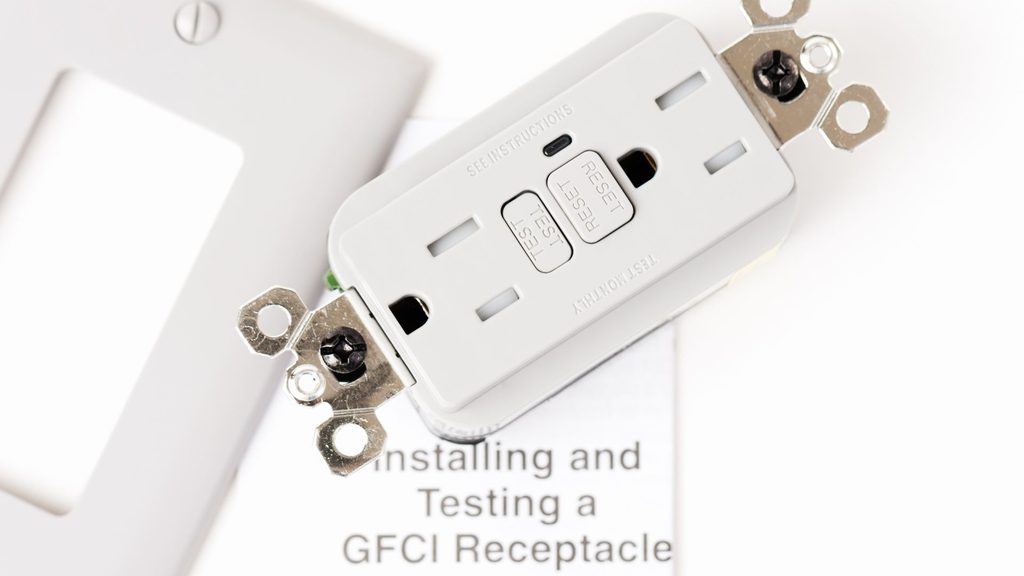
Replace a GFCI if it fails the button test, won’t reset, trips constantly with nothing plugged in, or shows any signs of heat damage. If you’re buying a new one, get a self-test GFCI outlet and match the amp rating printed on the old one, 15 or 20 amps.
Swapping a GFCI is a doable DIY job if you’ve replaced an outlet before, but it has one catch that trips people up: GFCIs have LINE terminals (power coming in) and LOAD terminals (power going out to the downstream outlets). Mix them up and the outlet either won’t work or won’t protect anything downstream. Before you touch a wire, turn off the breaker and confirm the power is actually off with a non-contact voltage tester. Take a photo of the old wiring before you disconnect anything.
If the wiring doesn’t look like the diagram on the new outlet’s instructions, or you’re not sure which wires are LINE and which are LOAD, stop and call an electrician. It’s a short service call, and it’s not worth guessing with electricity. Source: Angi — How to Test a GFCI Outlet
Frequently Asked Questions About GFCI Outlets
How often should you test a GFCI outlet?
Most manufacturers recommend testing GFCI outlets once a month. It takes a few seconds per outlet. At minimum, test them after storms, power outages, or any time an outlet acts strange.
Why is my outlet dead when no breaker is tripped?
The most likely cause is a tripped GFCI somewhere else in the house. One GFCI can protect several regular outlets, and when it trips, those outlets lose power without the breaker moving. Check the GFCIs in your kitchen, bathrooms, garage, basement, and outdoors, and press RESET on each one.
Can a GFCI outlet go bad without tripping?
Yes. An older GFCI can fail in a way where it still supplies power but no longer protects you. That’s why the monthly TEST button check matters. If pressing TEST doesn’t cut the power, the outlet isn’t protecting you, even though everything plugged into it still works.
How long do GFCI outlets last?
Many electricians suggest replacing GFCIs around the 10-year mark, but it depends on how often they trip, moisture, and power surges. Outdoor GFCIs tend to wear out faster. Test monthly and replace any that fail.
Is it safe to keep resetting a GFCI that keeps tripping?
Resetting once or twice is fine. If it keeps tripping, something is leaking current, and resetting it over and over just ignores the warning. Unplug everything, find the cause, and call an electrician if you can’t track it down.