

Yardtally is reader-supported. Some links on this page are affiliate links. As an Amazon Associate, Yardtally earns from qualifying purchases. See our Affiliate Disclosure.
Knowing how to get rid of garden pests without chemicals is easier than most homeowners think. If something is eating your plants and you’d rather not spray around kids, pets, and pollinators — you’re not out of options. Most of the common pests that hit home gardens are controllable with organic methods, and in many cases those methods work faster than people expect.
This guide covers the three most common leaf-eating culprits: aphids, caterpillars and hornworms, and slugs. For each one you’ll find how to identify it, what’s actually working on it, and the organic products worth having on hand before the problem gets out of hand.
What’s in This Guide
- Why Skip the Chemicals?
- Aphids — How to Identify and Eliminate Them
- Caterpillars and Hornworms
- Slugs
- Products Worth Keeping On Hand
- Prevention Beats Treatment Every Time
- FAQ
Why skip the chemicals?
Chemical pesticides don’t discriminate. They kill aphids, but they also kill the ladybugs and parasitic wasps that were already eating those aphids. They kill caterpillars, but also the beneficial beetles and pollinators working your garden beds. Once you wipe out the natural predators, you often end up with worse pest problems down the road — not better ones.
Organic controls target the pest without destroying the ecosystem that’s quietly managing your garden for free. They also break down quickly and don’t leave residues on food you’re about to harvest.
According to the UC Statewide Integrated Pest Management Program, most established plants can tolerate moderate aphid pressure and will outgrow the damage.
Aphids
What they look like and what they do
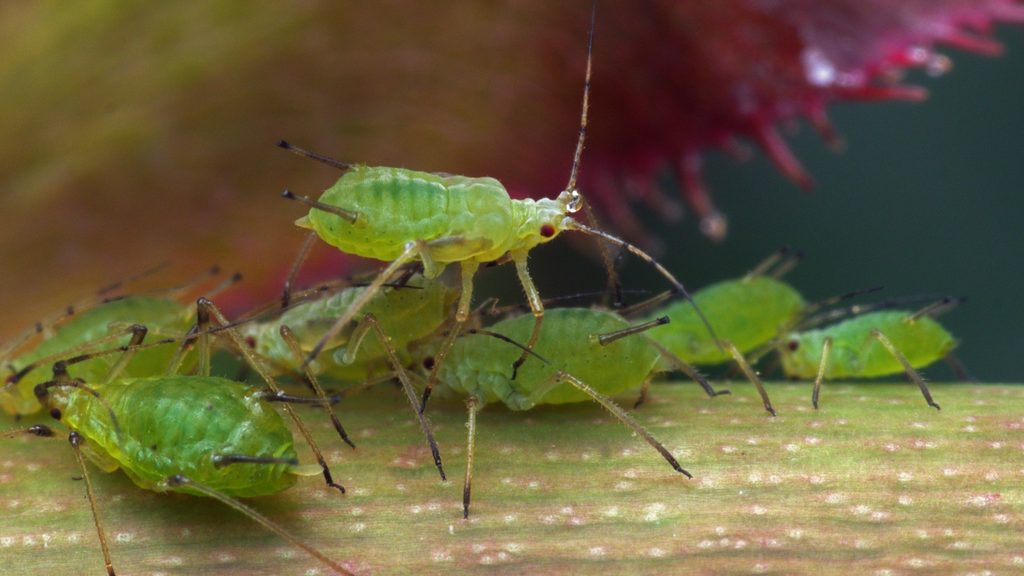
Aphids are tiny — about 1 to 3 mm — soft-bodied, and pear-shaped. They cluster on new growth and the undersides of leaves, and come in green, black, yellow, or woolly white depending on the species. The first signs are usually curled or distorted new leaves, a sticky residue on leaves and stems called honeydew, and a trail of ants going up the plant (ants farm aphids for the honeydew).
They reproduce fast. A single wingless female can produce up to 80 live young per week, and those nymphs are already pregnant when they’re born. A small colony can become a large one quickly in warm weather.
How to get rid of aphids without chemicals
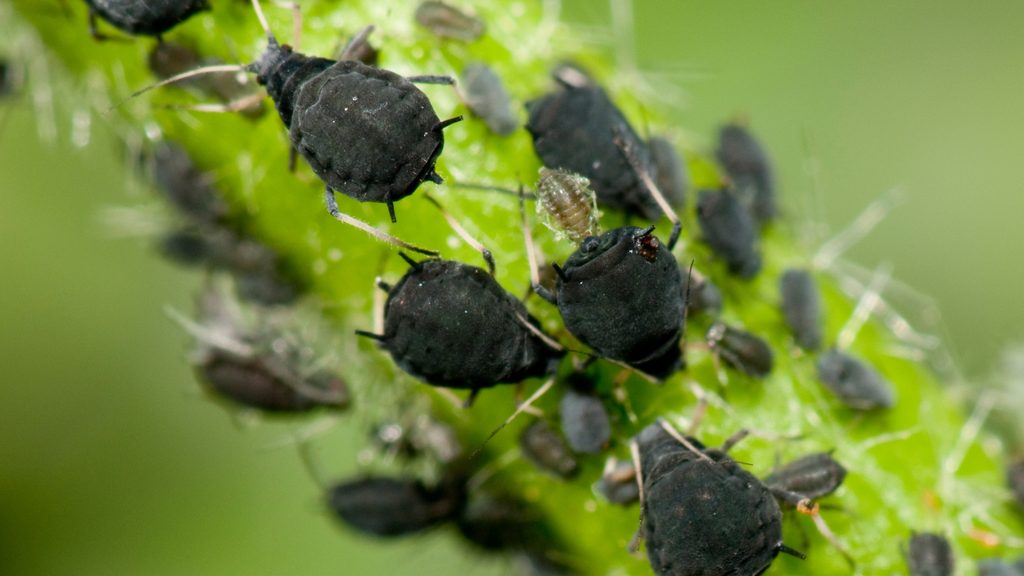
The simplest first step is a strong blast of water. Knock them off with a hose — targeting the undersides of leaves — and most won’t make it back to the plant. The University of Maine Cooperative Extension notes this is often effective enough on its own for moderate infestations. Repeat every few days.
For heavier infestations, insecticidal soap spray is the standard organic fix. Mix one tablespoon of pure castile soap or dish soap per gallon of water and spray directly on the aphids, covering both leaf surfaces. It only kills on contact and washes off, so repeat applications every few days until the population drops.
For persistent aphid problems, neem oil is the next step up. According to the National Pesticide Information Center, neem oil is derived from the seeds of the neem tree and disrupts aphid feeding and hormone systems, making it harder for them to reproduce. A concentrated option like Neem Oil Spray for Plants can be mixed to the right dilution and applied in the evening — not in full sun or temperatures above 90°F. Cover both sides of leaves and reapply after rain.
One important tip from UC IPM: avoid over-fertilizing with nitrogen. High nitrogen levels produce the soft, succulent new growth that aphids prefer. Use slow-release or organic fertilizer instead.
When to let nature handle it
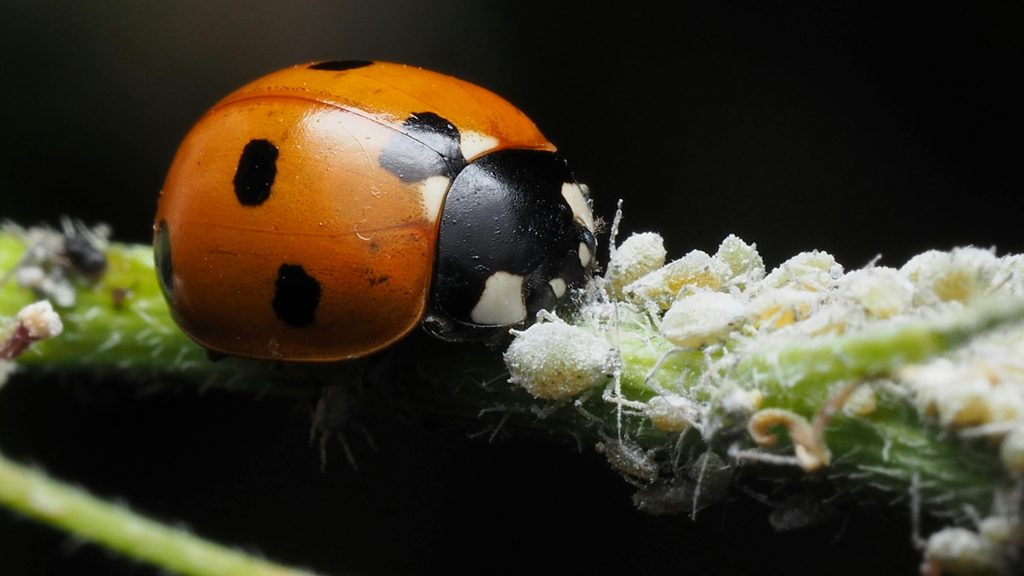
If you start seeing mummified aphids — dried, golden-brown husks still on the plant — that means parasitic wasps have already been at work. Once you see mummies, the population is usually going to crash on its own within a week or two. Leave it alone.
Caterpillars and hornworms
What they look like and what they do
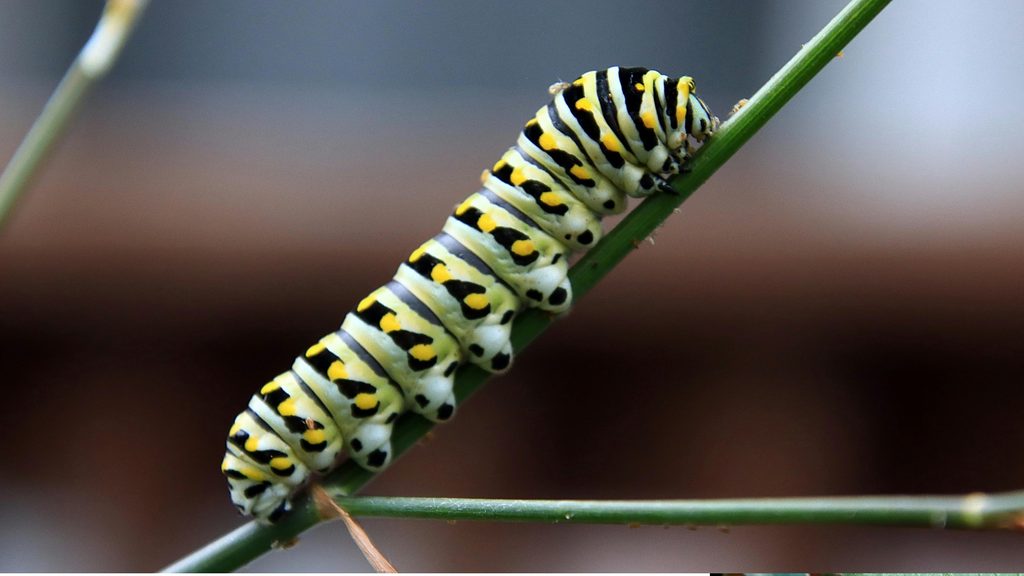
Caterpillars are the larval stage of moths and butterflies. In home gardens the most damaging ones are tomato hornworms (large, green, with white stripes and a horn on the rear), cabbage loopers, and various armyworms. Hornworms can defoliate a tomato plant in a matter of days — they’re well-camouflaged and easy to miss until the damage is obvious.
Look for: ragged holes in leaves, missing foliage, dark green droppings (frass) on leaves and soil, and the caterpillars themselves, often on leaf undersides or inside curled leaves. Hornworms are easiest to spot at dusk with a flashlight — Rutgers Cooperative Extension recommends this specifically because they’re most active after dark.
How to get rid of caterpillars without chemicals
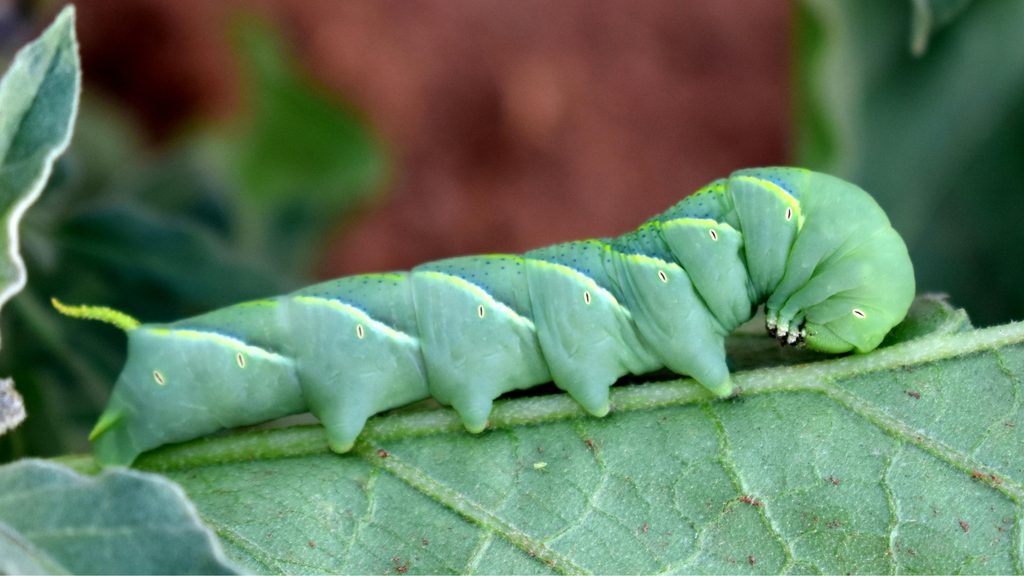
Hand-picking is the most effective method for hornworms and larger caterpillars. Drop them into a bucket of soapy water. It’s not glamorous, but for a small garden it’s faster than waiting for a spray to work. Check every few days.
For smaller caterpillars or larger infestations, the go-to organic solution is a Bt spray — specifically one containing Bacillus thuringiensis, a naturally occurring soil bacterium that only affects caterpillars. Captain Jack’s Bacillus Thuringiensis BT Spray is one of the most widely used options and is OMRI listed for organic gardening. It’s safe for bees, birds, beneficial insects, pets, and people. According to NC State Cooperative Extension, it’s most effective on small, young caterpillars, so apply it as soon as you notice damage and spray late afternoon since Bt degrades in sunlight.
One thing to never do with hornworms
If you find a hornworm covered in small white rice-like cocoons on its back, do not kill it. Those are braconid wasp eggs — the wasp larvae are feeding on the hornworm from the inside and will emerge to parasitize more hornworms in your garden. It’s nature’s pest control working exactly as it should.
Slugs
What they look like and what they do
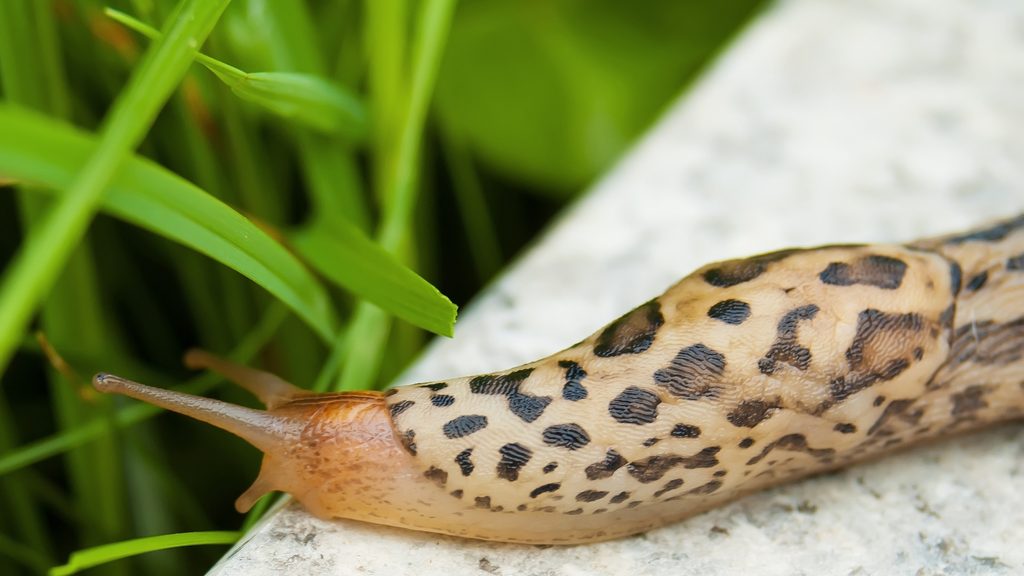
Slugs are soft-bodied, shell-less mollusks that feed at night and on cloudy days. They leave irregular, ragged holes in leaves — especially the lower leaves of plants close to the ground — and a distinctive silvery slime trail. They’re especially damaging to seedlings, lettuce, hostas, and basil.
You often won’t see them because they hide under debris, boards, and pots during the day. If you’re seeing leaf damage but no insects, flip over pots and check under mulch in the evening.
How to get rid of slugs without chemicals
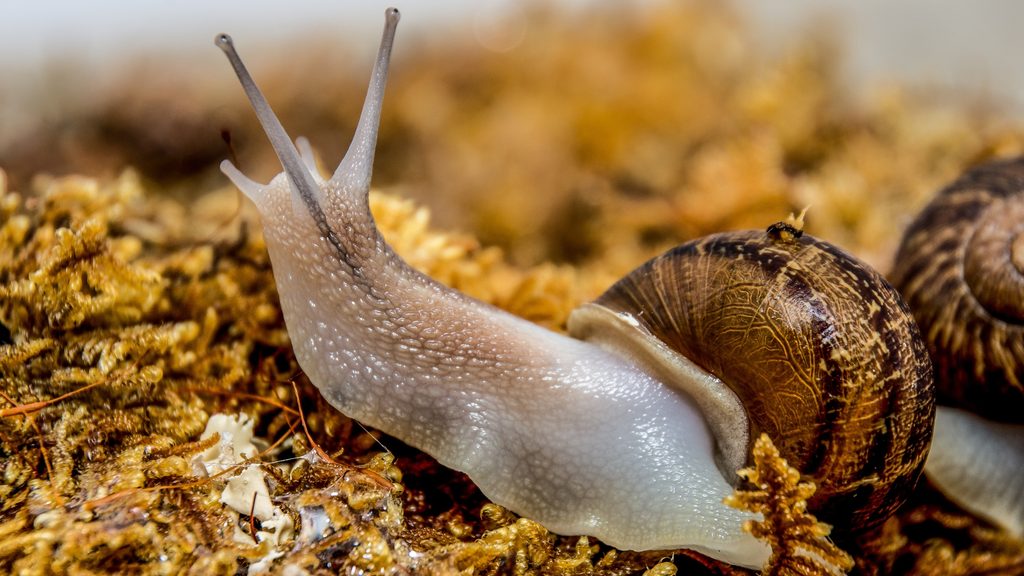
Start by removing their habitat. Clear debris, boards, and dense ground cover from around your beds. Slugs need moisture and shelter — eliminating hiding spots reduces populations significantly.
Diatomaceous earth (DE) — food-grade — is effective as a barrier. Sprinkle it around the base of plants. The sharp microscopic particles damage the slug’s body on contact. Reapply after rain since it loses effectiveness when wet.
Copper tape creates a mild electrical barrier that slugs won’t cross. Wrap it around raised bed edges or individual pots. It works best as a preventative before populations build.
The beer trap method works and requires no product at all. Bury a shallow container (a tuna can works well) level with the soil surface and fill it halfway with cheap beer. Slugs are attracted to the yeast, fall in, and drown. Empty and refill every day or two.
For a ready-to-use organic option, Garden Safe Brand Slug & Snail Bait Granules use iron phosphate as the active ingredient, which breaks down into iron and phosphate naturally present in soil. Unlike older metaldehyde baits that are toxic to pets and wildlife, this formula is safe to use around kids, pets, and garden beds. Scatter it around affected plants in the evening.
Products worth keeping on hand
You don’t need a full arsenal. These four cover the majority of common garden pest problems without chemicals:
- Neem Oil Spray — aphids, caterpillars, fungal issues
- Captain Jack’s Bt Spray — caterpillars and hornworms only
- Garden Safe Slug & Snail Bait — slugs and snails, safe around pets
- Diatomaceous Earth (food grade) — slugs and crawling insects
Prevention beats treatment every time
The best pest control is a healthy garden that doesn’t invite infestations in the first place. A few habits that make a real difference:
- Use slow-release or organic fertilizer — excess nitrogen grows the soft, succulent growth that aphids and caterpillars prefer. If you’re not sure what your soil actually needs before you amend it, our guide to preparing garden soil for planting walks through soil testing and the right way to fertilize before the season.
- Water at the base of plants in the morning — wet foliage at night creates slug habitat
- Plant marigolds, garlic, and herbs like basil near susceptible vegetables — they deter aphids and some other pests
- Check plants weekly — catching a small colony early is far easier than managing a large one
- Encourage beneficial insects by avoiding broad-spectrum sprays and planting flowers nearby. Lady beetles, lacewings, parasitic wasps, and ground beetles are among the most common beneficial insects in home gardens — all of them natural predators of aphids and caterpillars.
Frequently Asked Questions About Getting Rid of Garden Pests Without Chemicals
What is the most effective organic spray for garden pests?
Neem oil is the most versatile organic pest control product for home
gardens — it works on aphids, caterpillars, whiteflies, spider mites,
and fungal issues in one product. Apply it in the evening when pollinators
aren’t active, covering both sides of leaves, and reapply after rain.
For caterpillars specifically, Bt spray (Bacillus thuringiensis) is more
targeted and faster-acting than neem — use Bt for caterpillar infestations
and neem for everything else. Neither leaves harmful residues, both break
down quickly, and neither kills beneficial insects when applied correctly.
How do I get rid of aphids without killing beneficial insects?
Start with the least disruptive method first: a strong blast of water
directly on the aphid colonies, targeting the undersides of leaves.
Repeat every few days — most aphid populations are manageable with water
alone for moderate infestations. If that’s not enough, insecticidal soap
spray (one tablespoon of pure castile soap per gallon of water) kills on
contact and breaks down immediately after drying, leaving no residue.
Neem oil is the next step up. All three methods spare ladybugs, lacewings,
and parasitic wasps — the beneficial predators that will take over natural
control once the population pressure is reduced. Avoid any broad-spectrum
spray, including organic pyrethrin, which kills beneficials indiscriminately.
Are there any plants that naturally repel garden pests?
Yes — and this is the most sustainable long-term pest management strategy.
Marigolds planted at garden borders repel soil nematodes and deter aphids
through their root secretions and volatile compounds. Basil planted near
tomatoes deters whiteflies and aphids. Garlic repels a wide range of pests
and can be interplanted throughout the garden. Dill and fennel allowed to
flower attract parasitic wasps that parasitize aphids and caterpillar eggs.
None of these are absolute barriers — a heavy infestation will overwhelm
any companion planting strategy — but they meaningfully reduce pest pressure
before it reaches a level requiring intervention.
How do I get rid of slugs naturally?
Four methods work reliably without chemicals: removing their daytime
habitat (debris, boards, dense mulch near plant bases), applying food-grade
diatomaceous earth as a barrier around vulnerable plants, setting beer
traps (shallow containers buried level with the soil surface, filled with
beer — slugs are attracted to the yeast and drown), and applying iron
phosphate bait granules, which are the most effective option and break
down safely into iron and phosphate. The beer trap method requires the
most maintenance but costs almost nothing. For persistent infestations,
iron phosphate bait scattered in the evening is the most reliable fix
and is safe around pets, wildlife, and children.
When should I treat my garden for pests?
Early is almost always better — a small colony caught at ten aphids is
far easier to handle than one caught at a thousand. Check your plants
weekly during the growing season, specifically the undersides of leaves
where aphids and caterpillar eggs hide, and the soil surface and plant
bases where slugs shelter. Apply preventive measures like copper tape for
slugs and insecticidal soap before populations establish rather than waiting
for visible damage. For caterpillars, apply Bt spray in late afternoon or
evening as soon as you notice the first damage — it’s most effective on
young, small caterpillars and degrades in sunlight, so late-day application
gives it the most working time overnight.
SOURCES & FURTHER READING
- UC Statewide IPM Program — Aphids
- University of Maine Cooperative Extension — Managing Aphids
- National Pesticide Information Center — Neem Oil
- Rutgers Cooperative Extension — Hornworms in the Home Garden
- NC State Cooperative Extension — Controlling Caterpillars in Vegetable Gardens
- UC Cooperative Extension Alameda County — Battling Summer Vegetable Garden Pests