
Yardtally is reader-supported. Some links on this page are affiliate links. As an Amazon Associate, Yardtally earns from qualifying purchases. See our Affiliate Disclosure.
If you’re looking for how to get rid of mosquitoes in your backyard, you’re not alone — and the good news is there are several approaches that actually work. Mosquito control in a backyard works in two layers: eliminating breeding sites so new mosquitoes stop hatching, and reducing adult populations with targeted treatment. Most homeowners skip the first layer and go straight to spraying — which is why they’re back to square one every two weeks. This guide covers both layers in order, including the breeding sites most people miss.
What’s in This Guide
- Why It’s So Hard to Get Rid of Mosquitoes in Your Backyard
- Step 1 — Eliminate Standing Water (The Most Important Step)
- Step 2 — Trim Vegetation and Improve Airflow
- Step 3 — Treat Your Yard With a Perimeter Spray
- Step 4 — Use Personal Protection at Gatherings
- What About the Other Backyard Pests?
- Natural Mosquito Control Options
- When to Call a Professional
- The Fastest Way to Enjoy Your Backyard Again
- Frequently Asked Questions
Why It’s So Hard to Get Rid of Mosquitoes in Your Backyard
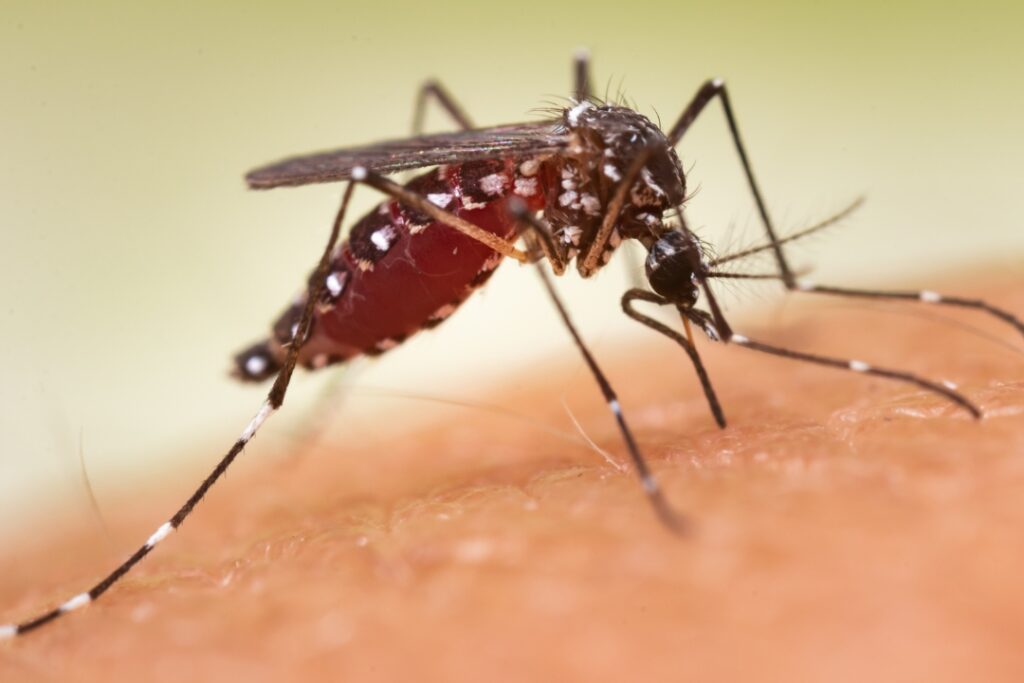
Before you spend money on repellents and treatments, it helps to understand what’s drawing mosquitoes to your yard in the first place. Mosquitoes need three things to thrive: standing water to breed, shaded vegetation to rest in during the day, and a warm-blooded host to feed on. If your yard is giving them the first two, they’ll keep coming back no matter what you spray.
The breeding timeline is fast — a mosquito can go from egg to biting adult in as little as 8 to 10 days in warm weather. And they don’t need much water to do it. A bottle cap, a clogged gutter, a low spot in a tarp — any of these can produce hundreds of mosquitoes. The single most effective thing you can do is cut off their breeding sites before you reach for any product. Source: CDC — Larvicides for Mosquito Control
Step 1 — Eliminate Standing Water (The Most Important Step)
I walked my entire yard with a notepad the first time I took this seriously, and I was surprised by how many spots I found. Here’s where standing water hides in most backyards:
— Clogged gutters (one of the most common breeding sites and easiest to overlook)
— Birdbaths that aren’t refreshed weekly
— Flowerpot saucers and trays
— Low spots in tarps, pool covers, or furniture covers
— Kids’ toys, buckets, and wagons left outside
— Wheelbarrows
— Tree holes and stumps that collect rainwater
— Pet water bowls left outside overnight
Empty, scrub, or flip anything that holds water. For things you can’t eliminate — like birdbaths, rain barrels, or decorative ponds — treat the water rather than draining it. Mosquito dunks or bits containing BTI (Bacillus thuringiensis israelensis) kill mosquito larvae without harming birds, fish, pets, or beneficial insects. Drop one in any standing water you can’t eliminate and replace it monthly.
Step 2 — Trim Vegetation and Improve Airflow
Adult mosquitoes don’t spend all day flying around looking for a target. They rest in cool, shaded, humid spots during the hottest parts of the day — tall grass, dense shrubs, ground cover, and the underside of large leaves. My backyard had a section of overgrown ornamental grasses along the fence line that was essentially a mosquito hotel.
Mow regularly, trim shrubs, and cut back any dense ground cover near seating areas. Mosquitoes are weak fliers — they struggle in wind above about 1 mph. A simple oscillating fan aimed at a patio seating area can dramatically reduce the number that land on you during a backyard gathering. It doesn’t need to be a weatherproof outdoor model — a standard fan works great under a covered patio or screened porch as long as it’s protected from direct rain. It’s one of the cheapest and most underrated mosquito tricks there is.
Step 3 — Treat Your Yard With a Perimeter Spray
Once breeding sites are under control, a yard spray knocks down the adult population that’s already there and creates a residual barrier that lasts several weeks. Look for a product containing permethrin or bifenthrin — both are widely used, EPA-registered insecticides that are highly effective against mosquitoes and most other backyard pests including flies, gnats, and ticks.
Apply in the early morning or evening when mosquitoes are most active and when beneficial insects like bees are less likely to be foraging. Focus on the shaded areas where mosquitoes rest — under deck boards, along fence lines, in dense shrubs, and in ground cover. Don’t spray flowering plants or open water. Reapply every three to four weeks or after heavy rain.
Step 4 — Use Personal Protection at Gatherings
Even with great yard control, some mosquitoes will always be present — especially if you back up to woods, a creek, or a neighbor’s untreated yard. For outdoor gatherings, personal protection is still worth having.
Repellents That Actually Work
DEET, picaridin, and oil of lemon eucalyptus (OLE) are the three EPA-registered active ingredients with the strongest evidence for mosquito repellency. DEET at 25-30% concentration provides several hours of protection. Picaridin repellent is odorless and less irritating to skin — a good option if you don’t like DEET. OLE is a plant-based option with solid research behind it, unlike most “natural” repellents which have weak evidence.
Citronella — The Truth
Citronella candles and torches are popular backyard fixtures, and they do have some repellent effect — but only in the immediate area around the flame and only in calm conditions. Wind disperses the smoke instantly. They’re better thought of as atmosphere than serious mosquito control. Use them alongside other methods, not instead of them.
What About the Other Backyard Pests?
Flies
House flies and blow flies breed in decaying organic matter — trash, pet waste, compost, and standing water with algae. Keep trash cans sealed and clean, pick up pet waste regularly, and turn your compost pile to speed decomposition. For the patio specifically, a simple fly trap placed away from the seating area draws them in and keeps them off your food. A bug zapper is another solid option for covered patios — it handles flies, gnats, and mosquitoes all at once with no chemicals. Just know that zappers kill a broad range of insects, so keep them away from garden beds where beneficial insects are active.
Gnats and Fungus Gnats
Small gnats hovering near plants or damp soil are usually fungus gnats — they breed in overwatered soil, not in standing water. Let the top inch of potted plant soil dry out between waterings, and the population drops on its own within a week or two. For gnats around the patio in general, yellow sticky traps catch them without any chemicals.
Ticks
If you have wooded edges, tall grass, or wildlife passing through your yard, ticks are a serious concern — particularly deer ticks carrying Lyme disease. The same perimeter spray that controls mosquitoes (permethrin or bifenthrin) also kills ticks on contact and provides residual protection along fence lines and woodland edges. Keep grass short, create a wood chip or gravel barrier between lawn and wooded areas, and check yourself and pets after spending time outside.
Natural Mosquito Control Options
If you prefer to avoid chemical sprays, there are several effective natural approaches worth combining:
— BTI dunks in standing water (safe for birds, fish, pets, and beneficial insects)
— Encourage natural predators — dragonflies, bats, and purple martins all eat mosquitoes. A bat house or purple martin house installed near your yard can make a noticeable dent in the local population over time.
— Plant mosquito-repelling herbs near seating areas — basil, lemon balm, catnip, and lavender have some repellent effect when brushed or bruised. They won’t clear your yard, but they add a layer of protection right where you sit.
— Use a fan — as mentioned above, airflow is one of the simplest and most effective non-chemical deterrents for seating areas.
None of these alone will eliminate a serious mosquito problem, but combined with standing water removal they make a meaningful difference.
When to Call a Professional
DIY methods work well for most backyard situations. But if you live near a creek, pond, wetland, or a neighbor who isn’t managing their yard, you may be dealing with mosquito pressure from outside your property that no amount of standing water removal will fix. Professional barrier treatments applied every 3 weeks through mosquito season can dramatically reduce the population in those situations. Most services also treat for ticks at the same time.
How to Get Rid of Mosquitoes in Your Backyard: The Fast Version
Start with standing water — that’s always step one. Then trim the vegetation mosquitoes rest in, apply a perimeter spray if needed, and add a fan to your seating area for gatherings. In my experience, those four steps together reduce the problem by 80 to 90 percent without needing to turn your yard into a chemical zone. The goal isn’t a completely mosquito-free yard — that’s not realistic.
The goal is a yard where you can sit outside without spending the whole evening swatting. And if standing water is a recurring problem in your yard, our guide on how to fix a muddy backyard can help you address the drainage issue at the source — which also happens to be one of the best things you can do for long-term mosquito control.
Sources & Further Reading
- Source: CDC — Larvicides for Mosquito Control
- Source: EPA — Controlling Mosquitoes at the Larval Stage
Frequently Asked Questions About Getting Rid of Mosquitoes
What is the most effective way to get rid of mosquitoes in a yard?
Eliminating standing water is the highest-leverage single action — one
tablespoon of standing water can produce hundreds of mosquitoes. After
breeding sites are removed, a yard treatment with a pyrethrin-based
concentrate applied to shrubs, ground cover, and shaded areas kills
adult mosquitoes and provides 3-4 weeks of residual control. Combining
both approaches is significantly more effective than either alone.
How do I find mosquito breeding sites in my yard?
Walk the yard 24-48 hours after any rain and look for anything holding
water — not just obvious containers. Common missed sites include: the
saucers under potted plants, tarps or covers with low spots, clogged
gutters, low spots in lawn where water pools, children’s toys left
outside, and bird baths. Even a bottle cap holds enough water to
breed mosquitoes.
Do mosquito repellent plants actually work?
Modestly. Plants like citronella, lavender, lemon balm, and basil
contain compounds that mosquitoes dislike — but the repellent effect
requires direct contact with or crushing of the leaves, not passive
proximity. A citronella plant on your patio provides much less protection
than a citronella candle burning nearby. They’re worth growing but
shouldn’t be your primary strategy.
How long does yard mosquito treatment last?
Pyrethrin-based sprays applied to shrubs and vegetation typically provide
21-30 days of residual control in normal conditions. Rain accelerates
breakdown — a heavy rain event shortly after treatment may cut effectiveness
in half. Rotating between pyrethrin and other active ingredients prevents
resistance buildup if you treat repeatedly through the season.
Are mosquito misting systems worth the cost?
For backyards with severe, ongoing mosquito pressure — near water features,
wooded areas, or low-lying properties — yes. Automated misting systems
spray on a timer and maintain consistent residual control without manual
application. The upfront cost is significant ($1,500-$3,500 installed)
but ongoing cost is mostly the insecticide refill. For occasional
backyard use, seasonal treatments are more cost-effective.