
Yardtally is reader-supported. Some links on this page are affiliate links. As an Amazon Associate, Yardtally earns from qualifying purchases. See our Affiliate Disclosure.
Learning how to edge a lawn is one of those things that looks complicated until you do it once — then it just becomes part of the routine. Before I figured out the right approach for my yard, I looked into what actually makes a difference: which tool to use where, how deep to cut, and what keeps edges from needing to be recut every single week. This guide covers all of it — the types of edging tools, how to cut a clean line the first time, and how to maintain it so your yard stays looking sharp without a lot of extra work.
What’s in This Guide
- Why Lawn Edging Matters
- Types of Lawn Edging Tools
- How to Edge a Lawn: Step by Step
- Edging Along Different Surfaces
- Physical Edging Materials (Permanent Solutions)
- How Often to Edge a Lawn
- FAQ
Why Lawn Edging Matters
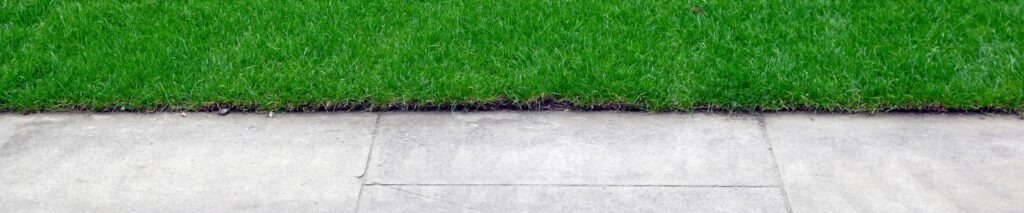
Edging does one thing: it creates a defined boundary between your grass and everything next to it — driveways, sidewalks, garden beds, and landscaping borders. That clean line is what separates a lawn that looks maintained from one that just looks mowed. Grass naturally creeps outward via stolons and rhizomes, and without regular edging it gradually colonizes your pavement and beds, making the whole yard look unkempt even if the grass itself is healthy and green.
Beyond aesthetics, edging reduces long-term maintenance. A well-defined edge is easier and faster to mow along, reduces the amount of trimming needed after mowing, and helps keep turf out of areas where it doesn’t belong. For garden beds in particular, a clean edge also slows grass encroachment into the bed itself.
Types of Lawn Edging Tools
The right tool depends on where you’re edging, how much you have to do, and whether you’re establishing a new edge or maintaining an existing one.
Rotary Lawn Edger (Powered)
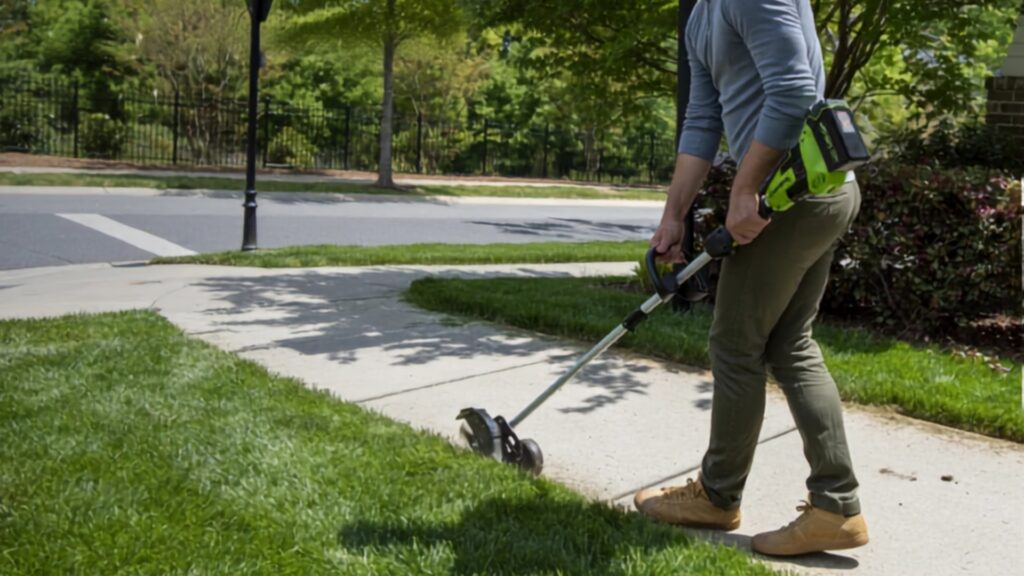
A dedicated lawn edger — either gas, corded electric, or battery-powered — uses a vertical spinning blade to cut a clean trench between grass and pavement. It’s the fastest and most precise option for long straight runs along driveways and sidewalks. If you have more than 50 feet of hardscape edge to maintain, a powered edger pays for itself in time and consistency. Most have an adjustable depth guide so you control how deep the blade cuts.
A quality battery-powered lawn edger handles the majority of residential edging jobs without cords or gas mix.
String Trimmer (Flipped Vertically)
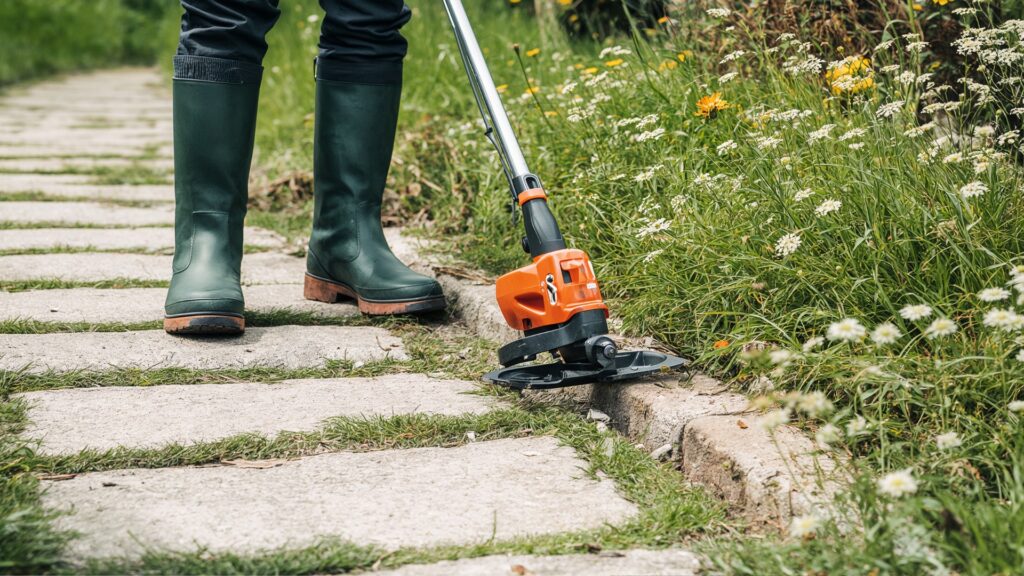
A string trimmer you already own can double as an edger — flip the head 90 degrees so the string spins in a vertical plane, and guide it along the pavement edge. It’s less precise than a dedicated edger but perfectly capable for maintenance passes once a clean edge already exists. It’s also more maneuverable around curves and irregular shapes. This is the “good enough” tool for most homeowners who don’t want to own a separate edger.
Half-Moon Edger (Manual)
A half-moon edger is a long-handled tool with a flat, crescent-shaped blade you press into the soil with your foot. It’s the right choice for cutting or redefining a bed edge — particularly curved edges around garden beds — where you want precise control over the cut line. It requires more physical effort than a powered tool but produces a very clean trench and gives you complete control over the shape. This is also the tool to reach for when re-establishing a heavily overgrown edge from scratch.
For curved garden bed edges, a half-moon edging tool gives you the control that a powered edger can’t match on tight curves.
Edging Shears (Manual)
Edging shears have long handles and horizontal blades that cut grass at ground level — they’re designed for snipping grass along bed edges and in tight spots where a power tool won’t fit cleanly. They work well around stepping stones, along fence lines, and in small areas. They’re not practical for long runs of edging but are a useful finishing tool for detail work after a powered edge pass.
Spade or Flat Spade
In a pinch, a flat spade can cut a bed edge — press the blade vertically into the soil along your marked line and work in overlapping sections. It’s slower and less consistent than a half-moon edger but it works for occasional re-establishment of a bed edge if you already have a spade on hand.
How to Edge a Lawn: Step by Step
Step 1 — Mow First
Always mow before you edge. Mowing first sets the grass to a consistent height, which makes it easier to see where the edge should fall and reduces how much cleanup you need after edging. If you edge before mowing, you’ll likely mow over your fresh edge and have to redo it.
Step 2 — Mark Your Line (First Time Only)
If you’re establishing a new edge or redefining one that’s been neglected, take a few minutes to mark your line first. For straight runs along pavement, the pavement itself is your guide — follow it. For garden bed edges, lay a garden hose along the desired line and adjust until the curve looks natural and balanced when viewed from a standing position. Once you’re happy with it, mark the line with landscaping spray paint or chalk before removing the hose. Gentle curves look more natural than sharp angles; avoid creating complex curves you’ll have to reproduce every maintenance pass.
Step 3 — Cut the Edge
For hardscape edges with a powered edger: position the blade directly at the junction of grass and pavement, engage the blade, and walk at a slow, steady pace. Let the tool do the work — pushing too fast produces a ragged edge. Keep the guide wheel on the pavement and the blade cutting into the turf side.
For bed edges with a half-moon edger: set the blade on your marked line, press straight down with your foot to cut a clean vertical slice, then lever slightly to release the cut plug of turf. Work in overlapping 4–6 inch sections for a continuous clean trench. The trench should be about 2–3 inches deep.
For trimmer edging: hold the trimmer so the string spins in a vertical plane with the cut side facing the grass. Guide along the pavement edge at a steady pace, keeping the string just at the edge line. Don’t tilt — a consistent vertical angle is what produces a straight edge.
Step 4 — Clean Up the Clippings
After cutting, use a broom, blower, or rake to clear grass clippings and soil debris off the pavement and out of the bed. For bed edges, remove the cut plugs of turf from the trench so they don’t re-root. Leaving debris on the pavement can stain concrete over time and looks unfinished.
Step 5 — Blow or Sweep Clean
A quick pass with a leaf blower along the pavement clears any remaining fine debris and finishes the job cleanly. This step takes two minutes and makes a significant difference in how sharp the result looks.
Edging Along Different Surfaces
Driveways and Sidewalks
This is the most common edging situation and the one where a powered rotary edger shines. The pavement gives you a natural guide, and the straight runs let you work quickly. Cut a vertical trench about 1–2 inches deep at the grass-pavement junction. You don’t need to go deeper — the goal is a clean visible line, not a drainage channel.
Garden Beds
Garden bed edging requires more finesse than hardscape edging because you’re creating or maintaining a shape rather than following an existing surface. A half-moon edger gives you the most control. The trench should be 2–3 inches deep and cleanly vertical on the lawn side — this creates a physical barrier that slows grass rhizomes from crossing into the bed. After cutting, some homeowners install a physical edging material (metal, plastic, or stone) into the trench to make future maintenance easier and further slow encroachment.
Curved Edges
Curves are where a string trimmer often outperforms a dedicated edger — the trimmer is more maneuverable and can follow an organic line more naturally. Mark tight curves with a hose first, then follow it carefully with the trimmer or a half-moon edger. Work slowly on curves; rushing produces a choppy, uneven result.
Around Trees and Obstacles
For edging around tree bases, mulch rings, or landscape obstacles, edging shears or a string trimmer are the right tools. A powered edger is impractical in tight spaces. Keep the edging line consistent with the shape of the obstacle and work slowly to avoid scalping exposed roots.
Physical Edging Materials (Permanent Solutions)
If you want to reduce how often you have to re-edge, installing a physical border is the most effective long-term solution. Physical edging sits in the trench between turf and bed, acting as a barrier to slow rhizome spread and giving you a consistent line to maintain against.
Steel or Aluminum Edging
Metal landscape edging is the most durable option — it holds its shape, resists UV degradation, and gives a clean, modern look. Steel edging in particular develops a natural patina over time. It’s more expensive than plastic options but lasts indefinitely. Install it into a cut trench so the top edge is at or just below soil level, and stake it in place every few feet.
Plastic Landscape Edging
Plastic edging is inexpensive and widely available, but it has limitations — it becomes brittle with UV exposure over time, tends to heave out of the ground with freeze-thaw cycles, and can look cheap if not installed carefully. For permanent beds, metal is worth the upgrade. Plastic works fine for short-term or lower-visibility applications.
Brick, Stone, or Paver Edging
A row of bricks, pavers, or natural stone set at grade creates a mowing strip — a hard surface the mower wheel can ride on, eliminating the need to edge that section entirely. It’s labor-intensive to install but essentially maintenance-free once in place. This is the best option for high-visibility areas where you want a clean edge with minimal ongoing work.
How Often to Edge a Lawn
For hardscape edges (driveways, sidewalks), maintenance edging every 2–4 weeks during the growing season keeps things looking sharp without much effort. Once a clean edge exists, a quick trimmer or edger pass takes only a few minutes. Letting it go more than a month means more material to cut and more cleanup.
For garden bed edges, edging 2–3 times per season is typically enough if a physical border is in place. Without a physical border, plan to re-edge monthly during active growing months.
The best time to edge is after mowing, when you’re already outside with tools in hand. Making it part of your mowing routine — even a quick maintenance pass — is much easier than letting it build up into a full restoration project.
Frequently Asked Questions About How to Edge a Lawn
What is the best tool for edging a lawn?
It depends on what you’re edging. For long straight runs along driveways
and sidewalks, a powered rotary edger — battery, corded, or gas — is the
fastest and most precise option. For curved garden bed edges, a half-moon
edger gives you the control that a powered tool can’t match on tight curves.
For maintenance passes once a clean edge exists, a string trimmer flipped
vertically works well and uses a tool most homeowners already own. Most
homeowners find that a string trimmer handles 80% of their edging needs
after an initial edge is established with a dedicated edger or half-moon tool.
How do I get a clean edge between my lawn and garden bed?
The first pass is the most important. Mark your desired line with a garden
hose and adjust until the curve looks natural when viewed standing up. Then
cut the line with a half-moon edger, pressing straight down to create a
clean vertical trench 2 to 3 inches deep. This establishes the physical
barrier that defines the edge. Maintenance passes with a string trimmer
every 2 to 4 weeks keep it looking sharp. For a more permanent solution
that reduces maintenance frequency, install metal or plastic edging material
in the cut trench — it acts as a barrier to slow grass rhizome migration
into the bed.
How deep should I edge my lawn?
For hardscape edges (driveways, sidewalks), 1 to 2 inches deep is sufficient —
just enough to create a clean visible line between turf and pavement.
For garden bed edges, 2 to 3 inches deep creates a more effective
physical barrier against grass rhizomes migrating into the bed. Going
deeper than 3 inches on a bed edge isn’t necessary and creates more soil
disturbance than the benefit justifies. Consistent depth matters more than
exact depth — a uniform edge looks intentional; a varying one looks ragged.
How often should I edge my lawn?
For hardscape edges along driveways and sidewalks, every 2 to 4 weeks
during the growing season keeps things sharp without much effort. Once
a clean edge exists, maintenance passes take only a few minutes. For
garden bed edges, 2 to 3 times per season is typically adequate if a
physical border is in place — without a border, plan to re-edge monthly
during active growing months. The easiest habit is to run the edger as
part of every mowing session, which prevents buildup and keeps the job
quick.
Can I use a string trimmer to edge my lawn?
Yes — flip the trimmer head 90 degrees so the string spins vertically,
and guide along the pavement edge or bed border. It’s less precise than
a dedicated edger on long straight runs, but it’s perfectly capable for
maintenance passes once a clean edge already exists. It’s also more
maneuverable than a rotary edger on curves, around obstacles, and in
tight spaces. Most homeowners find that a trimmer handles the majority
of their edging needs without needing a separate dedicated edger — though
for establishing a new edge on an overgrown border, the half-moon edger
or rotary edger produces a more consistent initial result.
Sources & Further Reading
No external citations required for this article — content is based on tool specifications and established lawn care practice. No challengeable scientific claims present.