
Yardtally is reader-supported. Some links on this page are affiliate links. As an Amazon Associate, Yardtally earns from qualifying purchases. See our Affiliate Disclosure.
Knowing how to get rid of ants in your house starts with understanding why spraying them doesn’t work — the ants you can see are just scouts, and the colony behind them could have thousands more. If you spray them and call it done, more will show up within days following the same scent trail. This guide covers what actually works: how to cut off the colony, seal the entry points, and make your house the one ants skip.
What’s in This Guide
- Why You Keep Seeing Ants in Your House
- Step 1 — Use Bait, Not Spray, to Kill the Colony
- Step 2 — Seal Every Entry Point You Can Find
- Step 3 — Treat the Perimeter
- When You Need Quick Knockdown: Ant Spray
- Natural Options That Actually Work
- What to Do About Specific Ant Problems
- What Doesn’t Work
- When to Call a Professional
- FAQ
Why You Keep Seeing Ants in Your House
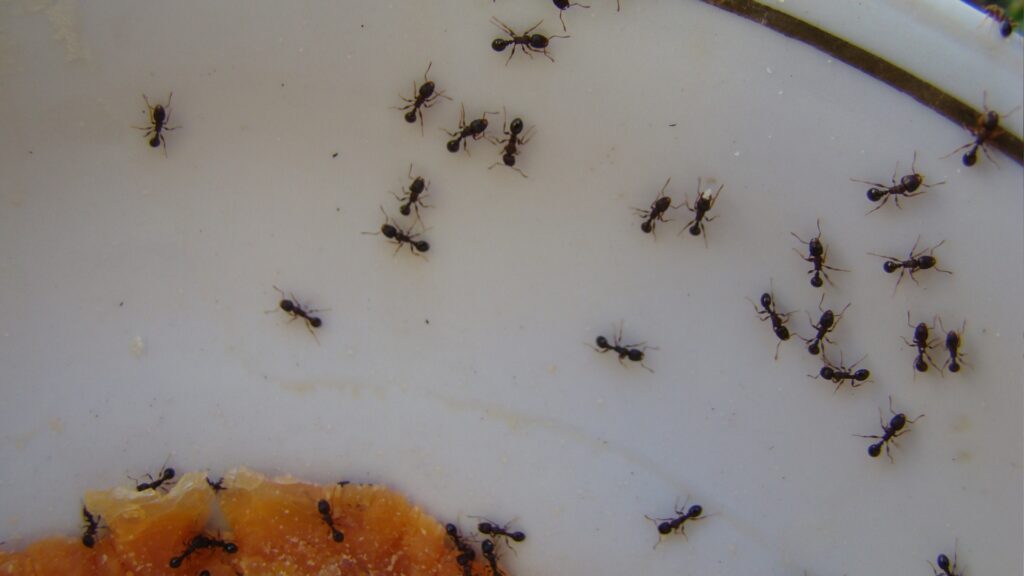
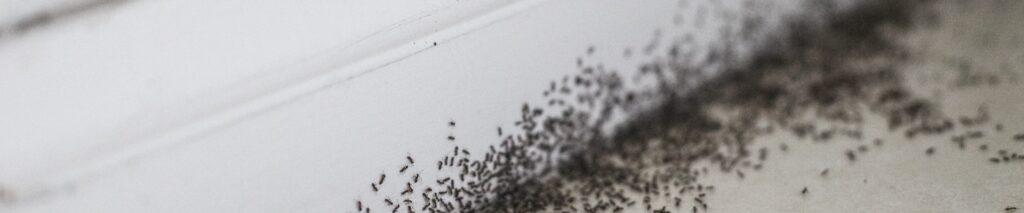
Ants come inside for three things: food, water, and shelter. Even a clean house can get ants if there’s a moisture problem under a sink, a gap around a door frame, or a crack in the foundation near a mulch bed. Once one scout finds a reliable food or water source, it lays down a pheromone trail on the way back to the colony — and every ant that follows reinforces that trail. That’s why you see them in a line. Wiping the counter or spraying the visible ants breaks the trail temporarily but doesn’t touch the colony.
Ant activity spikes in spring and early summer when colonies expand and send out scouts, and again in late summer and fall when ants are foraging hard before winter. Rain drives them inside looking for dry ground. So does drought, when they come looking for moisture. If you’re seeing ants seasonally, the colony is almost certainly outdoors and sending workers in through gaps in your exterior.
Step 1: Use Bait — Not Spray — to Kill the Colony
This is the most important thing to get right. Spray kills individual ants on contact but doesn’t reach the colony or the queen. Bait works differently — worker ants carry the slow-acting bait back to the nest, where it spreads through the colony and eventually kills it. It takes a few days longer to see results, but it’s the only DIY method that actually eliminates the source.
Terro T300 Liquid Ant Bait Stations are the most consistently recommended product for indoor ant control. The active ingredient is borax, which is slow-acting enough that workers carry it back before they die. Place them directly on ant trails — near baseboards, under the sink, behind the refrigerator, or wherever you’re seeing activity. Don’t kill or disturb the ants near the bait stations while they’re feeding — you want them to bring the bait home.
You’ll often see more ants at first as workers swarm the bait — that’s a good sign, not a bad one. It means it’s working. Give it 3–5 days before deciding it isn’t working.
Step 2: Seal Every Entry Point You Can Find
Bait handles the current colony. Sealing handles the next one. Ants get in through gaps around pipes, cracks in foundation walls, gaps under door frames, torn weatherstripping, and any opening where a utility line enters the house. Even a gap the width of a credit card is enough.
Walk the exterior of your house and look for any crack or gap at the foundation level. Inside, check under every sink for gaps around supply lines, around the base of toilets, and along baseboards in the kitchen and bathrooms. Seal everything you find with a silicone caulk and a caulk gun. Silicone holds up better than latex in wet areas and around pipes — it stays flexible instead of cracking over time.
Step 3: Treat the Perimeter
Once you’ve handled the inside, treat the outside so new colonies don’t send scouts in. Ortho Home Defense creates a barrier around the foundation that kills ants on contact and keeps working for months. Spray a band about 12 inches up the foundation wall and 12 inches out along the ground. Pay extra attention to where utility lines enter, door thresholds, and any area where you found interior ant activity. Reapply after heavy rain or every few months during peak season.
For cracks in the foundation or gaps in exterior walls where you can’t apply liquid, Terro T600 Ant Dust gets into voids where spray can’t reach. Apply it in cracks, under siding, and around any exterior opening. Dust lasts longer than liquid in dry areas and works well for carpenter ants, which often nest in wood rather than soil.
When You Need Quick Knockdown: Ant Spray
Spray doesn’t fix an ant problem but it has its place — clearing a trail before you place bait, handling a sudden surge, or dealing with ants in an area where bait stations aren’t practical. Raid Ant & Roach Killer kills on contact and leaves a residual that deters ants from crossing treated surfaces for a period of time. Use it to wipe out visible trails and treat entry points while your bait stations are working on the colony.
One important note: don’t spray near your bait stations. The residual from the spray repels ants and will stop them from reaching the bait, which defeats the purpose. Keep spray use away from wherever you’ve placed bait.
Natural Options That Actually Work
If you prefer to avoid chemical sprays — especially in a kitchen or around pets and kids — there are a couple of natural options worth using.
Diatomaceous Earth
Food-grade diatomaceous earth is a powder made from fossilized algae that damages the exoskeleton of insects and causes them to dry out. It’s non-toxic to humans and pets but effective against ants when applied in a dry layer along baseboards, under appliances, and at entry points. It loses effectiveness if it gets wet, so it works best in dry interior areas. Reapply after cleaning or if it gets damp.
Peppermint Oil Spray
Peppermint oil disrupts ant scent trails and acts as a deterrent at entry points. Mighty Mint Peppermint Oil Insect Repellent Spray is a ready-to-use version that’s safe around food prep areas and smells significantly better than chemical spray. It won’t eliminate a colony on its own but works well as a follow-up after bait has done its job — spray entry points and trail areas to discourage re-entry. It’s also a good first line of defense if you’re seeing only a few ants and want to try the least aggressive option first.
What to Do About Specific Ant Problems
Ants in the Kitchen
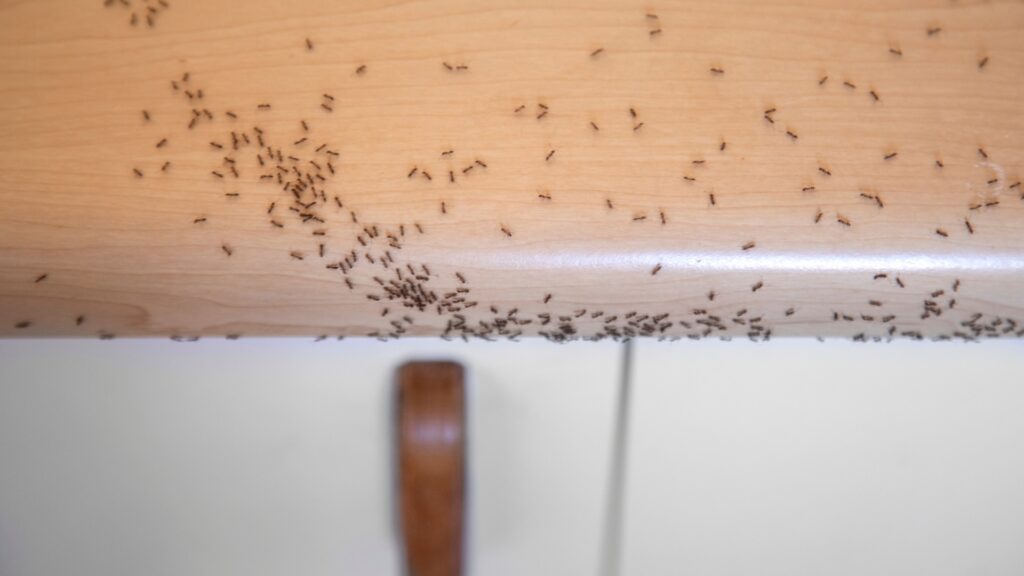
Kitchen ants are almost always after food or moisture. Check under the sink for any slow drips, wipe down the inside of cabinets, and make sure countertops are clean after cooking — even crumbs behind the toaster are enough. Place Terro bait stations under the sink, behind the refrigerator, and along the back of the counter. Avoid spraying on food prep surfaces.
Ants in the Bathroom
Bathroom ants are usually after moisture. A dripping faucet, condensation around the toilet base, or a slow leak under the vanity is all it takes. Fix any drips first, then place bait stations under the sink and treat the gap around the toilet base with silicone caulk. Dry the tub and sink after use — standing water is an attractant.
Carpenter Ants
Carpenter ants are larger than common house ants and don’t eat wood — they excavate it to build nests. If you’re seeing large black ants (usually 1/4 to 1/2 inch), especially near window frames, door frames, or anywhere with past moisture damage, carpenter ants may be nesting in wood inside your walls. Bait stations help but may not be enough for a large carpenter ant infestation — that’s when calling a pest control professional makes sense. Source: University of Minnesota Extension — Carpenter Ants
What Doesn’t Work (Stop Wasting Time on These)
The most common mistake people make when figuring out how to get rid of ants in your house is reaching for the spray first. A few things people reach for first that don’t solve the problem: spraying the visible trail without using bait (kills scouts, leaves the colony intact), vinegar (disrupts scent trails temporarily but doesn’t kill or repel long-term), and cinnamon or baby powder at entry points (minor deterrents at best, won’t stop a determined colony). These aren’t harmful to try but don’t mistake temporary trail disruption for solving the problem.
When to Call a Professional
If you’ve used bait consistently for two weeks, sealed every entry point you can find, treated the perimeter, and still have active ant trails inside, the colony is likely in a location you can’t reach — inside a wall cavity, under a slab, or in structural wood. At that point a pest control professional with access to non-repellent insecticides and colony-specific baits will be more effective than anything available over the counter.
Frequently Asked Questions About Getting Rid of Ants in Your House
Why do I suddenly have so many ants in my house?
Sudden ant surges usually have one of three triggers: weather, season,
or a newly discovered food or water source. Rain drives ants inside
looking for dry ground — expect more indoor ant activity in the day
or two after heavy rain. Hot, dry weather drives them inside looking
for moisture. Seasonally, ant activity peaks in spring when colonies
are expanding and sending out new scouts, and again in late summer when
foraging ramps up before winter.
Inside your house, even a small crumb
source or a slow drip under a sink is enough to attract and sustain
a trail once a scout finds it. Eliminating the food or water source
while placing bait on the trail addresses both the immediate problem
and the underlying attraction.
How long does it take for ant bait to work?
Terro liquid bait typically shows visible results in 3 to 5 days —
you’ll notice the ant trail slowing or stopping as the colony is
affected. Complete elimination of the colony can take up to 2 weeks
depending on colony size and how many bait stations workers are
carrying from.
The most common mistake is removing the bait stations
too early when ant activity appears to have stopped — leave them in
place for a full two weeks to ensure the queen and remaining workers
have been reached. If activity hasn’t dropped at all after 5 days,
move the bait stations closer to where you’re seeing the most ant
traffic.
Is Terro ant bait safe around pets and children?
The active ingredient in Terro is borax at a low concentration (5.4%)
mixed with a sugar solution. It’s not intended for consumption by
humans or pets, but the bait stations are enclosed and the amount of
borax in each station is small — accidental exposure from a child or
pet licking a station is generally not a medical emergency, but contact
Poison Control (1-800-222-1222) if you’re concerned.
For households
with dogs or toddlers who might chew on the stations, place them
inside cabinet hinges, behind appliances, or in other locations that
are on ant trails but inaccessible to children and pets.
What is the fastest way to get rid of ants in the house?
For immediate knockdown of visible ants, spray the trail with an ant
spray — this kills the ants you can see and temporarily disrupts the
pheromone trail. This is not a permanent fix but it buys time while
your bait strategy gets to work.
For the fastest path to actual
elimination, place Terro bait stations on active trails immediately,
don’t disturb the ants near the bait, and give it 3 to 5 days. Doing
both simultaneously — spray visible ants away from bait stations,
place bait on the main trail — is the fastest combined approach.
The bait will have the colony significantly reduced within a week in
most cases.
Why do ants keep coming back after I treat them?
Recurring ants after treatment almost always mean one of three things:
the colony wasn’t eliminated (only the workers were killed, not the
queen), new colonies are finding the same entry points, or the food
or moisture source that attracted them hasn’t been removed.
If bait
didn’t work, try a different product — some ant species are less
responsive to borax-based bait. Seal every entry point you can find
after treatment, treat the exterior perimeter with a barrier spray,
and address any moisture issues (dripping faucets, leaky pipes, damp
wood) that may be attracting them. Recurring ants in the same location
after thorough treatment may indicate a colony nesting inside the walls —
at that point a professional with non-repellent insecticide is the
most reliable solution.