
Yardtally is reader-supported. Some links on this page are affiliate links. As an Amazon Associate, Yardtally earns from qualifying purchases. See our Affiliate Disclosure.
Knowing how to rake leaves without killing grass sounds like a low-stakes problem — it’s just raking, right? But I’ve watched sections of my own lawn come out of fall looking worse than they went in, and most of the damage wasn’t from the leaves themselves. It was from raking at the wrong time, using the wrong tool, or leaving wet leaves matted against the grass for too long. Once I understood what actually damages turf during fall cleanup, the whole job got simpler and the lawn looked better in spring. Here’s what changed.
What’s in This Guide
- What Actually Damages Grass During Leaf Cleanup
- The Right Tool Makes a Bigger Difference Than Technique
- How to Rake Leaves Without Killing Grass: Step by Step
- Should You Rake or Mulch-Mow? (The Real Answer)
- What to Do With the Leaves Once You’ve Raked Them
- When to Stop Raking for the Season
- Frequently Asked Questions
What Actually Damages Grass During Leaf Cleanup
Before getting into technique, it helps to understand what you’re actually protecting the grass from — because the leaves themselves aren’t always the biggest problem.
Wet, matted leaves
A single layer of dry leaves lets light and air through. A thick, matted layer of wet leaves does not — it creates a dark, moist environment that blocks photosynthesis, encourages fungal disease, and can smother grass crowns within a week or two during warm fall weather. The longer wet leaves sit, the more damage they do. This is why timing matters more than technique.
The wrong rake
A stiff metal garden rake or a rigid tine rake used with too much pressure digs into the soil and tears up the grass crowns rather than just gathering leaves. This is especially damaging in fall when grass is beginning to slow its growth and isn’t recovering as quickly as it would in spring. A flexible-tine leaf rake is the right tool — the tines flex on contact with the soil rather than digging in.
Over-raking bare or thin areas
If you overseeded in fall and the new grass is just establishing, aggressive raking can pull up seedlings that haven’t anchored yet. The same goes for any thin or bare patches — raking directly over them with downward pressure can tear out what little root system is holding things together. These areas need a lighter touch or a pass with the rake held slightly above the surface.
Raking in the wrong direction
Raking against the grain of the grass — pulling leaves toward you while the rake tines catch and drag grass blades — causes more turf damage than raking with or across the grain. It’s a small thing that adds up over a full afternoon of raking.
The Right Tool Makes a Bigger Difference Than Technique
If you’re using the wrong rake, the best technique in the world won’t fully protect your lawn. There are two tools worth knowing about:
Flexible-tine leaf rake (best for most lawns)
A wide, flexible-tine leaf rake — 24 to 30 inches across — moves a lot of material quickly without digging into the soil. The wider the head, the fewer passes you need. Look for a rake with tines made of polypropylene or spring steel that flex rather than rigid tines that stay stiff under pressure. A comfortable grip and adjustable handle length matter more than you’d think over a two-hour job — you want the handle long enough to rake with a straight back.
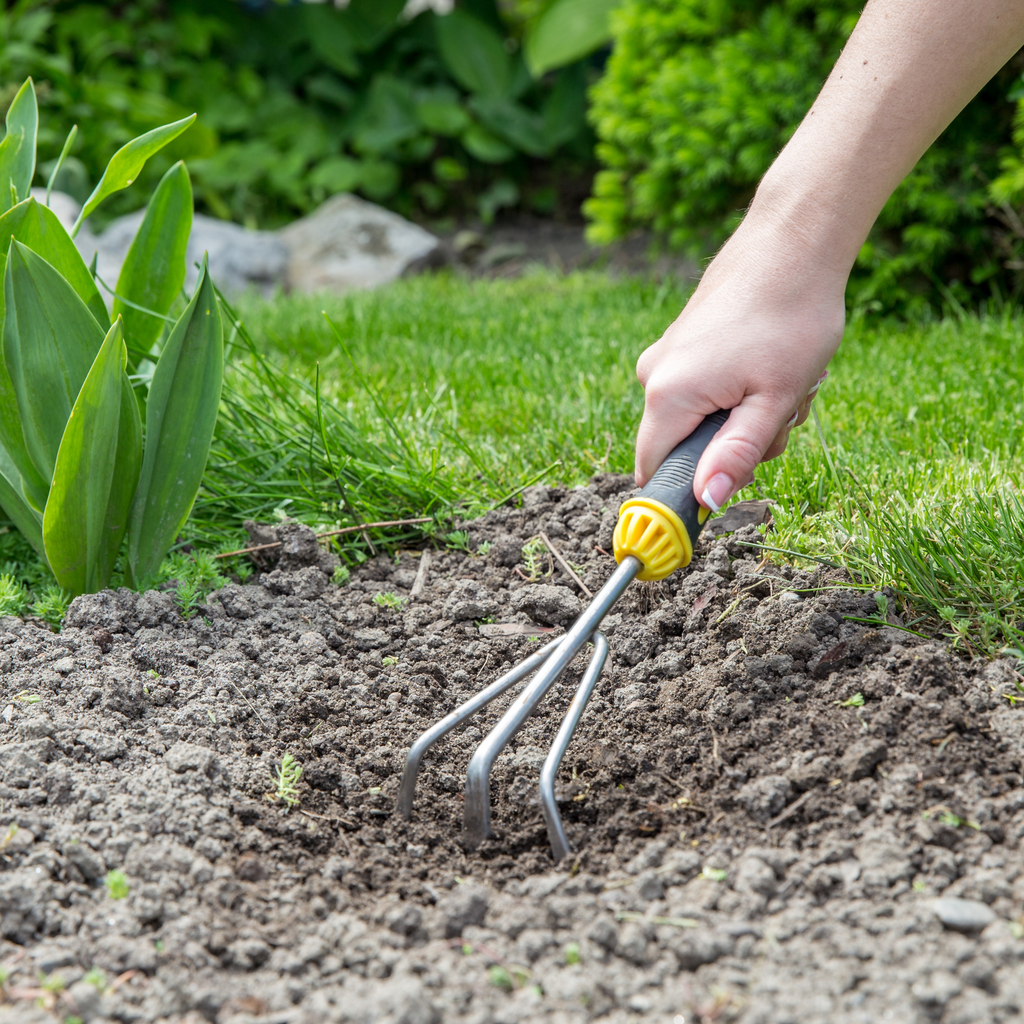
The hand rake is the right tool for getting into tight spaces around beds, trees, and along fence lines where the full-size rake can’t reach without damaging plants.
Dethatching rake (only when needed — not for routine leaf cleanup)
A dethatching rake has sharp curved tines designed to dig into the thatch layer. It is not a leaf rake and should not be used for leaf cleanup — it will tear up your lawn. If you have a dethatching rake in the garage, leave it there for leaf cleanup and use it only for its intended purpose in late summer or early fall before overseeding.
How to Rake Leaves Without Killing Grass: Step by Step
Step 1 — Check the conditions before you start
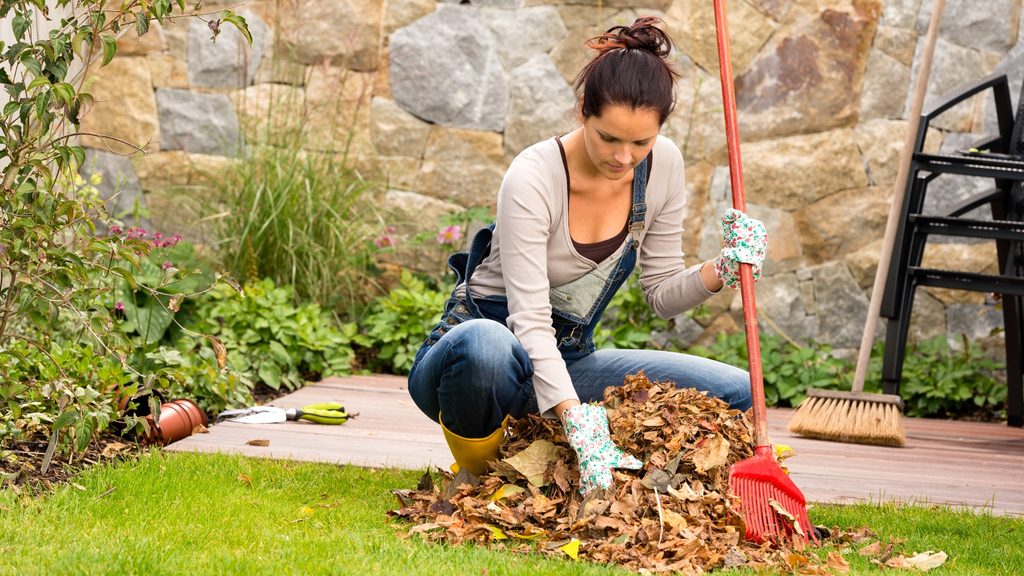
Don’t rake wet leaves if you can avoid it. Wet leaves are heavier, stick to the grass, and tear more easily — you end up dragging them across the lawn instead of lifting them cleanly. Wait for a dry day, or at minimum let the leaves dry out for a few hours after morning dew before you start. Working with dry leaves is faster, easier on your back, and far less damaging to the turf.
Step 2 — Work with the wind, not against it
Position yourself so the wind is at your back and you’re raking leaves in the direction the wind is already moving them. Fighting the wind means raking the same area twice as leaves blow back over where you’ve just cleared. On a calm day, work in a consistent direction — end to end in rows, or in a grid pattern — rather than raking from all directions, which just redistributes the pile.
Step 3 — Use the grid method
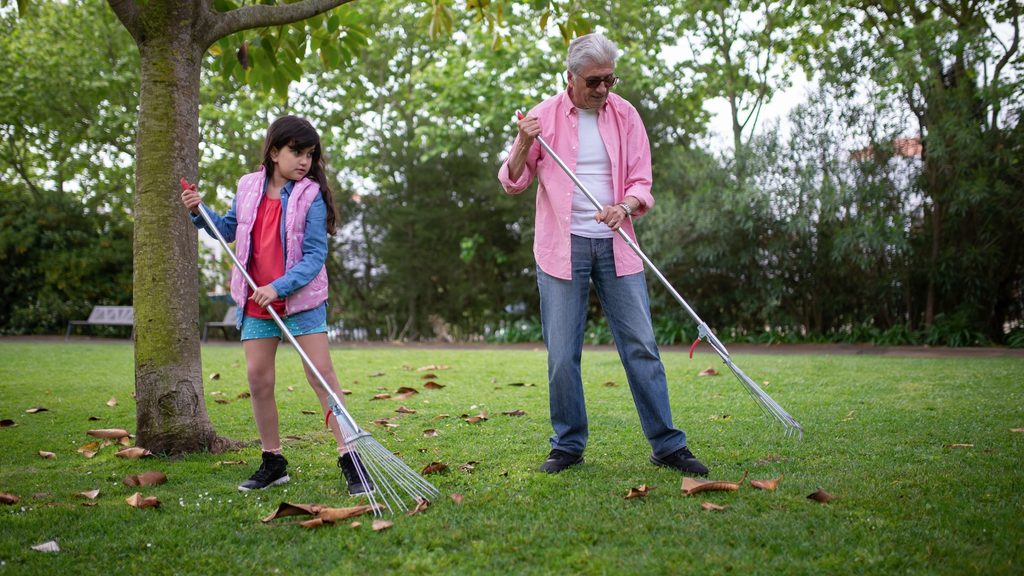
Divide the yard into manageable sections and work through them in order. Rake each section into a windrow — a long, loose pile — then move to the next section and add to it. This keeps you from re-raking areas you’ve already cleared and gives you a clear sense of progress. Once you have a windrow, rake it onto a tarp for hauling rather than trying to bag leaves where they sit. Source: University of Wisconsin Extension — Leave the Leaves
Step 4 — Lighter pressure over thin areas and new seedlings
When you reach a thin patch or a recently overseeded area, raise the rake slightly and use a lighter touch — you’re skimming the surface rather than dragging through it. New grass seedlings that went in during September won’t be fully anchored until they’ve been mowed two or three times. Aggressive raking over new seedlings pulls them out before they’ve had a chance to establish. If a section was recently seeded, consider skipping it entirely and letting those leaves break down naturally — a light leaf cover won’t hurt new seedlings the way aggressive raking will.
Step 5 — Use the tarp method for hauling
Rake leaves onto a large tarp rather than bagging them in place. Once the tarp is full, gather the corners and drag the whole load to the curb, compost pile, or wherever they’re going. This is faster than repeated bagging and causes less back strain than bending over a dozen times per pile. A 10 x 12 tarp holds a significant amount of leaves and is easy to drag across a dry lawn.
Should You Rake or Mulch-Mow? (The Real Answer)
This comes up every fall and the honest answer is: it depends on how many leaves you have.
A thin layer of dry leaves — one where you can still see the grass beneath — can be mulch-mowed instead of raked. Run the mower over them with the blade at its highest setting and the bag removed. The mower chops the leaves into small fragments that filter down to the soil surface, decompose over winter, and add organic matter back to the lawn. When done correctly, mulch-mowing a light leaf layer is actually better for your lawn than raking. Source: Purdue Turfgrass Science — Keep Mowing to Mulch Those Tree Leaves
Where mulch-mowing fails: a heavy, thick layer of leaves — where you can barely see the grass — will choke the lawn even after being chopped. The shredded material sits too thick on the surface, still blocks light and air, and breaks down too slowly to clear before winter sets in. In Indiana, where oaks and maples can drop heavily in a short window, most lawns need actual raking during peak drop, with mulch-mowing used for the lighter early and late drops.
The rule I use: if I can see the grass through the leaves, I mulch-mow. If I can’t, I rake first, then mulch-mow the stragglers.
What to Do With the Leaves Once You’ve Raked Them
Don’t just bag them and send them to the curb if you have a yard to care for — raked leaves have value.
Compost them
Leaves are an excellent carbon source for a compost pile. They break down over winter and the resulting compost can go back into garden beds or on the lawn as topdressing in spring. A compost bin outdoor tumbler speeds up the process and keeps the pile contained.
Use them as mulch
Shredded leaves make excellent mulch for garden beds — they insulate plant roots over winter, suppress weeds, and break down to improve soil structure. Run them through the mower to shred before applying, or use them whole as a 3 to 4 inch layer in beds where appearance is less critical.
Leave a thin layer on garden beds
A thin layer of whole leaves on perennial beds provides insulation for plant crowns over winter. This is especially useful in Indiana where freeze-thaw cycles can heave roots out of the ground. The leaves break down by spring and can be worked into the soil or removed if they haven’t decomposed.
When to Stop Raking for the Season
Rake until the leaves stop falling — which in Indiana is typically late October to mid-November depending on what trees you have. Oaks are the last to drop and often hold leaves until after the first frost. Do a final cleanup pass before Thanksgiving and you’ll go into winter with a clean surface and good air circulation at the soil level, which is the best condition for turf going into dormancy.
If you’re unsure when to make your final watering pass before the lawn goes dormant for winter, our guide on when to stop watering your lawn in fall covers the cutoff timing by region and grass type.
Frequently Asked Questions About How to Rake Leaves Without Killing Grass
Is it bad to leave leaves on the lawn over winter?
A thin layer of shredded leaves is fine — mulch-mowing breaks them into small fragments that filter down and decompose. Whole leaves left in a thick layer are a different story. They mat down under moisture and snow, block light and air from reaching the grass, and create conditions for fungal disease including snow mold. The threshold is simple: if you can see the grass through the leaves, mulch-mow them. If you can’t see the grass, rake first.
What type of rake is best for leaves without damaging grass?
A wide flexible-tine leaf rake — 24 to 30 inches across — is the right tool. Look for polypropylene or spring steel tines that flex on contact with the soil rather than digging in. Avoid stiff metal garden rakes and dethatching rakes for leaf cleanup — both are designed to contact the soil aggressively, which tears up grass crowns and is especially damaging in fall when grass is growing slowly and recovering less quickly than it would in spring.
Can you rake a lawn that was just overseeded?
Use a very light touch, or skip those areas entirely. New grass seedlings that went in during September won’t be fully anchored until they’ve been mowed two or three times. Aggressive raking over new seedlings pulls them out before they’ve established. A light leaf cover over newly seeded areas won’t hurt — the bigger risk is the raking, not the leaves.
Should I rake leaves before or after mowing?
Rake heavy accumulations first, then mow. For light leaf coverage, mow first with the bag removed to chop and scatter the leaves, then rake up whatever the mower didn’t fully mulch. For heavy coverage where you can barely see the grass, raking first gives the mower a manageable amount to work with — trying to mulch-mow a heavy leaf layer in one pass bogs down the mower and still leaves too much material on the surface.
When is the best time of day to rake leaves?
Mid-morning after the dew has dried is ideal. Wet leaves from morning dew are heavier, stick to the grass, and drag across the turf rather than lifting cleanly. Dry leaves rake faster, cause less turf damage, and are significantly easier on your back. Avoid raking right after rain for the same reasons — wait at least a few hours for the surface to dry out.