
Yardtally is reader-supported. Some links on this page are affiliate links. As an Amazon Associate, Yardtally earns from qualifying purchases. See our Affiliate Disclosure.
Wondering what’s wrong with my lawn? You walk outside one morning and something is clearly off — brown patches, weird discoloration, a strange powdery coating on the blades. The grass was fine last week. Now it isn’t. Before you reach for any product or start ripping things up, the most important step is figuring out what you’re actually looking at. Most lawn problems have very specific visual signatures, and the fix depends entirely on correctly identifying the cause. I looked into this before dealing with issues in my own lawn, and the pattern recognition is simpler than it sounds once you know what to look for.
What’s in This Guide
Start Here: Is It Disease, Pests, or Something Else?
Brown Patch
Dollar Spot
Red Thread
Lawn Rust
Snow Mold
Fairy Ring
Quick Diagnosis Cheat Sheet
When to Use Fungicide — and When Not To
How to Prevent Lawn Disease in the First Place
Frequently Asked Questions
Start Here: Is It Disease, Pests, or Something Else?
Not every lawn problem is a disease. Before assuming fungus, rule out the basics. Check your watering schedule — both overwatering and underwatering can cause brown patches that look like disease. Check for grub damage by pulling back a section of damaged turf: if the grass lifts like loose carpet and you see white C-shaped larvae in the soil, that’s grubs, not fungus. Check for compaction by pushing a screwdriver into the soil — if it won’t penetrate more than a couple of inches, compaction may be starving the roots.
If the basics check out and you’re still seeing unusual patches, discoloration, or growth on the grass blades themselves, you’re likely dealing with a fungal lawn disease. Here’s how to identify the most common ones.
Brown Patch
What It Looks Like
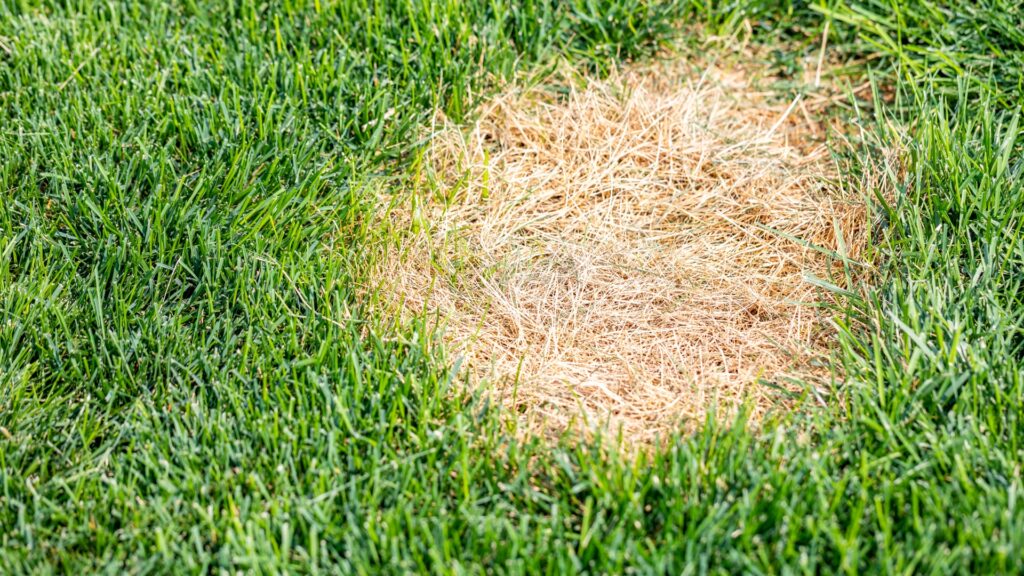
Circular or irregular brown patches ranging from a few inches to several feet across. The affected grass looks dead or dried out. A key identifying feature during active infection is a darker “smoke ring” border around the outside edge of the patch — a ring of water-soaked, grayish grass that appears in the early morning before it dries out. The center of the patch may actually begin to recover while the outer ring continues to spread.
When It Happens
Brown patch is a warm-season disease. It thrives when daytime temperatures exceed 80°F and nighttime temps stay above 65°F with high humidity. It’s most common in mid to late summer and hits hard after periods of rain followed by heat.
Grasses Most Affected
Tall fescue, perennial ryegrass, Kentucky bluegrass, and St. Augustinegrass.
The Fix
Reduce watering frequency and water early in the morning so grass dries before evening. Improve air circulation if possible. For active infections, apply a lawn fungicide labeled for brown patch — it works best at the first sign of trouble, before the patch expands. Avoid excess nitrogen fertilizer during hot weather — it promotes the lush, soft growth that brown patch loves.
Dollar Spot
What It Looks Like
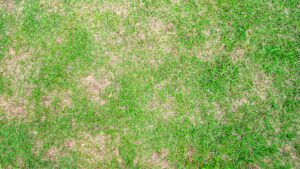
Small, roughly circular bleached or straw-colored spots about the size of a silver dollar — typically 1 to 4 inches in diameter. Individual grass blades within the spots have distinctive tan or straw-colored lesions with reddish-brown borders. In the early morning with dew still on the grass, you may see white, cobweb-like fungal threads stretching across the soil and blades between spots. Multiple spots often merge into larger irregular patches as the disease progresses.
When It Happens
Dollar spot is most active when daytime temps are warm (60–85°F), nights are cool and humid, and there’s heavy dew formation. It’s strongly associated with low-nitrogen lawns and drought stress — underfed, underwatered grass is prime territory.
Grasses Most Affected
Bermudagrass, bentgrass, Kentucky bluegrass, perennial ryegrass, and zoysiagrass.
The Fix
Fertilize — nitrogen deficiency is the most common underlying cause. Water deeply and less frequently rather than shallow daily watering. Raise mowing height slightly. For active infections, a fungicide labeled for dollar spot will knock it back, but improving fertility is the real long-term fix.
Red Thread
What It Looks Like
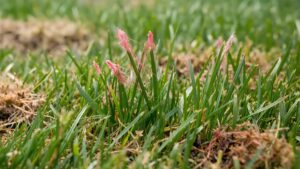
Patches of pale pink or reddish grass, typically 4 to 8 inches in diameter. The defining feature is visible: thin, bright red or pink thread-like strands extending from the tips of the grass blades, sometimes stretching between blades. From a distance the lawn looks pinkish or tan. Up close, those red threads are unmistakable — no other common lawn disease looks quite like this.
When It Happens
Red thread thrives in cool, wet conditions — spring and fall are peak seasons. It’s strongly associated with nitrogen-deficient lawns and is common in the Pacific Northwest and anywhere with cool, humid springs. Source: Purdue University Extension — Lawn Disease Management
Grasses Most Affected
Kentucky bluegrass, perennial ryegrass, tall fescue, and zoysiagrass.
The Fix
Like dollar spot, red thread is heavily linked to low nitrogen. A balanced fertilizer application often resolves it without fungicide. The disease rarely kills grass permanently — it damages the blades but the crowns and roots usually survive. Fungicide is an option for severe cases but fixing fertility first is the smarter move.
Lawn Rust
What It Looks Like
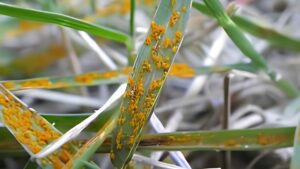
Orange, yellow, or rust-colored powder coating individual grass blades rather than forming dead patches. If you rub a blade between your fingers, you’ll get an orange or yellow residue on your skin — that’s the fungal spore mass. From a distance, affected areas look yellowish-orange or dull. You may also notice the orange powder on your shoes or mower after walking through the lawn.
When It Happens
Rust is most common in late summer and early fall during periods of slow grass growth — warm days, cool nights, moderate moisture. Shady areas and nitrogen-deficient lawns are most vulnerable. It’s worse when grass is growing slowly and can’t outpace the infection.
Grasses Most Affected
Perennial ryegrass, Kentucky bluegrass, tall fescue, and zoysiagrass.
The Fix
Fertilize to encourage faster growth — a lawn growing vigorously can outgrow a rust infection naturally. Improve sunlight if possible by trimming overhanging branches. Mow regularly and remove clippings to reduce spore spread. Fungicide is rarely necessary for rust unless the infection is severe.
Snow Mold
What It Looks Like
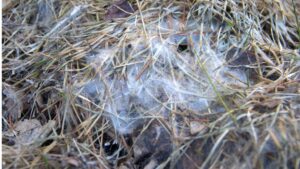
Circular patches of matted, crusty, tan or grayish-white grass that appear in early spring as snow melts. Two types: gray snow mold produces grayish-white patches and stays confined to the leaf tissue; pink snow mold has a more salmon or pinkish edge and can damage crowns and roots, making it more serious. Both appear as roughly circular matted areas, usually 3 to 12 inches across, that can merge into larger irregular shapes.
When It Happens
Snow mold develops under snow cover during winter. It becomes visible in early spring when the snow melts, which is also when most homeowners first notice it.
Grasses Most Affected
Kentucky bluegrass, tall fescue, perennial ryegrass, and bentgrass. Common across the northern United States.
The Fix
Light raking to break up matted areas helps the grass dry out and recover. Most gray snow mold damage is cosmetic — the grass recovers on its own as temperatures warm. Pink snow mold is more serious and may require fungicide. Prevent it next season by avoiding late-fall nitrogen applications, mowing at normal height until the grass stops growing, and not letting leaves pile up before snow falls.
Fairy Ring
What It Looks Like
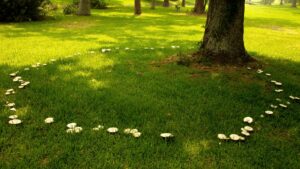
A circular or arc-shaped ring of dark green grass, often with a ring of dead or thin grass just inside or outside it. Sometimes mushrooms appear along the ring, particularly after rain. The rings grow outward slowly over time and can reach several feet in diameter in established lawns. The dark green ring is caused by nitrogen released as the fungus breaks down organic matter in the soil.
When It Happens
Fairy ring can appear any time the soil has buried organic matter — old tree stumps, roots, or construction debris — that the fungus feeds on. It’s more visible in spring and fall when conditions are moist.
The Fix
Fairy ring is one of the more stubborn lawn problems because the fungus lives in the soil, not just on the surface. Fungicides don’t penetrate deeply enough to eliminate it. Core aeration to break up the hydrophobic layer the fungus creates, combined with deep watering to re-wet the dry soil inside the ring, is the most practical approach for homeowners. The dark green ring tends to fade as the underlying food source is depleted over time.
Quick Diagnosis Cheat Sheet
Use this to narrow it down fast:
— Large circular brown patches, smoke ring border, summer heat → Brown patch
— Silver dollar-sized straw spots, cobweb threads in morning dew, underfed lawn → Dollar spot
— Pink or red thread-like strands on blade tips, cool wet weather → Red thread
— Orange powder on blades, residue on fingers, late summer → Lawn rust
— Matted tan or pink patches in early spring after snow melts → Snow mold
— Ring of dark green grass, possibly with mushrooms, growing outward → Fairy ring
When to Use Fungicide — and When Not To
Fungicide is the right tool for active, spreading infections of brown patch, dollar spot, and pink snow mold. It’s rarely the right first move for red thread, rust, or gray snow mold — those three respond better to correcting the underlying cause (usually nitrogen deficiency or poor growing conditions) than to chemical treatment.
A systemic fungicide applied at the first sign of disease works far better than one applied after significant damage has occurred. Once grass is dead it won’t recover from fungicide — you’re protecting the surrounding healthy grass, not reviving what’s already gone. For preventive applications in lawns with a history of brown patch, timing the first application just before conditions become favorable (warm nights, high humidity) is more effective than reactive treatment.
How to Prevent Lawn Disease in the First Place
Most fungal lawn diseases share the same set of triggers: excess moisture, low nitrogen, poor air circulation, and stressed grass. Address those and you reduce disease pressure significantly. Water deeply but infrequently, and always in the morning so the grass dries before nightfall. Maintain consistent fertility — underfed lawns are far more vulnerable than well-fed ones. Mow at the right height for your grass type and never remove more than a third of the blade at once. Dethatch when thatch exceeds half an inch, and aerate annually if your soil compacts easily.
Frequently Asked Questions About What’s Wrong With My Lawn
How do I know if my lawn has a disease or just needs water?
Pull back a section of the damaged turf and look at the roots and soil. If the grass lifts easily like loose carpet and you see white grubs in the soil, that’s a pest problem. If the soil is bone dry two inches down, drought stress is the likely cause. If the roots look intact, the soil has moisture, and you’re seeing discoloration patterns, powder on the blades, or unusual borders around the damage, you’re dealing with a fungal disease. The visual signature on the grass blades — threads, powder, smoke rings — is the fastest diagnostic.
What causes brown circular patches in a lawn?
The most common cause is brown patch disease, a fungal infection that thrives when daytime temps exceed 80°F and nighttime temps stay above 65°F with high humidity. The telltale sign is a darker smoke ring border around the outer edge of the patch that appears in early morning before it dries. Circular patches can also come from grub damage, dog urine, or a buried object decomposing underground — check the roots before assuming disease.
Can lawn disease spread to the rest of the yard?
Yes — most fungal diseases spread through spores carried by wind, water, foot traffic, and mowing equipment. Mowing through an active brown patch infection and then mowing healthy areas spreads spores efficiently. During active infections, clean your mower deck after each use, avoid walking through affected areas unnecessarily, and water only in the morning so grass dries before evening. Applying fungicide at the first sign of disease protects the surrounding healthy grass before the infection spreads.
Is lawn fungicide safe to use around pets and children?
Most systemic fungicides are considered low-toxicity once dry — the typical guidance is to keep pets and children off the treated area until it has dried completely, usually two to four hours. Always read the label of the specific product you’re using for re-entry intervals and any additional precautions. Spot treatment of active disease is lower-risk than blanket preventive applications across the entire lawn.
What is the orange powder on my grass blades?
That’s lawn rust — a fungal disease that coats grass blades with orange or yellow spore masses. If you rub a blade between your fingers and get an orange residue, rust is confirmed. It’s most common in late summer and early fall on slow-growing, nitrogen-deficient lawns. The fix is usually fertilizing to push faster growth — a vigorously growing lawn can outpace a rust infection on its own without fungicide in most cases.