
Yardtally is reader-supported. Some links on this page are affiliate links. As an Amazon Associate, Yardtally earns from qualifying purchases. See our Affiliate Disclosure.
Knowing when to prune trees matters as much as knowing how. Most people grab the saw on the first warm Saturday in April, and for most trees, that’s a little late. For an oak, it can be a death sentence.
This guide covers the best time to prune most trees, why oaks are different, a tree-by-tree pruning calendar, how to make a clean cut, and the mistakes to avoid.
What’s in This Guide
The Short Answer: Late Winter
If you’re wondering when to prune trees in Indiana, the answer for most of them is late winter, while the tree is dormant. Illinois Extension calls winter the most common time to prune, and says it’s best when trees and shrubs are dormant. Source: University of Illinois Extension — Late Winter Through Early Spring Is a Good Time to Prune
Pruning a dormant tree has real advantages:
- With the leaves off, you can see every branch and spot the ones that cross, rub, or grow in the wrong direction.
- Most insects and disease organisms aren’t active, so fresh cuts are less likely to get infected.
- The tree is ready to grow new wood over the cuts as soon as spring arrives.
Illinois Extension also says to remove no more than 25% of a tree’s leaves in a single season. If a tree needs more than that, spread the work over a few years.
Why Oaks Can’t Wait Until Spring
This is the most important part of knowing when to prune trees in Indiana. Oak wilt is a fungal disease that kills oak trees, and Purdue says it’s present in Indiana. Source: Purdue Landscape Report — Oak Wilt in Indiana
Here’s how pruning spreads it. Illinois Extension explains that fresh cuts in spring and early summer produce sap that attracts sap-feeding beetles, and those beetles may have just visited a diseased tree. The fungus gets into the tree through the fresh wound. It can also spread underground through roots that have grown together between nearby oaks. Source: University of Illinois Extension — Don’t Prune Oaks Now
Purdue’s oak wilt rules for Indiana:
- Don’t prune, wound, or remove oaks in known oak wilt areas from March through August.
- The safer window is November through February, when the fungus and the beetles aren’t active.
The red oak group, the ones with pointed leaf tips, is hit hardest. Purdue says red oaks infected early in summer usually wilt fast and may die within about a year. White oaks, with rounded leaf lobes, decline more slowly over many years.
If an oak gets damaged in spring or summer
Storms don’t follow the calendar, and that’s how a lot of oak wilt infections start. If a branch breaks or an oak has to be pruned during the risk period, Iowa State University Extension says to paint the pruning cuts with latex house paint immediately, within 15 minutes. That seals the wound before beetles can find it. Source: Iowa State University Extension — Pruning Oak Trees to Avoid Oak Wilt
This is the only time you should paint a cut. Iowa State says that on other trees, and on oaks pruned in winter, wound paint doesn’t prevent decay and may get in the way of the tree’s natural healing.
A Tree-by-Tree Pruning Calendar
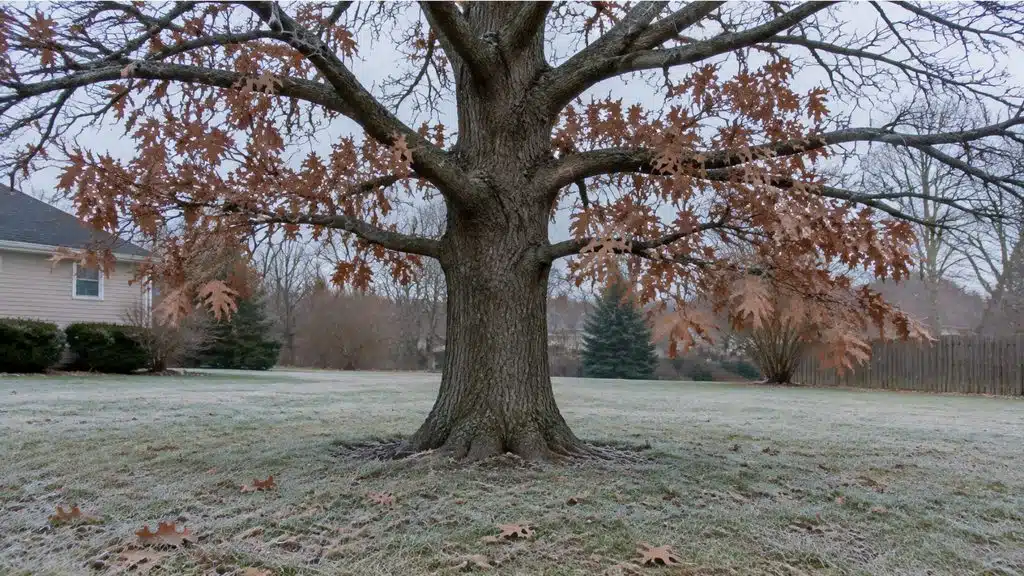
Here’s when to prune trees you’re likely to have in your yard, based on Illinois Extension and Purdue:
- Oaks: November through February only. Never March through August.
- Elms: winter, not spring. Illinois Extension says to avoid pruning elms and oaks in spring, since it can spread disease.
- Maples, birches, walnuts, and other “bleeders”: Illinois Extension lists birch, maple, elm, and walnut as trees that drip sap from fresh cuts in late winter and spring, and suggests pruning them from late fall into early winter. Some sap dripping in spring looks alarming but isn’t a sign you hurt the tree.
- Crabapples, magnolias, redbuds, and other spring-flowering trees: right after the flowers fade. Illinois Extension notes these bloom on old wood, so pruning in winter cuts off this year’s flowers.
- Most other shade trees: late winter, while dormant.
- Dead, broken, or hanging branches: any time of year, as soon as you see them. Just follow the oak rule if it’s an oak.
Got a young tree you just planted? Prune only broken or dead branches for the first couple of years and let it settle in. Our guide to winter tree care covers what young trees need this time of year.
How to Make a Good Pruning Cut
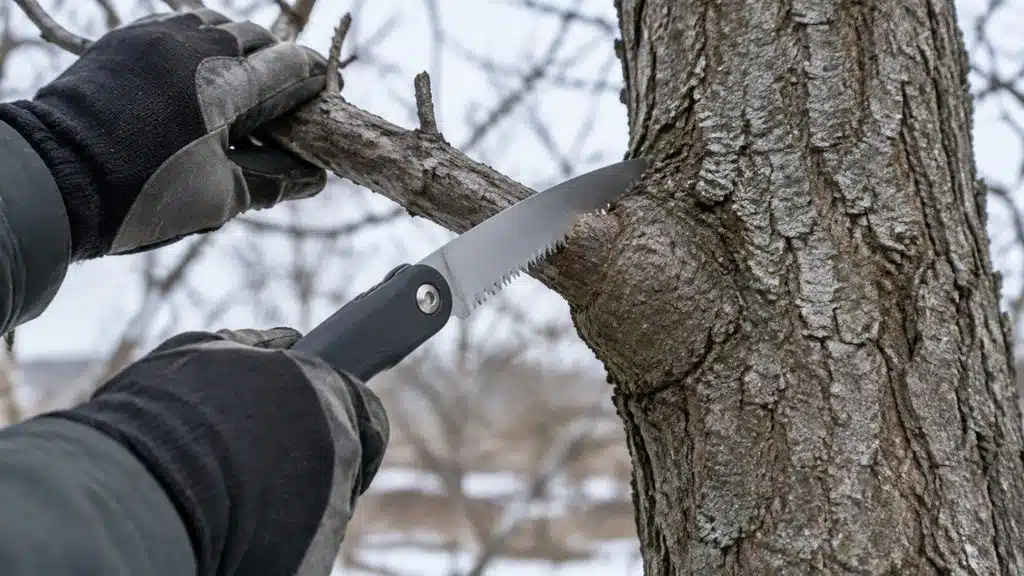
Knowing when to prune trees is half the job. Where you cut matters just as much. Iowa State says to cut just beyond the branch collar, the swollen ring where a branch meets the trunk, and the branch bark ridge. That collar is what grows over the wound.
For branches more than 1½ inches thick, Iowa State recommends the three-cut method so the weight of the branch doesn’t tear the bark down the trunk:
- About a foot out from the trunk, cut partway up from the underside of the branch.
- A little farther out, cut down from the top until the branch falls. The first cut stops the bark from peeling.
- Make the final cut just outside the branch collar to remove the stub.
For small branches, sharp bypass pruners make a clean cut without crushing the wood. For bigger limbs, a folding saw handles most of what a homeowner should be cutting. Illinois Extension also recommends cleaning your tools between cuts with rubbing alcohol or a disinfectant spray so you don’t carry disease from one tree to the next. Wear work gloves and safety goggles, since sawdust and snapping twigs go everywhere.
Pruning Mistakes to Avoid
Illinois Extension’s list of things never to do:
- Never top a tree. Cutting the main trunk or big limbs back to stubs weakens the tree and causes a mess of weak new shoots.
- Never leave a stub. Stubs can’t heal over and invite rot.
- Never make a flush cut. Cutting right against the trunk removes the branch collar, which is the part that seals the wound.
And one more: if a branch is big, high, or anywhere near a power line, hire a certified arborist. A falling limb doesn’t care how careful you are.
Got an ash tree with dead branches at the top? It may be more than a pruning job. Here’s how to tell if emerald ash borer is the problem, and whether to treat or remove the tree.
Frequently Asked Questions
What month is best to prune trees?
For most trees in Indiana, late winter, from about January through early March, while the tree is dormant. Oaks are the exception. Prune them only from November through February.
When should you not prune oak trees?
Purdue says not to prune, wound, or remove oaks in oak wilt areas from March through August. Fresh cuts during that time attract the beetles that spread oak wilt.
Is it bad to prune trees in the fall?
Early fall isn’t ideal for most trees, since cuts don’t seal as well heading into winter. Late fall and winter, once the tree is dormant, is fine. Oaks can be pruned starting in November.
Can I prune a maple tree in winter?
Yes, but it may drip sap from the cuts in late winter and early spring. That’s normal. Illinois Extension suggests pruning maples, birches, and other bleeders from late fall into early winter if the dripping bothers you.
Should I put wound paint on pruning cuts?
No, except on oaks pruned or damaged between March and August. Iowa State says wound paint doesn’t prevent decay and may interfere with the tree’s natural healing. On those oaks, paint the cut with latex house paint within 15 minutes.