
Yardtally is reader-supported. Some links on this page are affiliate links. As an Amazon Associate, Yardtally earns from qualifying purchases. See our Affiliate Disclosure.
If you’re trying to figure out how to get rid of dandelions, the good news is you have real options — hand-pulling, targeted herbicides, and a few lawn habits that make it much harder for them to come back. Before I tackled the dandelions in my own yard, I spent time researching what actually works versus what just delays the problem. This guide covers all of it: how to identify dandelions, the best removal methods for different situations, when to spray, and how to fill in the bare spots they leave behind so new ones can’t move in.
What’s in This Guide
- What Makes Dandelions So Hard to Kill
- How to Identify Dandelions
- When to Treat Dandelions
- How to Get Rid of Dandelions: 4 Methods That Actually Work
- How to Stop Dandelions from Coming Back
- Lawn Recovery After Dandelion Removal
- Quick Reference: Dandelion Removal by Situation
- FAQ
What Makes Dandelions So Hard to Kill
Dandelions aren’t just stubborn — they’re biologically designed to survive everything you throw at them. They’re broadleaf perennial weeds, which means they don’t just die off at the end of the season. The same plant comes back year after year, and it does so through one of the most effective survival systems in the plant world.
The real problem is underground. Dandelions grow a taproot that can reach 6 to 18 inches deep into the soil. If you pull the plant and leave even a small piece of that root, it regrows. That’s why hand-pulling feels so futile when the soil is dry or compact — the top snaps off, the root stays, and you’re back to square one in a few weeks.
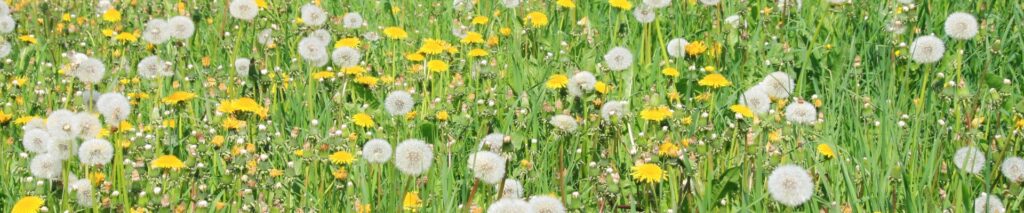
Above ground, the numbers are just as discouraging. Each dandelion flower head produces somewhere between 140 and 190 individual seeds — Source: Purdue Turfgrass Science — Dandelion — and those seeds form the iconic white puffball that gets carried by wind across your yard and your neighbors’. Once those seeds land on thin or open turf, they germinate fast and the cycle starts over.

The bottom line: killing the visible plant isn’t enough. You have to get the root — or prevent the seeds from finding bare ground to land on. That’s what the rest of this guide is built around.
How to Identify Dandelions
Before treating anything, make sure what you’re dealing with is actually a dandelion. A few common lawn weeds look similar enough to cause confusion.
Classic Dandelion (Taraxacum officinale)
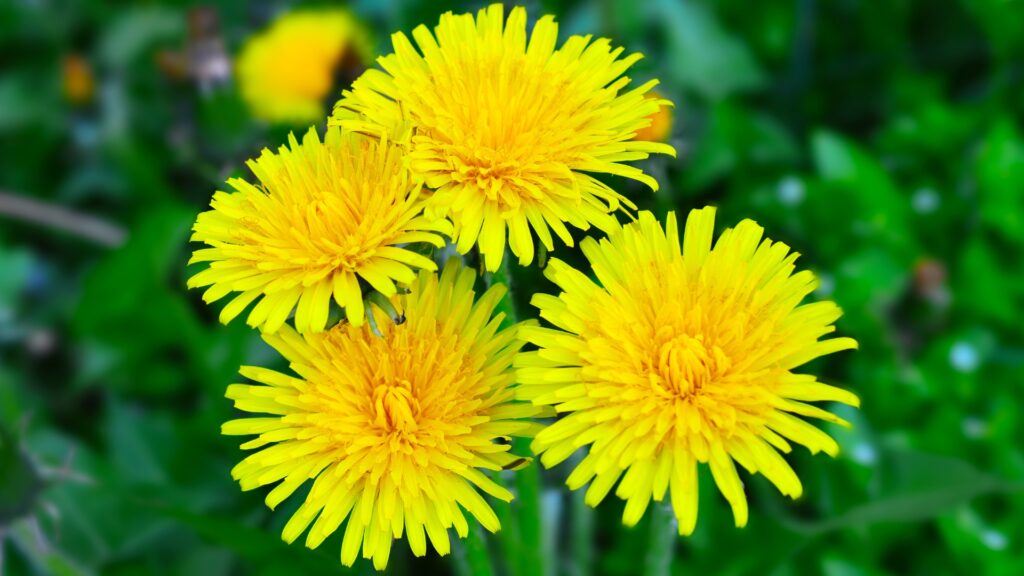
The standard dandelion is easy to spot once you know what to look for. Leaves grow in a rosette pattern flat against the ground, with deeply toothed or jagged edges — the name “dandelion” actually comes from the French dent de lion, meaning “lion’s tooth,” which describes those leaf edges well. The flower is a single bright yellow head on a hollow, leafless stem. When mature, it closes up and reopens as a white spherical seed head (the puffball). If you snap the stem, it bleeds a milky white sap.
What People Confuse It With
Cat’s ear (Hypochaeris radicata) is the most common lookalike — it has yellow flowers and a similar rosette, but the leaves are hairy and the stem branches into multiple flower heads. Chicory has blue flowers and tends to grow taller. Wild lettuce has smaller yellow flowers and grows much larger overall. If your “dandelion” has branching flower stems or hairy leaves, you may be dealing with cat’s ear, which responds to the same treatments.
When to Treat Dandelions
Timing matters more than most people realize. You can spray dandelions in spring when they’re flowering and get decent results, but the most effective treatment window is fall — September through early November. That’s because dandelions are actively moving energy down into their roots for winter storage, and herbicide applied at that point travels with those energy reserves straight to the root system for a complete kill instead of just top damage. Source: Purdue Turfgrass Science — Dandelion Control
Spring treatment — particularly when dandelions are actively flowering — is the second-best window. Avoid spraying in summer heat when dandelions are semi-dormant; the herbicide won’t translocate as effectively, and you risk stressing your grass.
For hand-pulling, the best time is right after rain or watering, when the soil is loose enough to pull the full taproot without it snapping.
How to Get Rid of Dandelions: 4 Methods That Actually Work
Hand-Pulling (Best for Small Infestations)
Hand-pulling works well if you’re dealing with a dozen or fewer dandelions and you do it right. The goal is to remove the entire taproot — not just the top of the plant. Pull at an angle rather than straight up, and work the root out of the ground by loosening the soil around it first.
A dedicated dandelion weeder tool makes this dramatically easier — these tools have a forked or notched tip designed to grip the root near the crown and lever it out intact, so you’re getting the full taproot instead of just snapping the stem off at ground level. Work when the soil is moist for the cleanest pulls.
Spot-Spraying with a Selective Broadleaf Herbicide (Best for Moderate Infestations)
For more than a handful of dandelions, a selective broadleaf herbicide is the most efficient approach. “Selective” means it targets broadleaf weeds without harming your grass — unlike non-selective herbicides like glyphosate, which kill everything they touch.
Look for products containing 2,4-D, triclopyr, or MCPP — these are the active ingredients found in most broadleaf lawn weed killers. Apply as a spot spray directly to the dandelion rosette, covering the leaves thoroughly. Don’t mow for two to three days before or after application — you want maximum leaf surface area for the herbicide to absorb, and mowing right after removes treated leaves before the product can move to the roots.
For larger yards, a concentrated liquid you mix yourself and apply with a pump sprayer is the most economical approach — you’ll cover far more ground per dollar than ready-to-use bottles.
Broadcast Spraying (Best for Heavy Infestations)
If dandelions are spread across a large portion of your lawn, spot-spraying becomes impractical. A hose-end sprayer or tank sprayer lets you cover the whole area at once. Apply a liquid broadleaf herbicide in the fall for best results — you’ll be treating dandelions you can see plus any that haven’t fully emerged yet.
Keep herbicide drift away from garden beds, ornamentals, and trees. Even small amounts of 2,4-D can damage non-target plants, especially on warm or windy days. Spray in calm conditions in the early morning.
Organic Removal (Low-Chemical Options)
If you’re avoiding herbicides — near a vegetable garden, around pets, or by personal preference — you have a few options, though none are as reliable as selective herbicide.
Boiling water kills dandelions on contact, including the root if you pour enough directly into the crown, but it will also kill surrounding grass — so this works best on isolated dandelions along a hardscape edge. Horticultural vinegar (20% acetic acid, not household vinegar) burns the top growth effectively but rarely kills the full taproot, so regrowth is common. Corn gluten meal applied in early spring acts as a pre-emergent that inhibits seed germination rather than killing existing plants, making it a prevention tool, not a cure for an existing problem.
For organic removal of individual plants, the hand-pulling approach with a good weeder tool remains your most effective chemical-free method.
How to Stop Dandelions from Coming Back
Removal is step one. Prevention is what makes the difference long-term. Dandelions are opportunistic — they move into thin, weak lawns and bare patches far more easily than they colonize thick, healthy turf.
Mow Higher
Mowing too short is one of the biggest invitations for dandelions. Keeping your grass at 3 to 4 inches shades the soil surface and makes it much harder for dandelion seeds to germinate and establish. Scalping your lawn in spring is essentially rolling out the welcome mat for weeds.
Fertilize Consistently
A dense, well-fed lawn crowds out weeds at the root level. Thin, under-fertilized turf leaves open gaps that dandelion seeds land in and exploit. A fall fertilization in September or October is especially important — it strengthens root systems going into winter and sets you up for denser growth the following spring. Our Fertilizer Calculator can help you figure out exactly how much to apply based on your lawn size and NPK numbers.
Overseed Thin Areas
After removing dandelions — especially a large patch — you’ll likely have bare or thin spots that need to be filled in quickly, or new dandelions will seed right back into them. Spread grass seed appropriate for your region (cool-season blend for Indiana and the Midwest), rake lightly, and keep it moist until germination. If you need help choosing the right amount, our grass seed calculator takes the guesswork out of it.
Apply a Pre-Emergent in Early Spring
Pre-emergent herbicides don’t kill existing dandelions — they prevent seeds from germinating. Apply in early spring (late March to mid-April in Indiana) before soil temperatures hit 50–55°F. This won’t solve an existing dandelion problem, but it significantly reduces the number of new plants establishing from seed each year. Note: if you’re planning to overseed, skip the pre-emergent — it will also prevent your grass seed from germinating.
Lawn Recovery After Dandelion Removal
Once you’ve cleared out dandelions — especially from a larger area — the lawn usually needs some help to fill back in. Left on its own, bare soil invites the next round of weeds before your grass has a chance to establish.
Here’s the basic recovery sequence: aerate if the soil is compacted, overseed with a regional grass seed mix, top-dress lightly with compost if the spots are significant, and water consistently until the new grass reaches 3 inches tall. Then resume your normal mow height and fertilization schedule. A thick lawn is your best long-term dandelion defense.
If your whole yard feels patchy and weed-prone, it may be worth doing a more thorough overseeding in fall when conditions are ideal. Our guide on how to overseed a lawn covers the full process.
Quick Reference: Dandelion Removal by Situation
A few dandelions — pull by hand with a weeder tool after rain, confirm you got the full taproot.
Moderate spread (10–50 plants) — spot-spray with a selective broadleaf herbicide in fall or when actively flowering in spring.
Heavy infestation — broadcast spray with a tank or hose-end sprayer in fall for the most complete kill.
Organic-only approach — pull by hand, use horticultural vinegar on isolated plants, apply corn gluten meal as a spring pre-emergent.
After any removal — overseed bare spots immediately and maintain mowing height at 3–4 inches to prevent reestablishment.
Frequently Asked Questions About Getting Rid of Dandelions
What kills dandelions but not grass?
A selective broadleaf herbicide — one containing 2,4-D, triclopyr, or MCPP
as active ingredients. These compounds target broadleaf weeds without harming
grass because the two plant types metabolize the herbicide differently.
Most lawn weed killers labeled for broadleaf weeds use one or more of these
active ingredients. Applied as a spot spray directly to the dandelion rosette,
they translocate to the roots and kill the plant completely — without damaging
the surrounding turf. Non-selective herbicides like glyphosate kill everything
they touch and are not the right product for dandelions in an established lawn.
What is the best time of year to kill dandelions?
Fall — September through early November — is the most effective treatment
window. Dandelions are actively moving energy and resources down into their
roots for winter storage, so herbicide applied at this point travels with
those reserves directly to the root system for a complete kill rather than
just top damage. Spring treatment when dandelions are actively flowering
is the second-best window. Avoid treating in summer heat when dandelions
are semi-dormant — the herbicide won’t translocate as effectively. For
hand-pulling, treat right after rain when the soil is loose enough to
pull the full taproot intact.
Do dandelions come back after pulling?
Yes — if any portion of the taproot remains in the ground. Dandelion
taproots can reach 6 to 18 inches deep, and if the stem snaps above the
root crown during pulling, the root will regrow. The key to successful
hand-pulling is removing the entire root — which requires loose, moist
soil and a dedicated weeder tool with a forked tip designed to lever the
root out intact rather than just snapping the stem off at ground level.
Pulling in dry, compacted soil almost always leaves enough root to regrow.
How do I prevent dandelions from coming back?
A thick, healthy lawn is your best long-term defense. Dandelions are
opportunistic — they establish far more easily in thin, sparse turf
than in a dense, well-maintained lawn. Mow at 3 to 4 inches (taller
grass shades the soil and makes it harder for dandelion seeds to
germinate), fertilize consistently (especially in fall), overseed thin
areas immediately after any removal, and apply a pre-emergent herbicide
in early spring before soil temperatures hit 50°F to block new seed
germination. These four habits together reduce dandelion pressure
significantly without relying entirely on herbicide applications.
Is it better to pull dandelions or spray them?
It depends on the scale of the problem. For a handful of isolated
dandelions, pulling is faster, cheaper, and equally effective when done
correctly with a good weeder tool after rain. For a moderate infestation
(10 to 50 plants), spot-spraying with a selective broadleaf herbicide is
more efficient — you don’t need to pull each plant individually, and fall
application gets the roots more completely than pulling does. For a heavy
infestation across a large area, broadcast spraying in fall is the most
practical approach. Organic-only gardeners should pull with a weeder tool
— it’s the most effective chemical-free method for individual plants.