
Yardtally is reader-supported. Some links on this page are affiliate links. As an Amazon Associate, Yardtally earns from qualifying purchases. See our Affiliate Disclosure.
Mulching leaves into your lawn instead of raking them is one of those things that sounds too good to be true — skip the raking, help the lawn, done. And the research actually backs it up. Michigan State University turfgrass scientists have studied leaf mulching for over 20 years and found that chopping leaves into the lawn improves soil quality, reduces weed pressure, and doesn’t harm turf quality, color, or disease resistance when done correctly. The catch is that last part: when done correctly. The details of mower height, pass count, and leaf volume are what separate a healthy lawn from one that gets smothered. This guide covers all of it.
What’s in This Guide
- Why Mulching Leaves Into Your Lawn Actually Works
- Does Your Mower Support Mulching?
- The Key Variables: Height, Timing, and Leaf Volume
- How to Mulch Leaves Into Your Lawn: Step by Step
- When Mulching Doesn’t Work — And What to Do Instead
- Mulching vs. Raking: Which Is Better for Your Lawn?
- Frequently Asked Questions
Why Mulching Leaves Into Your Lawn Actually Works
When you mow over dry leaves at the right height, the mower blade chops them into small fragments — roughly dime-sized or smaller. Those fragments filter down through the grass blades to the soil surface, where soil microbes and earthworms begin breaking them down. Over the following weeks, the decomposing leaf material returns carbon, nitrogen, phosphorus, and potassium to the soil — nutrients the grass will use the following spring. Source: Michigan State University Extension — Mulch Leaves Into Turf for a Smart Lawn
Research from Purdue University found that mulching up to 4,000 pounds of maple leaves per acre had no negative effects on turf quality, color, thatch accumulation, soil pH, weed populations, or disease pressure. That’s a significant amount of leaves — far more than most residential lawns accumulate in a season. The conclusion: mulching is positive and economical, and the fear that it harms the lawn isn’t supported by the research. Source: Purdue Turfgrass Science — Keep Mowing to Mulch Those Tree Leaves
The practical benefit beyond soil health: you skip the raking, skip the bagging, and skip the curb-side leaf piles entirely. On a typical suburban lot, that’s several hours of fall work eliminated.
Does Your Mower Support Mulching?
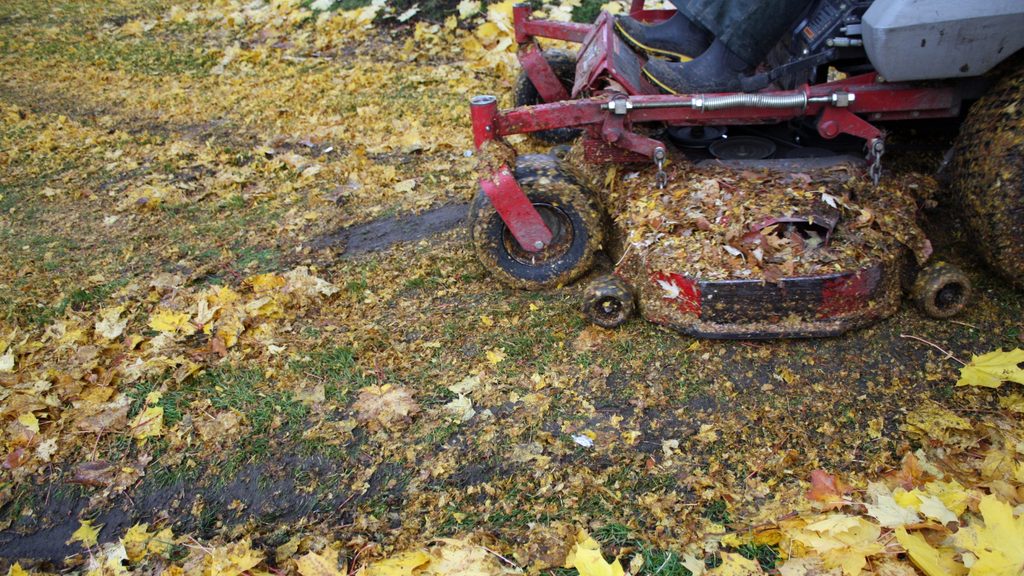
Any rotary mower can mulch leaves to some degree — the spinning blade chops whatever it passes over. But there’s a meaningful difference in results between a standard mower and a dedicated mulching setup.
Standard mower with discharge chute
Remove the bag and close the discharge chute if your mower has a chute-blocking plate. This keeps the leaf fragments circulating under the deck for additional chopping before they fall to the lawn. It works, but the fragments tend to be larger and less evenly distributed than with a true mulching mower.
Mulching mower or mulching blade
A mulching mower has no discharge chute — the deck is designed to keep material circulating longer for finer chopping. A mulching blade has a curved cutting edge that creates more airflow and chops material more aggressively than a standard blade. If your mower has a standard blade, replacing it with a mulching blade is an inexpensive upgrade that improves results significantly. Check your mower’s manufacturer for the compatible mulching blade model.
Does blade sharpness matter?
Yes — a dull blade tears rather than cuts, leaving ragged leaf fragments that decompose more slowly and look worse on the surface. If you haven’t sharpened your mower blade this season, sharpen it before leaf season starts. A
lawn mower blade sharpener makes this a five-minute job you can do in the driveway.
The Key Variables: Height, Timing, and Leaf Volume
These three factors determine whether mulching works or backfires.
Mower deck height
Set the mower to its highest or second-highest setting. You want the blade to chop the leaves while keeping the grass long enough to catch and hold the fragments as they fall. Cutting too low pushes the leaf fragments onto bare soil where they can mat before decomposing. Taller grass acts like a net — the fragments filter down through the blades toward the soil rather than sitting on the surface.
How often to mow during leaf season
The frequency rule from MSU: mow whenever a thin layer of leaves — roughly one inch — has accumulated on the lawn. Don’t wait for a heavy accumulation and try to do it all at once. Thin, frequent passes produce fine fragments that disappear into the turf within days. Heavy accumulations produce coarser fragments that sit on the surface longer and may require multiple passes to break down sufficiently.
During peak drop in Indiana — typically mid-October through mid-November for oaks and maples — this may mean mowing twice a week rather than once. That’s the trade-off: mulching eliminates raking but requires more frequent mowing during the heaviest leaf fall.
Maximum leaf volume
MSU research found that up to 6 inches of leaves can be successfully mulched in a single pass depending on the mower. In practice, if you can’t clearly see the grass beneath the leaf layer, you have too many leaves to mulch effectively in one pass. Rake the excess off first, then mulch what remains. Trying to mulch a layer so thick the mower bogs down produces clumps of partially chopped leaves that mat against the grass — exactly what you’re trying to avoid.
How to Mulch Leaves Into Your Lawn: Step by Step
Step 1 — Wait for dry conditions
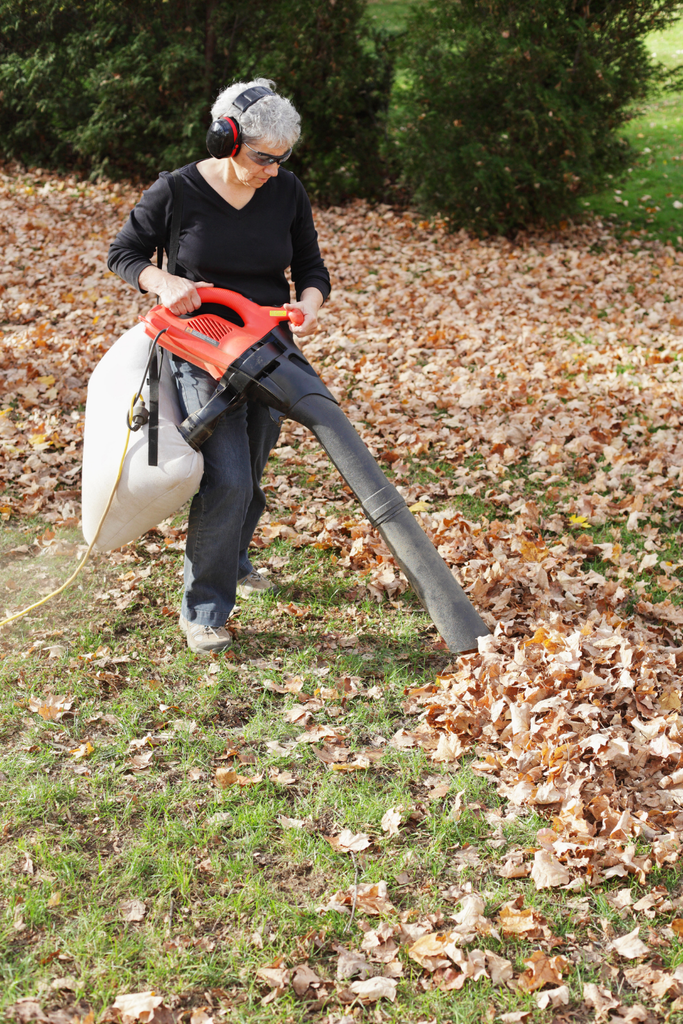
Mulching wet leaves is the fastest way to get bad results. Wet leaves clump under the mower deck, produce large sticky fragments that mat on the lawn surface, and put extra strain on the mower engine. Wait for a dry day, or let the leaves dry out for a few hours after morning dew before you start. Dry leaves chop cleanly and the fragments filter down into the turf within a few days. Wet leaf clumps can sit on the surface for weeks.
Step 2 — Set the deck to its highest position
Raise the mower deck to the highest or second-highest setting before you start. Don’t lower it to try to chop leaves more aggressively — you’ll scalp the grass along with the leaves and the shorter grass won’t hold the fragments as they fall.
Step 3 — Remove the bag and block the discharge chute
Take the bag off and attach the chute-blocking plate if your mower has one. This keeps the material recirculating under the deck for finer chopping. If your mower doesn’t have a plate, mow slowly to give the blade more time to chop before material exits the chute.
Step 4 — Mow in overlapping passes
Mow in your normal pattern during mulch mowing — overlapping each pass by a few inches ensures even coverage across the whole lawn. Go slowly — a slower ground speed gives the blade more time to chop each leaf before it exits the deck. For a moderately heavy leaf layer, two passes in slightly different directions (first north-south, then east-west) gives significantly finer results than a single pass. You’ll know you’re done when the leaf fragments are roughly dime-sized and you can clearly see the grass beneath them. Source: Virginia Cooperative Extension — Leave Them Alone: Lawn Leaf Management
Step 5 — Check the result and make a second pass if needed
After mowing, look at the surface. You should be able to see the grass clearly with a light dusting of small leaf fragments scattered through it. If you see large clumps, visible leaf pieces bigger than a quarter, or areas where the grass is completely covered, make another pass. The fragments should essentially disappear from view within a few days as they filter down and begin decomposing.
When Mulching Doesn’t Work — And What to Do Instead
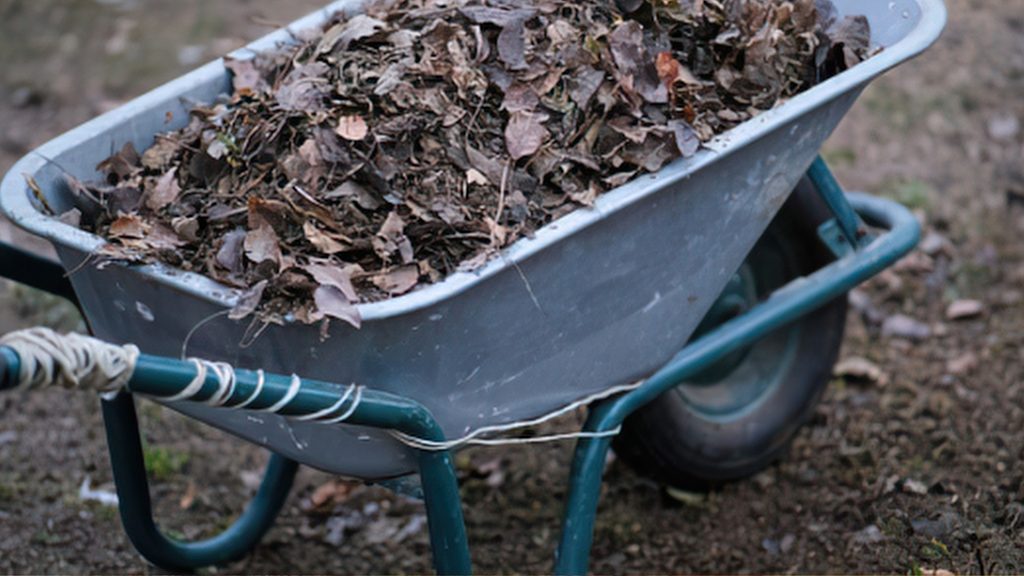
Mulching isn’t always the right call. Here’s when to rake instead:
When there are too many leaves to mulch effectively
If your yard is blanketed — leaves so thick you can’t see the grass — rake the bulk of them first, then mulch the remainder. Indiana oak trees in particular can drop heavily in a short window. Trying to mulch a heavy blanket in one session bogs the mower, produces coarse clumps, and leaves the lawn looking worse than if you’d just raked.
When leaves are wet
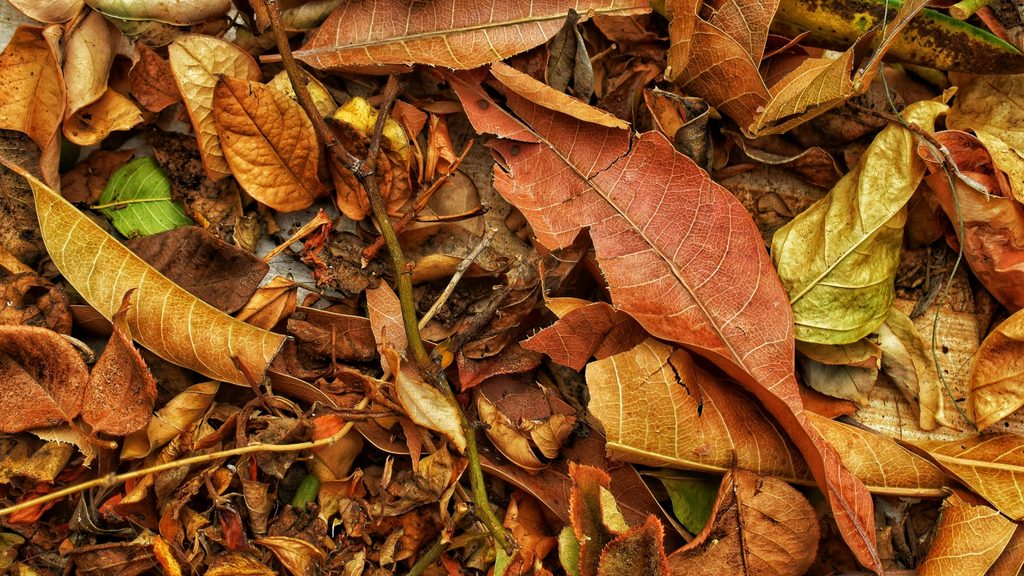
Wet leaves don’t mulch — they clump, mat, and clog the mower deck. If it’s rained recently or morning dew is heavy, wait. There’s no workaround for wet leaves; mulching them just creates problems that require raking to fix anyway.
When the lawn has active disease
If your lawn is showing active signs of fungal disease — brown patch, dollar spot, or snow mold from the previous winter — mulching keeps organic material on the surface that can slow the lawn’s ability to dry out between watering events. In this situation, rake and remove the leaves rather than returning material to the surface.
When you have newly seeded areas
New grass seedlings that haven’t been mowed yet are too fragile for the mower. Skip newly seeded sections during mulch mowing and let a light leaf layer sit naturally — it won’t hurt new seedlings. Once the new grass has been mowed two or three times and is well established, it’s ready for normal mulch mowing.
Mulching vs. Raking: Which Is Better for Your Lawn?
For most lawns in most conditions, mulching is better — the research is consistent on this point. It returns nutrients to the soil, improves organic matter over time, reduces water pollution from leaf runoff, and eliminates the labor of raking and bagging. The only consistent advantage of raking is appearance during the process: a freshly raked lawn looks cleaner immediately after cleanup than a mulched one does.
The practical answer for most Indiana homeowners: use mulching as the primary method throughout fall for routine leaf management, and rake when accumulation exceeds what the mower can handle in one or two passes. Our guide on
how to rake leaves without killing grass covers the raking side of the equation — when you do need to rake, the technique and tool choice matter more than most people realize.
Frequently Asked Questions About Mulching Leaves Into Your Lawn
Is mulching leaves into your lawn actually good for the grass?
Yes — university research confirms it. Michigan State University turfgrass scientists studied leaf mulching for over 20 years and found it improves soil quality and reduces weed pressure without harming turf color, thickness, or disease resistance. Purdue University research found that mulching large volumes of maple leaves had no negative effects on turf quality, soil pH, or thatch accumulation. The key is keeping the leaf layer thin and the fragments small — problems only arise when too many leaves are mulched at once or when they’re wet.
Do I need a special mower to mulch leaves?
No — any rotary mower can mulch leaves. Results are better with a mulching blade or a mower that has no discharge chute, but a standard mower with the bag removed and the chute blocked works for most residential leaf volumes. The most important variable is blade sharpness — a sharp blade produces clean, small fragments that disappear into the turf quickly; a dull blade produces ragged chunks that sit on the surface longer.
How often should I mow during leaf season?
Mow whenever about an inch of leaves has accumulated on the lawn — don’t wait for a heavy buildup. During peak drop in Indiana, that typically means mowing twice a week for oaks and maples in October and November. Thin, frequent passes produce fine fragments that filter into the turf within days. Waiting for a heavy accumulation and trying to mulch it all at once produces coarser material that takes longer to break down and may require multiple passes.
Can I mulch leaves if I overseeded in fall?
Skip any recently seeded sections — new seedlings aren’t anchored enough to handle the mower running over them. Let a light leaf layer sit over newly seeded areas naturally; it won’t hurt the seedlings. Once the new grass has been mowed two or three times and is well established, it’s ready for normal mulch mowing alongside the rest of the lawn.
What’s the difference between mulching leaves and composting them?
Mulching leaves into the lawn returns nutrients directly to the soil in place — it’s the fastest and lowest-effort method. Composting involves collecting the leaves, piling them with other organic material, and letting them break down over several months before applying the finished compost back to the lawn or garden. Composting produces a richer end product and lets you apply it where it’s needed most, but requires more time and effort. For routine fall leaf management, mulching is simpler and equally effective for lawn health.