

Yardtally is reader-supported. Some links on this page are affiliate links. As an Amazon Associate, Yardtally earns from qualifying purchases. See our Affiliate Disclosure.
Why is my lawn full of weeds? If you’re asking that question, the honest answer is that weeds didn’t take over your lawn — your grass let them in. Weeds are opportunistic plants that move into thin, weak, or stressed turf where there’s space, sunlight, and not enough competition to push them out. A healthy, dense lawn is the most effective weed barrier there is. When your grass is struggling, weeds are always ready to fill the gap. This guide covers the real reasons your lawn is losing ground to weeds and the step-by-step process to fix it.
What’s in This Guide
- Why Is My Lawn Full of Weeds? The Real Causes
- How to Fix a Lawn Full of Weeds — Step by Step
- How to Keep Weeds From Coming Back
- FAQ
Why Is My Lawn Full of Weeds? The Real Causes
Most homeowners treat weeds as the problem. They’re actually a symptom. Here’s what’s actually going on underneath.
Your Grass Is Too Thin
Thin turf is the number one reason weeds take over. Every bare spot, every patchy area, every place where the grass is sparse is an open invitation — weed seeds land there, find sunlight and space, and establish before grass can crowd them out. If your lawn looks more like scattered grass than a solid carpet, weeds will keep coming back no matter how many times you treat them, because the underlying problem — thin coverage — hasn’t been fixed.
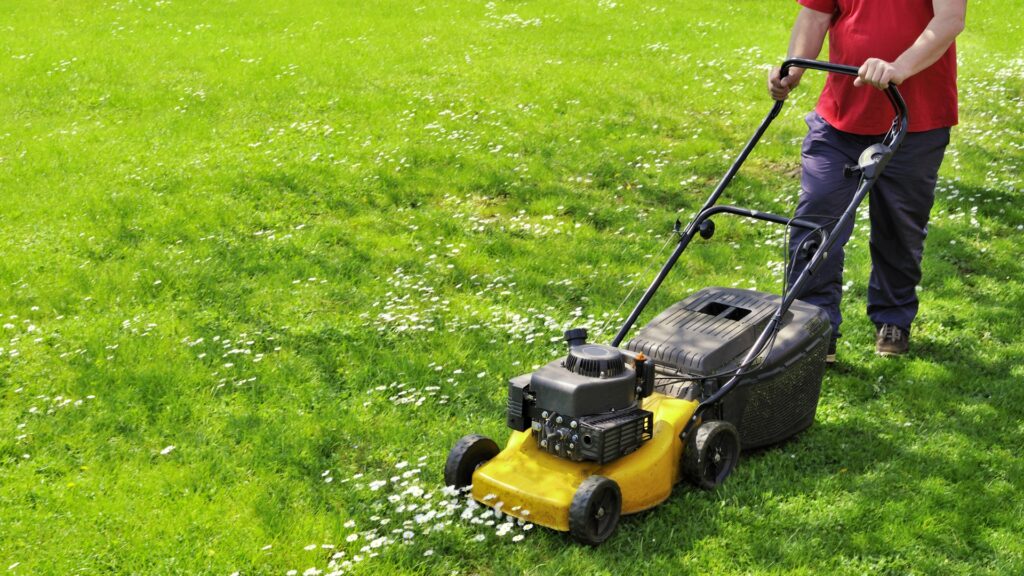
You’re Mowing Too Short
Cutting grass too short is one of the most common mistakes homeowners make, and it directly feeds weed growth. Short grass lets sunlight reach the soil surface, which is exactly what weed seeds need to germinate. Most cool-season grasses should be kept at 3–4 inches; warm-season grasses 2–3 inches. Raise your mower deck and leave it there. Taller grass shades the soil, suppresses weed germination, and develops deeper roots that compete more effectively for water and nutrients.
Your Soil Is Compacted
Compacted soil is hard, dense soil that restricts the movement of air, water, and nutrients to grass roots. Grass struggles to establish deep roots in compacted soil, which weakens it and opens the door to weeds — many of which are far more tolerant of compaction than turf grass. High foot traffic areas, clay-heavy soils, and lawns that have never been aerated are the most common culprits. Annual aeration breaks up compaction and gives grass roots the access they need to grow strong.
Your Lawn Is Under- or Over-Fertilized
Grass needs nutrients to stay thick and competitive. A lawn that hasn’t been fertilized in years will thin out gradually, and weeds will fill the gaps. But over-fertilizing — especially with high-nitrogen products applied at the wrong time — can also cause problems by burning grass or promoting lush top growth at the expense of root development. The goal is a consistent, appropriate feeding schedule matched to your grass type and region.
Watering Problems
Both underwatering and overwatering weaken grass in different ways. Underwatering leads to shallow root systems that can’t compete, and drought-tolerant weeds like dandelions move in. Overwatering keeps the soil soggy, promotes fungal disease, and favors weeds that thrive in wet conditions. The standard recommendation is about 1 inch of water per week, applied deeply and infrequently — one or two long waterings rather than daily light sprinkles. Deep watering trains roots to grow down, where they’re more resilient.
Soil pH Is Off
Grass grows best in soil with a pH between 6.0 and 7.0. If your soil is too acidic or too alkaline, nutrients become unavailable to grass even if they’re present in the soil — which weakens turf and favors weeds that tolerate wider pH ranges. A simple soil test (available at most garden centers or through your county extension office) will tell you where your pH stands. If it’s low, lime brings it up. If it’s high, sulfur brings it down. Source: Purdue Extension — Soil pH
How to Fix a Lawn Full of Weeds — Step by Step
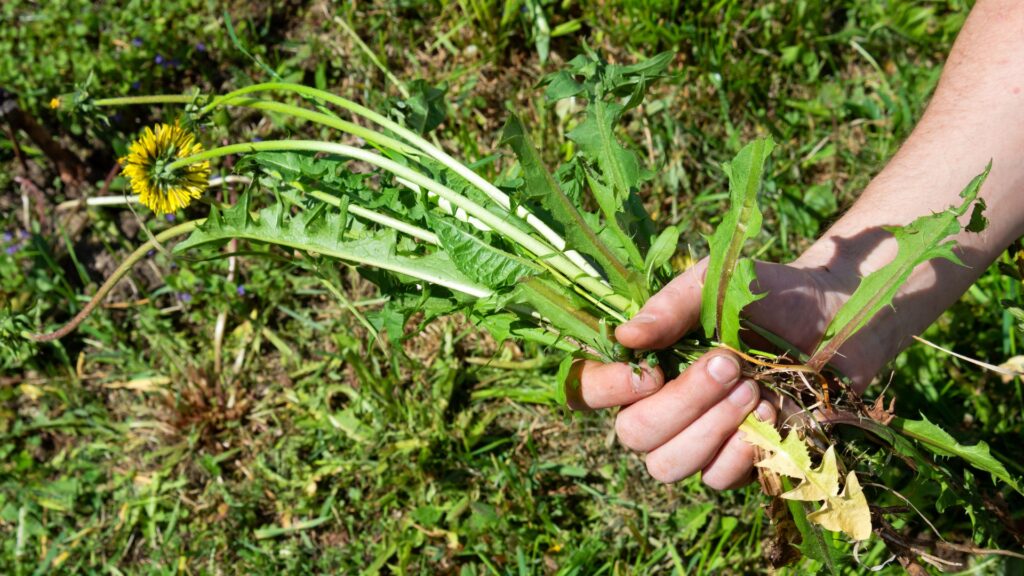
Step 1: Figure Out Which Weeds You Have
Not all weed killers work on all weeds, and different weeds tell you different things about your soil. Dandelions and clover often signal low nitrogen. Moss signals shade and poor drainage. Crabgrass signals thin turf and bare soil. Identify what you’re dealing with before reaching for a product. If you’re seeing mostly broadleaf weeds (dandelions, clover, plantain), a broadleaf herbicide is your tool. If you’re seeing grassy weeds (crabgrass, foxtail), you need a different approach.
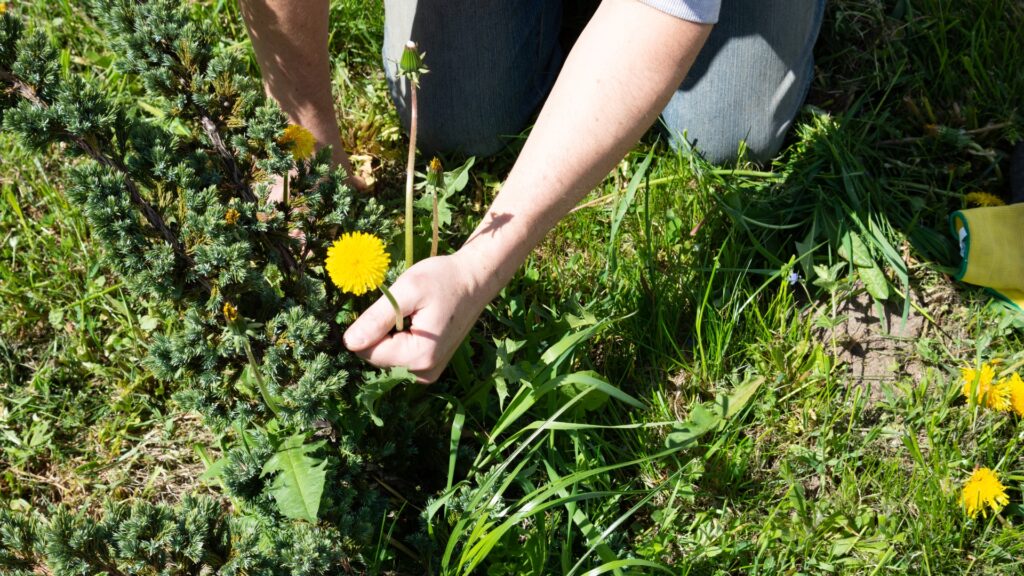
Step 2: Kill Existing Weeds
For broadleaf weeds in an established lawn, a selective herbicide like Ortho WeedClear Weed Killer for Lawns kills the weeds without harming the grass. Apply it when weeds are actively growing — not during drought stress or extreme heat — and follow label directions for your grass type. The comfort wand applicator makes spot treatment on large areas much easier than a handheld sprayer.
For spot removal of individual deep-rooted weeds like dandelions, a stand-up weed puller tool lets you extract the full root without bending down or using chemicals — useful in garden beds or areas near kids and pets where you want to avoid herbicide.
Step 3: Aerate to Fix Compaction
If compaction is part of the problem — and in most lawns it is — aerate before you do anything else to the soil. A core aerator pulls small plugs of soil out of the ground, opening up channels for air, water, and nutrients to reach the root zone. Do this in fall for cool-season grasses, late spring for warm-season grasses. The plugs left on the surface will break down on their own within a couple of weeks — leave them.
Step 4: Fertilize to Strengthen Your Grass
After aerating, feed your lawn to help it recover and thicken up. Scotts Turf Builder Weed & Feed combines broadleaf weed control with fertilizer in one application — it kills weeds while feeding the grass, which is efficient when you’re dealing with widespread weed coverage rather than isolated spots. Apply when weeds are actively growing and the grass is moist so the granules stick to weed leaves.
Step 5: Overseed Thin Areas
Killing weeds leaves bare spots. If you don’t fill those spots with grass seed, new weeds will move in within weeks. Overseed after weed treatment and aeration so the seed makes good contact with loosened soil. For cool-season lawns (Kentucky bluegrass, fescue, ryegrass), fall is the best time — soil is warm, air is cool, and competition from weeds is lower.
PICK ONE — Scotts Turf Builder Kentucky Bluegrass Seed OR Scotts Turf Builder Perennial Ryegrass Seed, depending on your region and existing grass type. Kentucky bluegrass is best for northern lawns that want a dense, dark green carpet. Perennial ryegrass establishes faster and works well for overseeding thin areas quickly.
Step 6: Prevent Future Weeds with Pre-Emergent
Once you’ve dealt with existing weeds and filled in thin spots, prevent the next generation from sprouting with a pre-emergent herbicide. Preen Lawn Weed Control creates a barrier in the soil that stops weed seeds from germinating — it won’t kill existing weeds but keeps new ones from establishing. Apply in early spring before soil temperatures reach 55°F, which is when most annual weed seeds start germinating. A second application in early fall covers late-season weeds.
How to Keep Weeds From Coming Back
The single best long-term weed control strategy is a thick, healthy lawn. Weeds don’t invade dense, well-maintained turf — they can’t compete. Here’s what that looks like in practice:
Mow high — keep grass at 3–4 inches for cool-season grasses, 2–3 for warm-season. Never remove more than one-third of the blade in a single mowing.
Water deeply and infrequently — one inch per week, applied in one or two sessions. Shallow daily watering produces shallow roots that can’t compete.
Fertilize on schedule — match your fertilizer timing and formulation to your grass type and region. Spring and fall for cool-season grasses; late spring through summer for warm-season.
Aerate annually — especially in high-traffic areas or clay-heavy soils. This single habit does more for long-term lawn health than almost anything else.
Overseed thin areas every fall — don’t wait for bare spots to appear. Proactive overseeding keeps coverage dense enough that weeds can’t find a foothold. Our full guide on how to overseed a lawn covers the timing, prep, and aftercare in detail.
Frequently Asked Questions About a Lawn Full of Weeds
Why does my lawn have so many weeds all of a sudden?
A sudden weed surge almost always follows a stressor that thinned
the turf — drought, disease, grub damage, a harsh winter, or a period
of neglect. Weeds don’t create openings; they move into openings that
already exist. When grass thins out from any cause, weed seeds that
were already in the soil get the light and space they need to germinate.
The fix is treating the weeds while simultaneously addressing why the
grass thinned — otherwise the same openings will refill with new weeds
within one season.
What kills weeds but not grass?
A selective broadleaf herbicide — one containing 2,4-D, triclopyr,
or MCPP as active ingredients. These compounds target broadleaf weeds
(dandelions, clover, plantain, chickweed) without harming established
cool-season grasses. Products like Ortho WeedClear are formulated
for this purpose. For grassy weeds like crabgrass, a different product
is needed — selective grassy-weed herbicides like quinclorac or
mesotrione target crabgrass specifically. Non-selective products like
glyphosate kill everything they touch and are not appropriate for use
in established turf.
How long does it take to get rid of weeds in a lawn?
Killing existing weeds with a selective herbicide takes one to three
weeks for visible death after application. But eliminating a weed
problem permanently takes one to two full growing seasons. The reason
is that weed seeds already in the soil will continue germinating into
newly opened spaces unless you fill those spaces with grass. The
sequence that works: kill existing weeds, aerate, overseed thin areas,
and apply a pre-emergent the following spring to stop new weed seeds
from germinating. Each step takes time, and skipping any one of them
means the cycle continues.
Is it better to pull weeds or spray them?
For individual plants with deep tap roots — dandelions, plantain —
a weed puller tool that extracts the full root is the most effective
method and doesn’t involve any chemical application. For widespread
coverage across a lawn, spot-spraying with a selective herbicide is
faster and more thorough than hand-pulling at scale. The determining
factor is density: a handful of weeds scattered through a lawn is
a pulling job; a lawn where weeds outnumber grass in significant areas
is a spray job. For areas near children, pets, or edible plantings,
pulling or organic options are worth prioritizing even if they’re
more labor-intensive.
Should I fertilize or weed first?
Weed first — at least for broadleaf weeds. Fertilizing before treating
weeds feeds the weeds as much as the grass, strengthening the competition
rather than reducing it. Apply herbicide when weeds are actively growing,
wait the required interval on the label (typically two to four weeks),
then fertilize to support the recovering and thickening grass. The
exception is combination products like Scotts Turf Builder Weed & Feed,
which apply both simultaneously — these work best when weeds are actively
growing and the grass is moist, so granules adhere to weed leaves.
Sources & Further Reading
- Source: Purdue Extension — Soil pH