
Yardtally is reader-supported. Some links on this page are affiliate links. As an Amazon Associate, Yardtally earns from qualifying purchases. See our Affiliate Disclosure.
If you’re trying to figure out how to fix dog spots in your lawn, you’re not alone — and the reason they keep coming back is almost always the same: most people treat the dead grass without addressing what killed it. Dog urine is high in concentrated nitrogen, and until you dilute or flush that nitrogen out of the soil, new grass seeded into the same spot will struggle to establish.
The fix comes down to three steps: flush the nitrogen out of the soil, reseed with the right product, and make a small change to how your dog drinks water. Here’s exactly how to do it.
What’s in This Guide
- What Actually Causes Dog Spots in Grass
- How to Fix Dog Spots in Your Lawn
- Dog Spot Repair Products — Do They Work?
- How to Prevent Dog Spots Going Forward
- When to Call It and Reseed the Whole Area
- Frequently Asked Questions
What Actually Causes Dog Spots in Grass
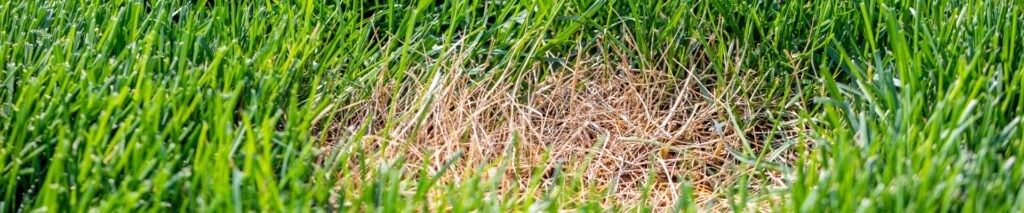
Dog urine is high in nitrogen. In small amounts, nitrogen is actually what lawn fertilizers use to make grass green. But dog urine delivers a concentrated dose in a small area, and that concentration burns the grass roots — the same way over-fertilizing in one spot kills grass. The brown patch in the center is dead from nitrogen overload, and you’ll often notice a ring of dark green grass around the outside edge of the spot. That outer ring is getting a diluted dose — just enough nitrogen to fertilize, not enough to burn. If you see that pattern, dog urine is almost certainly the cause. Source: Purdue Turfgrass Science — Renovating Turf
Female dogs tend to cause more visible damage than males because they squat and deliver the full volume of urine in one concentrated spot. Male dogs typically mark in smaller amounts across multiple locations, which distributes the nitrogen load more evenly and causes less visible damage. Diet, hydration level, and the dog’s size all affect how concentrated the urine is and how severe the damage becomes.
How to Fix Dog Spots In Your Lawn
The repair process is straightforward but requires a little patience. Dead grass won’t green back up — the roots are gone and the grass needs to be replaced. Here’s how to do it correctly.
Step 1: Flush the Area With Water
Before doing anything else, drench the affected spot with water — a full minute of steady hose flow directly on the patch. This dilutes and flushes the nitrogen salts out of the soil before you try to reseed. Skipping this step and seeding directly into soil that’s still saturated with urine nitrogen is one of the main reasons dog spot repairs fail. If the spot is fresh and the grass just started browning, flushing immediately can sometimes save the grass before it fully dies.
Step 2: Rake Out the Dead Grass
Once the area has dried out after flushing, use a hand rake to scratch out the dead grass and loosen the top inch of soil. You want to expose bare soil before seeding — grass seed needs soil contact to germinate, and laying seed on top of dead thatch is a common mistake that results in poor germination. Remove the dead material and discard it.
Step 3: Amend the Soil
Sprinkle a thin layer of lawn leveling mix over the bare patch — about a quarter inch is enough. This gives the new seed a fresh, uncontaminated surface to germinate in and helps if the existing soil is still slightly acidic or compacted from repeated urine exposure. Tamp it lightly with your foot or the back of the rake.
Step 4: Seed and Cover
For small dog spots, a Scotts EZ Seed Patch & Repair is the most convenient option — it combines grass seed, mulch, and soil amendment in one bag. Just apply it directly to the bare patch after flushing and raking, press it lightly into the soil, and water daily until established. If you prefer to seed separately, use a grass seed matched to your existing lawn type — cool-season for Indiana and most of the Midwest (tall fescue or Kentucky bluegrass), warm-season for the South (Bermuda or zoysia)
Step 5: Water Daily Until Established
Keep the seeded patch consistently moist — light watering once or twice a day until the new grass reaches about 3 inches tall. Don’t let it dry out completely during germination or the seed will fail. Most cool-season grasses germinate in 7–14 days under good conditions. Once the new grass is established, back off to a normal watering schedule.
Dog Spot Repair Products — Do They Work?
There are a handful of products marketed specifically for dog spot repair — gypsum-based soil amendments, enzyme sprays, and pre-seeded patch kits. Here’s an honest breakdown:
Gypsum Soil Amendment
Gypsum is sometimes marketed as a dog spot fix because it can help break up compacted soil and improve drainage — both of which help flush nitrogen through the soil faster. It’s not a miracle cure, but it’s a legitimate soil amendment that can help in compacted clay soils. It won’t undo existing damage but can help the repair take better. Sprinkle it over the patch before adding topsoil.
Patch and Repair Seed Kits
If you’d rather skip the multi-step process entirely, an all-in-one patch kit like Scotts EZ Seed handles seed, mulch, and soil amendment in a single application — which is why we recommend it in Step 4 above. For small isolated spots, it’s the simplest approach available.
How to Prevent Dog Spots Going Forward
Repair without prevention means you’ll be reseeding the same spots every few weeks. Here are the most effective strategies for reducing new damage.
Train Your Dog to Use a Designated Spot
The most effective long-term solution is training your dog to use one specific area of the yard — ideally a mulched or gravel corner that isn’t grass. Take your dog to the same spot every time, use a consistent command, and reward immediately after they go. Most dogs establish the habit within a few weeks of consistent reinforcement. Once it sticks, the rest of your lawn stays clean. If you’re converting a corner of the yard, a simple border of garden edging keeps the mulch or gravel contained and gives the space a finished look. Source: American Kennel Club — Puppy Potty Training Tips
Dilute With Water Immediately After
If you’re home when your dog goes, following up immediately with 30–60 seconds of hose water on the exact spot dilutes the nitrogen before it can concentrate in the soil. This single habit — if you do it consistently — dramatically reduces visible damage. Keep a hose nearby or run a sprinkler on a short cycle after your dog’s last outing each evening.
Dog Rocks or Dietary Supplements
Dog Rocks are a natural product you place in your dog’s water bowl — they claim to filter out nitrogen-producing compounds before the dog drinks. Results are mixed in independent testing, but some owners report noticeable improvement. Dog urine neutralizing supplements added to food work on a similar principle, reducing the nitrogen concentration in urine. Neither is a guaranteed fix, but both are low-risk options worth trying if training and water dilution aren’t enough.
Choose a More Urine-Resistant Grass Type
If you’re overseeding or reseeding a significant portion of your lawn anyway, certain grass varieties hold up better to urine nitrogen than others. Perennial ryegrass and tall fescue tend to be more tolerant than Kentucky bluegrass, which shows damage more readily. This isn’t a reason to reseed your whole lawn just for dog spot resistance, but if you’re already doing renovation work it’s worth factoring in. Our guide on How to Overseed a Lawn — Timing, Prep, and Aftercare covers grass selection in more detail.
If you’re planning a full overseeding, our free Overseeding Calculator can help you figure out exactly how much seed you need for your lawn size.
Keep Your Lawn Well Watered
A well-watered lawn naturally dilutes urine nitrogen in the soil faster than a dry one. If your lawn is already struggling with drought stress, our guide on why is my grass turning brown even though I water it covers recovery steps — and our free Lawn Watering Calculator can help you dial in the right amount of water for your yard size.
When to Call It and Reseed the Whole Area
If you have a dog that uses the same general zone of the lawn repeatedly and the grass never fully recovers before it gets hit again, spot reseeding becomes an endless cycle. At some point it makes more sense to designate that zone as a non-grass area — mulch, gravel, pavers, or a dedicated dog run — and redirect your dog permanently. This is especially worth considering for high-traffic corners near doors or along fence lines where most dogs naturally gravitate.
Frequently Asked Questions About Dog Spots in Lawns
Why does dog urine kill grass?
Dog urine is high in nitrogen — the same nutrient lawn fertilizers use
to make grass green. In small amounts, nitrogen is beneficial. In the
concentrated dose delivered when a dog urinates in a single spot, it
overwhelms the grass roots and burns them — the same mechanism as
fertilizer burn from over-application. The pattern is distinctive: a
dead brown center with a ring of dark green grass around the outside
edge. That outer ring is getting a diluted dose from the urine spreading
outward — just enough nitrogen to fertilize, not enough to burn. Female
dogs tend to cause more damage than males because they squat and deliver
the full urine volume in one concentrated spot.
How long does it take for grass to grow back after dog urine damage?
After proper repair — flushing the area, raking out dead grass, adding
fresh soil, and seeding — expect germination in 7 to 14 days for most
cool-season grasses and 3 to 4 weeks for the new grass to look reasonably
established. Full visual recovery, where the repaired spot blends in with
the surrounding lawn, typically takes one full growing season. The timing
of the repair matters: late August through mid-September is the best
window for cool-season lawns in Indiana and the Midwest — soil is warm
for fast germination and air temperatures are cooling for strong
establishment before winter.
Does watering after my dog urinates prevent lawn damage?
Yes — consistently. Following your dog’s outdoor visit with 30 to 60
seconds of hose water directly on the spot dilutes the nitrogen before
it can concentrate in the soil. This single habit, done every time,
dramatically reduces visible damage. Most homeowners who do it consistently
report nearly eliminating new dog spots without any other intervention.
It requires being home and paying attention — which is why it works best
as a habit during your dog’s regular routine, particularly the last outing
each evening before bed.
Do dog rocks or dietary supplements prevent lawn spots?
Results are mixed. Dog Rocks are placed in your dog’s water bowl and
claim to filter nitrogen-producing compounds before the dog drinks them.
Some owners report noticeable improvement; independent testing shows
inconsistent results. Dietary supplements that reduce urine nitrogen
concentration work on a similar principle with similarly variable outcomes.
Neither is a reliable standalone fix, but both are low-risk options worth
trying alongside the more reliable interventions — training your dog to
use a designated spot, and watering the area immediately after they go.
What grass type is most resistant to dog urine damage?
Perennial ryegrass and tall fescue hold up better to urine nitrogen than
Kentucky bluegrass, which shows damage more readily. Fescue’s deep root
system and drought tolerance also make it more resilient to the repeated
stress of dog traffic. This isn’t a reason to reseed your entire lawn
just for dog spot resistance, but if you’re already doing overseeding
or lawn renovation, choosing a tall fescue blend over pure Kentucky
bluegrass is worth factoring in. Our guide on how to overseed a lawn
covers grass selection and timing for cool-season lawns in Indiana and
the Midwest.