
Yardtally is reader-supported. Some links on this page are affiliate links. As an Amazon Associate, Yardtally earns from qualifying purchases. See our Affiliate Disclosure.
If you want to know how to improve clay soil, start by ignoring the most common advice: don’t add sand. It’s counterintuitive, but mixing small amounts of sand into clay creates something closer to concrete than garden soil — the fine clay particles fill the spaces between the larger sand grains and you end up with worse drainage than you started with. I’ve been researching this before tackling the clay sections of my own yard, and the same conclusion comes up in every credible source: the only thing that reliably improves clay soil is organic matter, applied consistently over time.
This guide covers what clay soil is and why it behaves the way it does, the amendments that actually work, the ones worth skipping, and a realistic timeline for what to expect. Clay soil can become genuinely productive — it just takes the right approach and more than one season.
What’s in This Guide
- What Clay Soil Is and Why It’s Difficult to Work
- How to Test Whether You Have Clay Soil
- The Sand Myth — Why You Should Never Add It to Clay
- What Actually Works — Organic Matter
- Gypsum — When It Helps and When It Doesn’t
- Mulch — The Surface Amendment That Works Year-Round
- Cover Crops — The Long-Game Strategy
- What to Avoid Doing
- What to Expect — A Realistic Timeline
- FAQ
What Clay Soil Is and Why It’s Difficult to Work
Clay soil is defined by particle size. Clay particles are the smallest in the soil texture spectrum — much smaller than silt or sand — and they pack tightly together, leaving very little pore space for air and water movement. That tight packing is what causes the problems most gardeners associate with clay: poor drainage, surface crusting, cracking when dry, and a sticky, compacted texture when wet that makes it nearly impossible to work without damaging soil structure.
The flip side — and this is worth understanding — is that clay soil holds nutrients exceptionally well. Those tiny particles carry an electrical charge that binds nutrients and keeps them from leaching out with rain. A gardener who successfully improves clay drainage and structure ends up with some of the most fertile soil possible, because the nutrient-holding capacity is already there. The goal isn’t to replace the clay — it’s to open up the structure so air, water, and roots can move through it.
How to Test Whether You Have Clay Soil
The simplest test: take a handful of moist (not soaking wet) soil and roll it into a ball in your palm. Then try to press it into a ribbon between your thumb and forefinger. If it forms a long, smooth, flexible ribbon — more than 2 inches — you have clay-dominant soil. Sandy soil won’t hold a shape at all. Loam falls somewhere in between.
A more complete picture comes from a soil test, which also tells you pH and nutrient levels — both of which affect how well amendments work. Clay soils in the Midwest tend to be alkaline, which can lock up certain nutrients even when they’re present. A soil test takes the guesswork out of what your specific soil needs.
A soil test kit gives you pH, nitrogen, phosphorus, and potassium readings at home in about 15 minutes — the starting point before buying any amendments.
The Sand Myth — Why You Should Never Add It to Clay
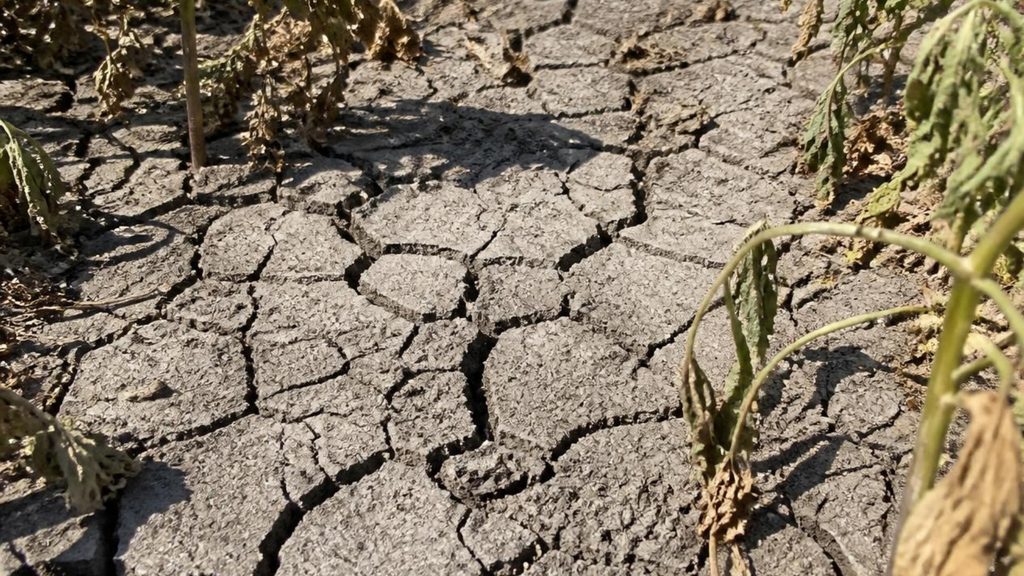
This deserves its own section because the advice is so widespread. Adding sand to clay sounds logical — sand is coarse and loose, clay is fine and dense, so mixing them should create a better middle ground. It doesn’t work that way.
Clay particles are so fine that they fill the pore spaces between sand grains rather than integrating with them. The result is a denser, more compacted material — sometimes compared to adobe or low-grade concrete — that drains worse and is harder to work than the original clay. To actually improve drainage with sand, you’d need to add so much of it (upward of 50% by volume) that you’ve essentially replaced the clay with a new growing medium entirely. That’s not realistic for an established garden bed.
The one amendment that some sources recommend alongside organic matter is gypsum (calcium sulfate) — but only for soils with a specific sodium problem. A soil test will tell you if that applies to your situation. For most Midwestern clay gardens, gypsum provides minimal benefit.
What Actually Works — Organic Matter
Every credible source on clay soil improvement — university extension services, the USDA, experienced gardeners — points to the same solution: organic matter, added consistently over time. Organic matter improves clay soil in several ways simultaneously. It introduces beneficial microorganisms that break down compaction. It creates aggregates — clumps of particles held together by fungal threads and organic compounds — that improve pore structure. And it decomposes slowly, releasing nutrients and continuing to improve soil structure season after season. Source: USDA NRCS — Role of Organic Matter
Compost
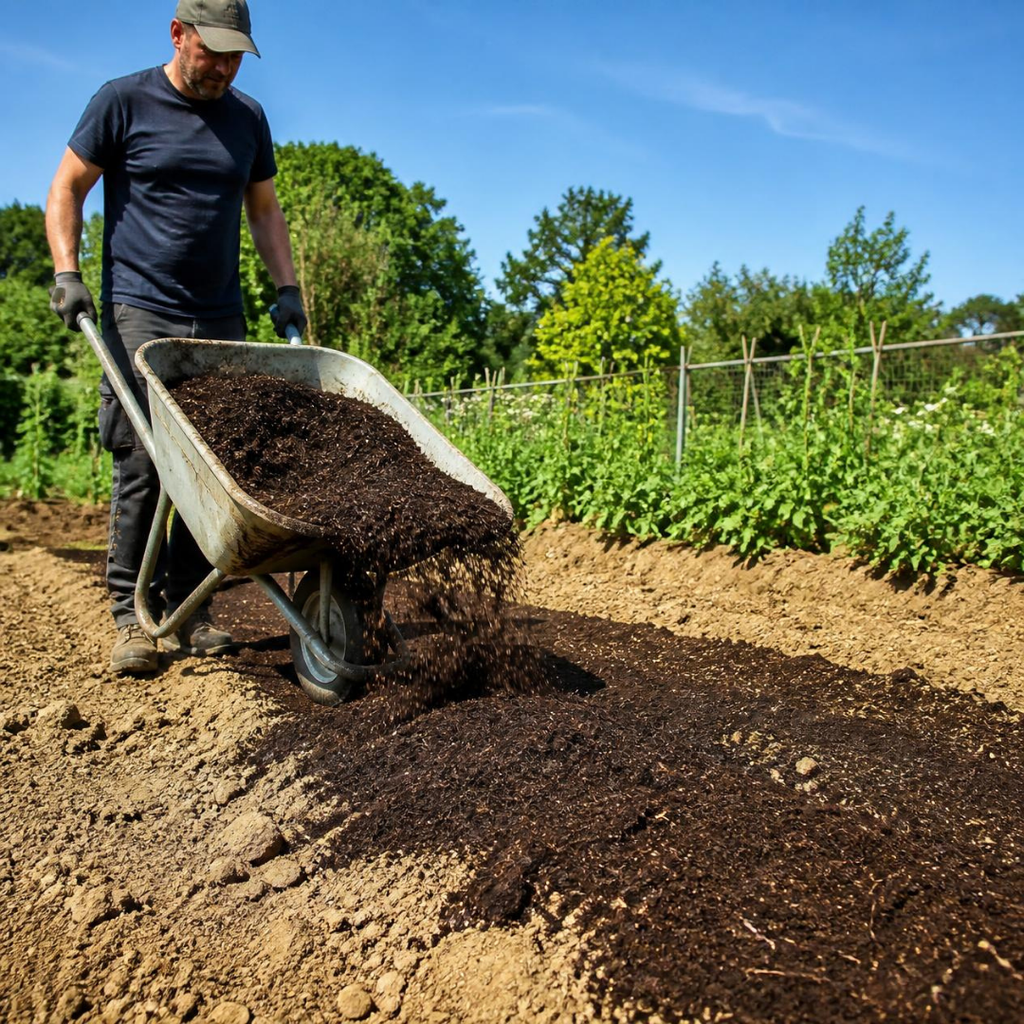
Compost is the most effective and most versatile clay soil amendment. Apply 2 to 4 inches across the surface of your garden bed and work it into the top 6 to 8 inches of soil. Do this every spring and fall if possible, or at minimum once a year. After two to three seasons of consistent compost application, most clay soils show measurable improvement in drainage and workability.
For immediate results in a new bed, work in a heavy application — 4 to 6 inches — before planting. This won’t transform the soil overnight, but it gives plants something workable to establish in while the longer-term improvement process begins.
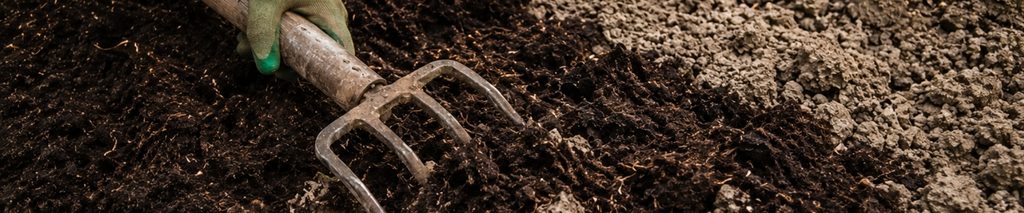
A garden fork is the right tool for working compost into clay — the tines penetrate compacted soil more effectively than a flat spade and cause less structural damage than rotary tilling.
Aged Manure
Well-aged manure — composted for at least six months — adds organic matter and nutrients while improving soil structure. Fresh manure is too high in nitrogen and can burn plant roots; always use aged or composted manure. Horse and cow manure are the most commonly available and both work well. Apply at similar rates to compost — 2 to 4 inches worked into the top several inches of soil.
Leaf Mold
Leaf mold is simply decomposed leaves — collected in fall, piled or bagged, and left to break down for one to two years. It’s free if you have mature trees, and it’s one of the best soil conditioners for clay because its fibrous structure creates long-lasting pore spaces that improve drainage and aeration. It’s lower in nutrients than compost but higher in fungal activity, which is particularly beneficial for clay improvement.
Worm Castings
Worm castings are concentrated organic matter that introduces a dense population of beneficial microorganisms into the soil. They improve clay structure faster than compost alone and dramatically increase microbial activity. They’re more expensive per volume than compost or manure, so they’re most effectively used as a targeted amendment mixed into planting holes or seed rows rather than broadcast across an entire bed.
Worm castings mixed into planting holes at transplant time give new plants the best possible start in clay soil that’s still in the process of being improved.
Gypsum — When It Helps and When It Doesn’t
Gypsum (calcium sulfate) improves clay structure in soils that have a sodium problem — high sodium causes clay particles to disperse and seal together, preventing water movement. In high-sodium soils, gypsum displaces the sodium and allows clay particles to flocculate (clump together), which dramatically improves drainage. In soils without a sodium problem, gypsum provides little to no benefit.
Get a soil test before buying gypsum. If sodium is elevated, gypsum is worth adding at the manufacturer’s recommended rate. If sodium is normal, the money is better spent on compost.
Gypsum applied to sodium-affected clay soils can produce visible drainage improvement within one growing season — but only where elevated sodium is confirmed by a soil test.
Mulch — The Surface Amendment That Works Year-Round
Mulch applied to the surface of clay soil provides benefits that underground amendments can’t: it prevents the surface crusting that blocks water infiltration, moderates soil temperature, reduces evaporation, and adds organic matter continuously as it breaks down. A 2 to 3 inch layer of organic mulch — wood chips, shredded leaves, or straw — applied over clay beds and maintained year-round is one of the most effective long-term clay improvement strategies.
Surface mulch also protects the soil from compaction caused by rain impact and foot traffic — both of which rapidly undo clay improvement work. Keep a consistent mulch layer and avoid walking in planted beds.
Organic mulch maintained as a 2 to 3 inch surface layer over clay beds improves soil structure gradually while preventing the surface crusting that makes clay nearly impermeable after rain.
Cover Crops — The Long-Game Strategy
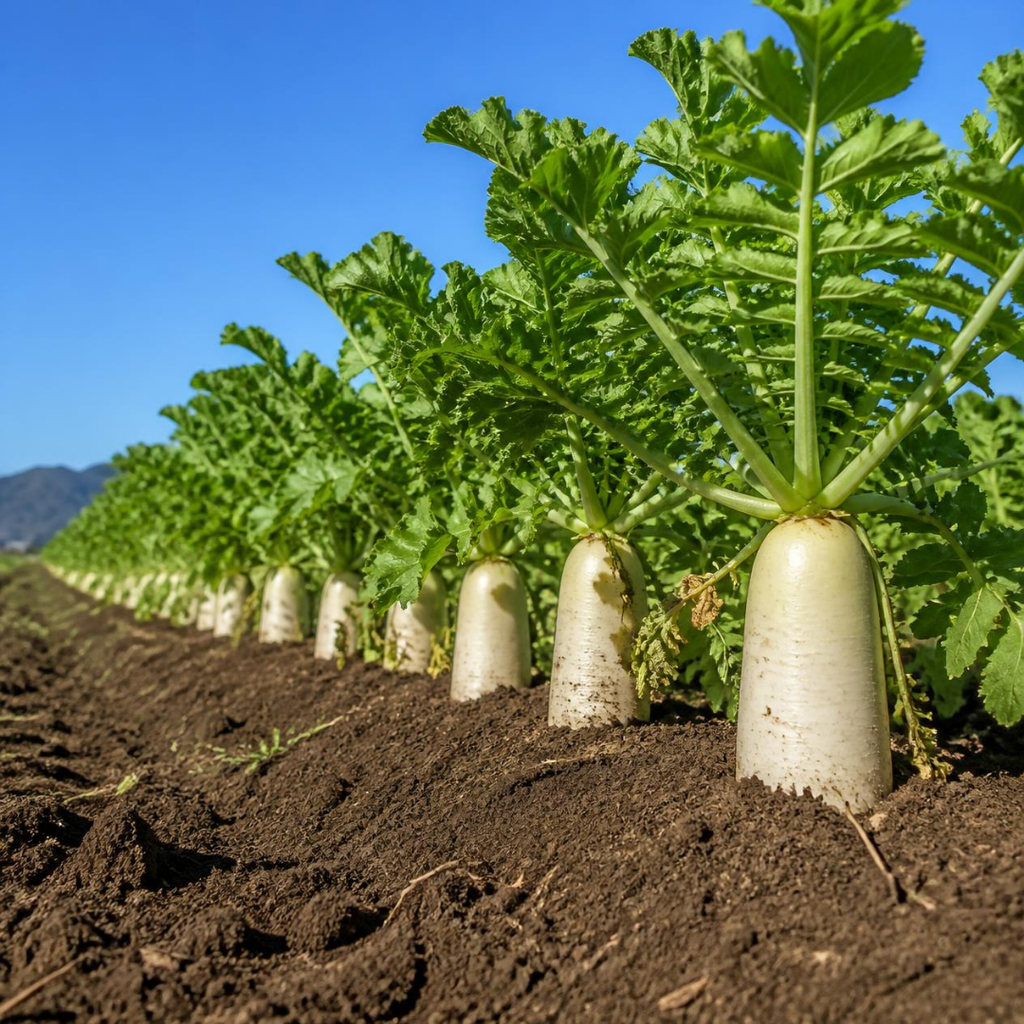
Cover crops are plants grown specifically to improve soil rather than for harvest. For clay soil improvement, deep-rooted cover crops like daikon radish (sometimes called tillage radish), cereal rye, and vetch are particularly effective. Their roots penetrate compacted clay layers and create channels that remain open after the roots die, improving drainage and aeration at depth that surface amendments can’t reach.
Plant cover crops in fall after the main garden season, let them grow through winter, then terminate them in spring before they go to seed. Turn the surface growth into the soil as green manure or leave it as mulch. One to two seasons of cover cropping in problem clay areas can produce significant improvement that would take three to four years of compost applications alone.
What to Avoid Doing
Two habits actively reverse clay improvement work:
Tilling Wet Clay
Working clay soil when it’s wet — which is tempting in spring when you’re eager to plant — compacts it significantly. Wet clay particles slide against each other and compress into a dense, nearly impermeable layer called a hardpan. The test: pick up a handful of soil and squeeze it. If it sticks together in a wet ball and doesn’t crumble when you open your hand, it’s too wet to work. Wait until it crumbles slightly when compressed before doing any digging or tilling.
Walking on Beds
Foot traffic on clay soil — especially when wet — compacts it faster than almost anything else. In established gardens, use permanent pathways and step only on designated walking areas. In new beds being amended, minimize foot traffic entirely until the soil structure has improved over several seasons.
What to Expect — A Realistic Timeline
Clay soil improvement is measured in seasons, not weeks. Here’s what a realistic improvement arc looks like with consistent organic matter additions:
After one season: drainage improves noticeably in the areas where compost was worked in. Soil is easier to work when moist. Plants establish more readily.
After two to three seasons: soil structure has changed meaningfully — earthworm populations increase, surface crusting is reduced, and the soil holds a more workable texture longer after rain. Drainage is significantly better than the original clay.
After four to five seasons of consistent organic matter addition: many gardeners report that their formerly clay-heavy beds are now genuinely loamy — dark, loose, and easy to work. The clay is still there, but the structure has been transformed by organic matter and biological activity.
The key is consistency. One heavy compost application followed by neglect produces minimal lasting improvement. Small, regular additions of organic matter — every spring and fall — transform clay soil reliably over time.
If you’ve already built raised beds over clay soil, our guide on how to build a raised garden bed covers the right soil mix for filling those beds so you’re not fighting clay from day one.
If you’re starting a compost pile to generate your own amendment supply, our guide on how to start a compost pile covers the full process — from browns and greens ratios to knowing when it’s ready to use.
Frequently Asked Questions About Improving Clay Soil
How long does it take to improve clay soil?
Meaningful improvement takes two to three seasons of consistent organic
matter additions. After the first season you’ll notice better drainage
and easier workability. By years two and three, soil structure has changed
enough that earthworm populations increase and the surface no longer
crusts after rain. Full transformation — where clay-heavy beds feel and
behave like loam — typically takes four to five seasons of regular compost
additions every spring and fall. There’s no shortcut that works faster
than organic matter applied consistently over time.
Can you fix clay soil permanently?
You can transform it permanently, but you can’t fix it in a single season.
The clay itself stays in the soil — the goal is to improve its structure
by adding organic matter that creates aggregates and pore spaces between
the particles. Once that structure is established and maintained, it
persists. Stop adding organic matter and the biological activity that
maintains the improved structure slows down, and clay soils gradually
revert over several years. Annual compost additions — even just 1 to 2
inches per year — maintain the improvement indefinitely.
Is clay soil good or bad for gardening?
Both. Clay’s fine particles hold nutrients exceptionally well — better
than sandy or loamy soils — which is why improved clay soil can be
extremely productive. The problem is the structure, not the clay itself.
Unimproved clay drains poorly, compacts easily, and makes root penetration
difficult. Improved clay, with adequate organic matter and good structure,
combines the nutrient retention of clay with the drainage and workability
of better soils. Gardeners who successfully improve their clay often end
up with some of the most fertile beds they’ve ever grown in.
Will adding compost fix clay soil?
Yes — it’s the primary fix, and it’s what every credible source recommends.
Compost improves clay soil in several ways: it introduces microorganisms
that build aggregate structure, it adds pore space between clay particles,
and it provides slow-release nutrients. Apply 2 to 4 inches worked into
the top 6 to 8 inches of soil each spring and fall. After two to three
seasons, most clay soils show measurable improvement in drainage and
workability. Heavy initial applications (4 to 6 inches) when establishing
a new bed give plants workable conditions immediately while the longer-term
improvement process gets underway.
Does gypsum help clay soil?
Only in specific conditions. Gypsum improves clay drainage in soils with
elevated sodium — sodium causes clay particles to disperse and seal
together, blocking water movement. In those soils, gypsum displaces the
sodium and allows particles to clump, which dramatically improves drainage.
In soils without a sodium problem, gypsum provides minimal benefit. Get a
soil test before buying gypsum — if sodium levels are normal, spend that
money on compost instead.