

Yardtally is reader-supported. Some links on this page are affiliate links. As an Amazon Associate, Yardtally earns from qualifying purchases. See our Affiliate Disclosure.
Lawn drought recovery is something most homeowners get wrong by jumping straight into aggressive treatment before the lawn is ready for it. Drought recovery has a specific order of operations, and doing things out of sequence sets you back rather than moving you forward. Here’s what actually works and when to do each step.
What’s in This Guide
- Lawn Drought Recovery Starts Here: Dormant or Dead?
- Step 2: Resist the Urge to Fertilize Immediately
- Step 3: Mow High While the Lawn Recovers
- Step 4: Aerate Compacted Soil
- Step 5: Overseed Dead or Thin Areas
- Step 6: Topdress With Compost
- Step 7: Fertilize Once Recovery Is Established
- What to Expect From Drought Recovery
- FAQ
Lawn Drought Recovery Starts Here: Dormant or Dead?
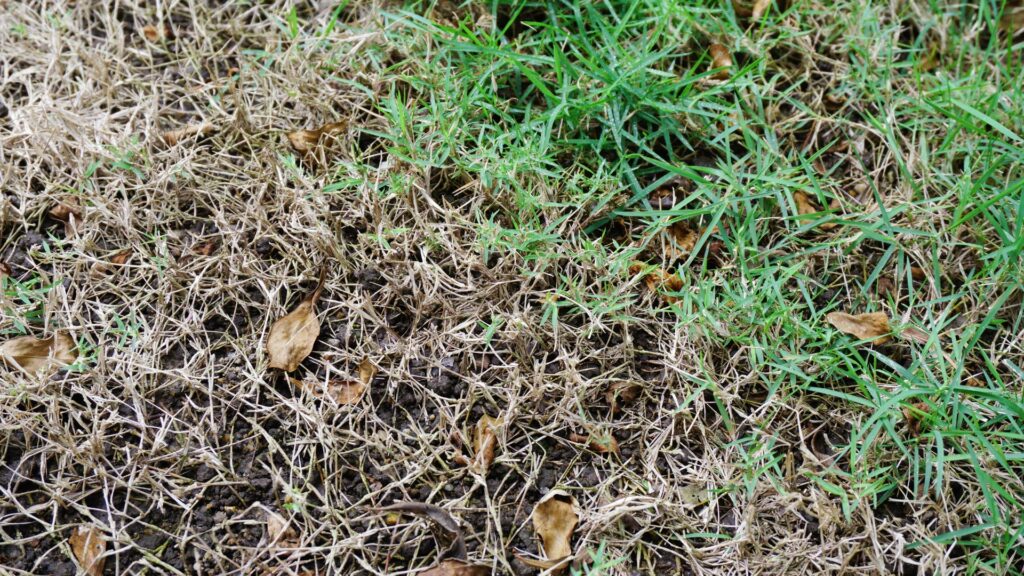
This is the most important question to answer before doing anything else, because the recovery process is completely different depending on the answer.
Cool-season grasses — tall fescue, Kentucky bluegrass, perennial ryegrass — go dormant during extended heat and drought as a survival mechanism. The grass turns brown and stops growing, but the crown and root system stay alive underground. When temperatures drop and moisture returns, dormant grass greens back up on its own without any intervention.
Dead grass doesn’t come back. The crown — the growing point at the base of each plant — has been killed, and no amount of watering will revive it. Only reseeding will restore those areas.
How to Tell the Difference
Pull a handful of brown grass from the affected area. If the crowns — the white or tan base of each grass plant just at or below the soil surface — are still firm and intact, the grass is dormant. If the crowns crumble, are black or mushy, or if the grass pulls out with no resistance and no visible root system, it’s dead.
Another method: water a small test patch consistently for two weeks. If dormant grass is present, you’ll see green shoots emerging within 14 days. No new growth after two weeks of consistent watering confirms the grass is dead in that area. Source: Purdue Extension — Advice for Repairing Drought-Damaged Lawns
Step 1: Resume Watering Correctly
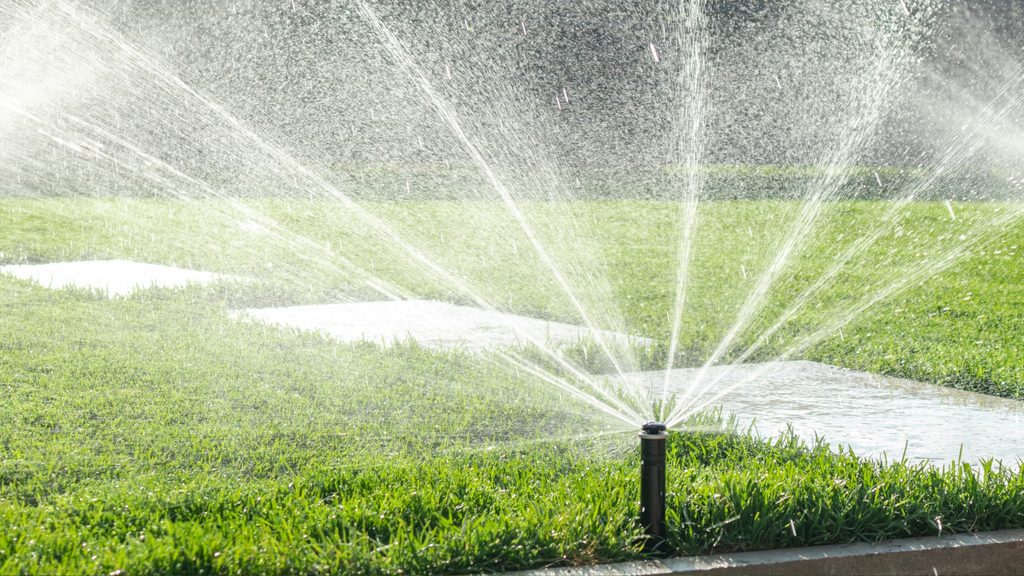
Before any other recovery step, get water back into the lawn — but do it correctly. After an extended drought, the soil is often so dry and compacted that water runs off rather than penetrating. Apply water slowly and in multiple short cycles rather than one long soak — this gives the soil time to absorb each application before the next one starts.
Target one inch of water per week, applied in two half-inch sessions rather than one deep soak. Early morning watering — between 4am and 9am — minimizes evaporation and reduces disease pressure. Avoid evening watering which leaves grass wet overnight and invites fungal disease. Our Lawn Watering Calculator can help you figure out exactly how long to run your sprinkler to hit the right amount based on your system’s output.
Give the lawn two to four weeks of consistent watering before evaluating which areas recovered and which didn’t. This step is non-negotiable — everything else depends on the lawn being adequately hydrated before you proceed.
Step 2: Resist the Urge to Fertilize Immediately
This is where most people go wrong. A drought-stressed lawn looks like it needs fertilizer, but applying nitrogen to stressed grass before it has recovered is one of the fastest ways to burn it further. The roots are shallow and damaged from drought — they can’t handle a nutrient surge.
Wait until the lawn shows clear signs of active recovery — new green growth, normal color returning — before applying any fertilizer. For cool-season grasses, early fall (late August through September) is the ideal fertilizing window anyway, which often coincides naturally with post-drought recovery timing. A slow-release nitrogen fertilizer applied at that point feeds the recovering grass without the burn risk of fast-release products.
Step 3: Mow High While the Lawn Recovers
Raise your mowing height during drought recovery. Taller grass blades shade the soil, reduce moisture evaporation, and give the recovering root system more leaf area to photosynthesize. Set your mower to the highest recommended height for your grass type — typically 3.5 to 4 inches for cool-season grasses — and leave it there until the lawn is fully recovered.
Don’t mow drought-stressed grass when it’s brown and dormant — you’re just adding stress to a plant that’s already struggling. Wait until the grass is actively growing again before resuming regular mowing. When you do mow, use a sharp blade — a dull blade tears rather than cuts and adds stress to recovering grass. A lawn mower blade sharpener is a quick fix that makes a real difference in cut quality.
Step 4: Aerate Compacted Soil
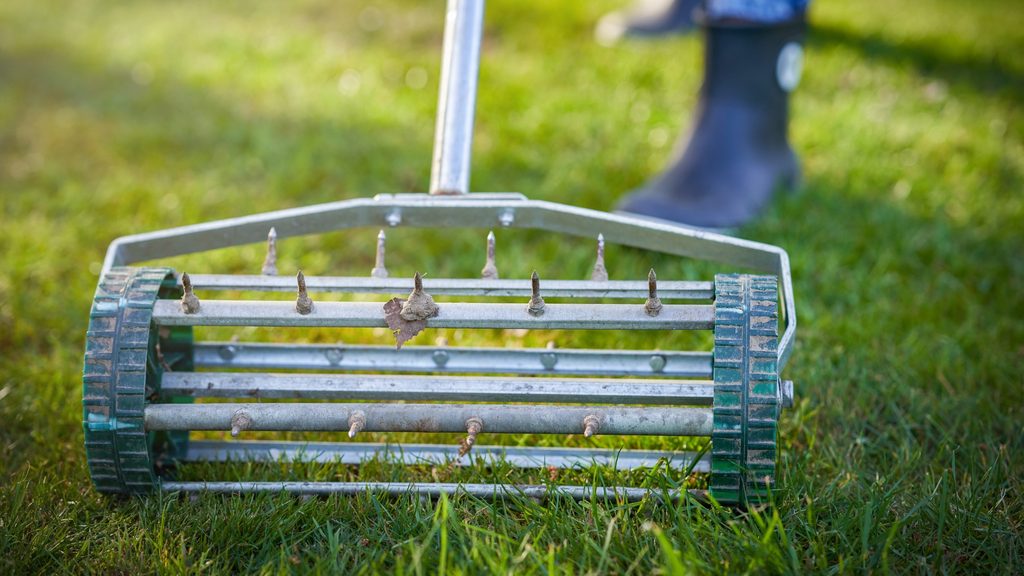
Drought bakes soil into a hard, compacted crust that resists water penetration long after rain or irrigation returns. Core aeration breaks up that compaction and restores the soil’s ability to absorb and hold water. It’s one of the most important recovery steps for a post-drought lawn.
Time aeration for early fall for cool-season grasses — this is already the ideal aeration window, and it follows naturally after a summer drought. A manual core aerator handles small areas; gas-powered aerators are available for rent at most home improvement stores for larger lawns. Aerate before overseeding so the seed falls into the holes and makes direct soil contact.
Step 5: Overseed Dead or Thin Areas
Once you’ve confirmed which areas are truly dead — no recovery after two to four weeks of consistent watering — those spots need to be reseeded. Dormant grass will come back on its own; dead grass won’t.
Early fall is the best overseeding window for cool-season grasses. Soil temperatures are still warm enough for germination, air temperatures are cooling down, and fall rainfall helps establishment without the heat stress of summer. Use a grass seed matched to your existing lawn type and the light conditions of the area you’re reseeding. Our guide on how to overseed a lawn covers the full process including timing, seed selection, and aftercare. The Overseeding Calculator gives you the exact amount of seed to buy based on your lawn size and grass type.
Step 6: Topdress With Compost
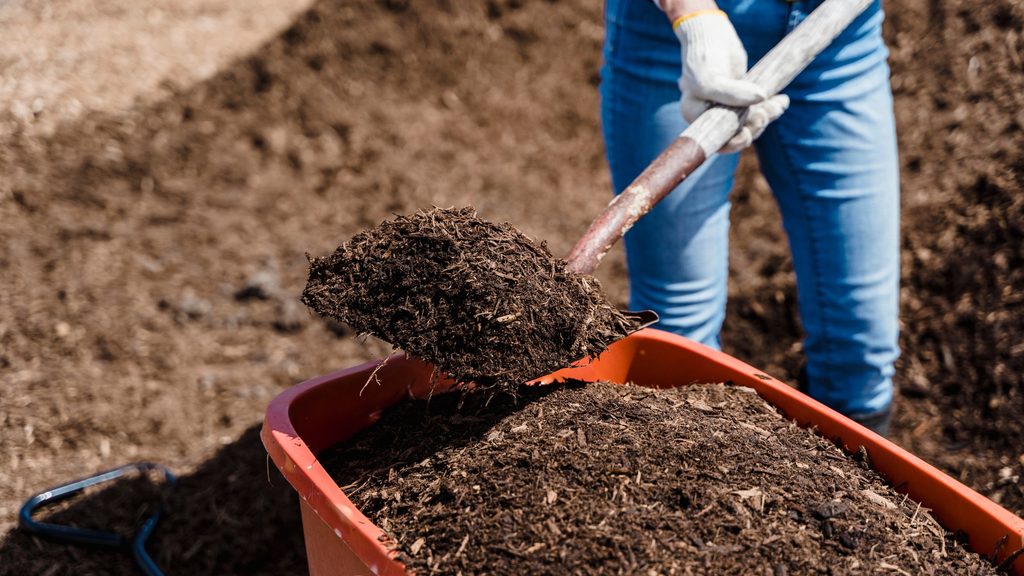
A light topdressing of compost after aeration and overseeding improves soil structure, adds organic matter, and helps retain moisture more consistently — all things that drought strips from soil over time. Apply no more than a quarter inch of compost and work it lightly into the aeration holes with a rake. This step is optional but makes a meaningful difference in how quickly a drought-damaged lawn recovers and how well it holds up in future dry spells.
Not sure how much compost you need? The Compost Calculator gives you the exact amount based on your lawn size and topdressing depth.
Step 7: Fertilize Once Recovery Is Established
Once the lawn is actively growing again and new grass from overseeding has reached about 3 inches tall, it’s time to fertilize. Apply a slow-release lawn fertilizer to feed the recovering grass and support root development heading into fall. Avoid high-nitrogen fast-release products on recently stressed grass — the roots aren’t ready for it.
For cool-season grasses, a fall fertilizer application is the single most important feeding of the year. It builds root reserves that carry the lawn through winter and fuel a strong spring green-up. Our Fertilizer Calculator helps you figure out exactly how much to apply based on your bag’s NPK numbers and your lawn size.
What to Expect From Drought Recovery
A lawn that went dormant during drought — but wasn’t killed — can recover surprisingly quickly once temperatures drop and moisture returns. Two to four weeks of consistent watering is often enough to bring dormant grass back to full color without any additional intervention.
A lawn with significant dead areas takes a full growing season to fully recover. Fall overseeding establishes new grass, but it won’t be a thick, mature stand until the following spring or summer. Manage expectations accordingly — the lawn will look rough through the first fall, better by spring, and fully recovered by the following summer if the recovery steps are followed correctly.
The best thing you can do to prevent repeat damage is to improve your soil’s long-term drought resilience: aerate annually, topdress with compost each fall, and maintain consistent fertilizing. A lawn with deep roots and healthy soil handles drought stress far better than one that’s been neglected. If watering during a dry stretch is part of your prevention plan, our guide on how to water your lawn during heat covers the strategy for keeping grass alive without overwatering.
Frequently Asked Questions About Lawn Drought Recovery
How long does it take for a drought-stressed lawn to recover?
A lawn that went dormant — but wasn’t killed — typically shows green
shoots within two to four weeks of consistent watering after temperatures
drop. A lawn with significant dead areas takes a full growing season
to fully recover. Fall overseeding establishes new grass, but a thick,
mature stand won’t develop until the following spring or summer. The
most important variable is the fall overseeding window — cool-season
grasses seeded in late August through September come in dense and
establish strong roots before winter, setting the lawn up for full
recovery by the following summer.
How do I know if my lawn is dormant or dead after drought?
The tug test is the fastest method. Grab a handful of brown grass
and pull firmly. If the crowns — the white or tan base of each grass
plant — are firm and intact and the grass resists pulling, it’s dormant.
If it pulls out easily with no root resistance and the crowns are black,
mushy, or absent, that area is dead. A second method: water a small
test patch consistently for two weeks. Dormant grass will show green
shoots within 14 days. No new growth after two weeks of consistent
watering confirms the grass is dead in that area. Dormant grass comes
back on its own; dead grass requires reseeding.
Should I fertilize a drought-damaged lawn right away?
No — this is one of the most common drought recovery mistakes. A drought-
stressed lawn looks like it needs fertilizer, but the root system is
shallow and damaged from drought stress and can’t handle a nutrient
surge. Applying nitrogen to a stressed lawn before it has recovered
can burn it further. Wait until the lawn shows clear signs of active
recovery — new green growth, normal color returning — before applying
any fertilizer. For cool-season grasses, early fall (late August through
September) is the ideal fertilizing window regardless, which often
coincides naturally with post-drought recovery timing.
Is it better to water a dormant lawn or let it stay dormant?
Either approach works, but pick one and stick to it. A lawn that
receives occasional, infrequent watering during dormancy — not enough
to break dormancy, but enough to keep the crown alive — is more
likely to make a full recovery when temperatures drop than one that
receives no water at all. Purdue Extension recommends a light watering
(about a quarter inch) every two to three weeks during extended drought
dormancy to keep the crown alive without breaking full dormancy. If
you commit to keeping the lawn dormant, do so intentionally — the
worst outcome is irregular watering that stresses the grass without
providing enough moisture to actually recover.
Can I overseed a drought-damaged lawn in summer?
For cool-season grasses in Indiana and the Midwest, summer overseeding
is not recommended. New seedlings are fragile and summer heat will
kill them before they establish. The right window is late August
through mid-September — soil is still warm enough for germination,
air temperatures are cooling, and the new grass has enough time to
establish before winter. For areas that are definitively dead, mark
them and wait for the fall window rather than wasting seed on a
summer application that’s unlikely to succeed.