
Yardtally is reader-supported. Some links on this page are affiliate links. As an Amazon Associate, Yardtally earns from qualifying purchases. See our Affiliate Disclosure.
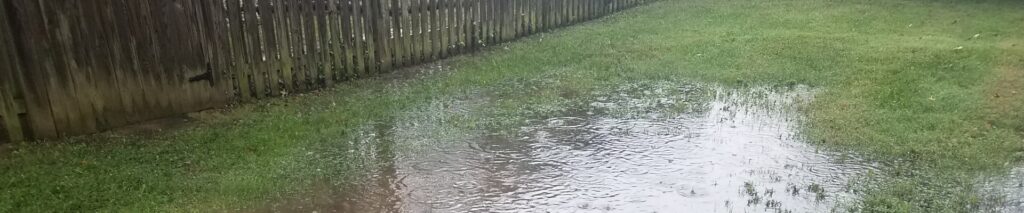
If your yard floods after rain — even moderate rain — the problem isn’t the weather, it’s the drainage. Before I started researching fixes for my own yard, I assumed all standing water was the same problem with the same solution. It’s not. Where the water comes from, how long it sits, and what your soil and slope look like all determine which fix actually works. This guide walks through how to diagnose why your yard is flooding, the fixes ranked from simplest to most involved, and what you can do to prevent it from getting worse each season.
What’s in This Guide
- Why Yard Floods After Rain
- How to Diagnose Your Drainage Problem
- Fixes Ranked from Simplest to Most Involved
- When to Call a Professional
- Preventing Yard Flooding Long Term
- FAQ
Why Yard Floods After Rain
Water floods a yard when rainfall arrives faster than the soil can absorb it or drain it away. That sounds simple, but the underlying cause matters — because the fix for a grading problem is completely different from the fix for compacted soil or a blocked downspout.
The most common causes:
Poor Grading or Negative Slope
The ground around your home should slope away from the foundation — ideally about 6 inches of drop over the first 10 feet. When a yard is flat or slopes toward the house, rainwater has nowhere to go except to pool against the foundation or in low spots across the yard. This is the most common cause of persistent flooding and the one that requires the most work to fix properly.
Compacted Soil
Dense, compacted soil — common in new construction where heavy equipment has packed the ground, or in high-traffic areas — absorbs water very slowly. Rain hits the surface faster than it can soak in, and it runs off or pools instead. Clay-heavy soils are naturally prone to this even without compaction, since clay particles hold water rather than letting it pass through.
Downspouts Dumping Near the Foundation
A surprisingly large amount of yard flooding traces back to gutters and downspouts. A single inch of rain on a 2,000 square foot roof produces over 1,200 gallons of water. If your downspouts terminate 6 inches from the house with no extension, all of that is dumping directly at your foundation and saturating the surrounding soil.
Low Spots and Drainage Basins
Natural or man-made low spots collect water from the surrounding area. Even with decent overall grading, a depression in the yard acts as a collection basin after every rain event. These can develop from settling soil, tree root removal, or poor fill work during construction.
Blocked or Inadequate Underground Drainage
Some yards have existing drain systems — catch basins, French drains, or perforated pipe — that have silted up, become root-clogged, or were undersized for the property in the first place. If a yard that used to drain well has started flooding, a blocked existing system is often the cause.
How to Diagnose Your Drainage Problem
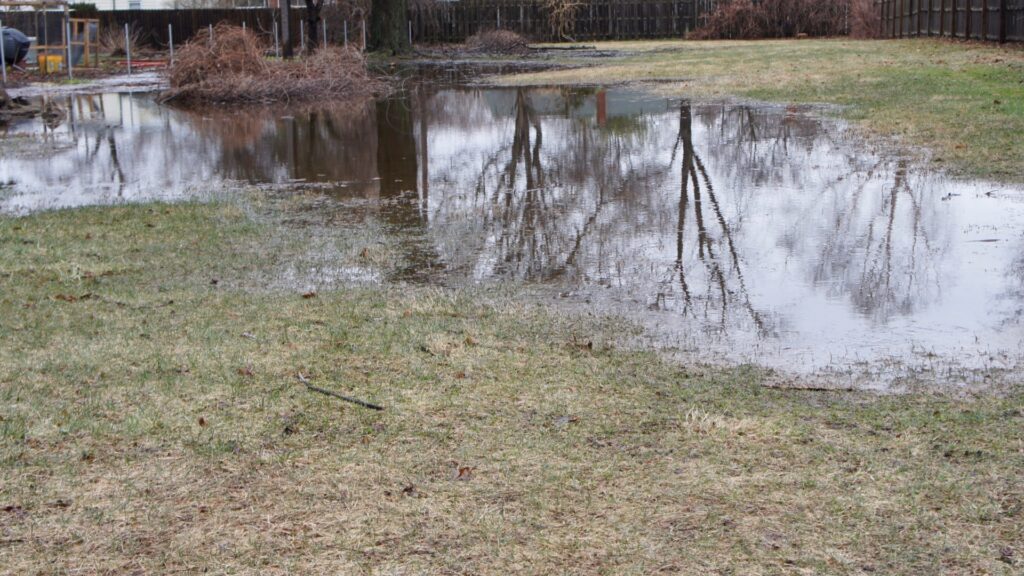
Before buying materials or renting equipment, spend 15 minutes after the next rain event walking your yard and answering these questions:
Where does the water come from? Watch during or immediately after rain — is it sheeting off the roof and pooling near the foundation? Running in from a neighboring property? Rising from a low spot in the middle of the yard? The source determines the fix.
How long does it sit? Water that clears within a few hours after light rain is a minor issue — likely minor compaction or a shallow low spot. Water that sits for 24 hours or more after moderate rain indicates a more serious drainage failure.
Where does your yard slope? Stand at the corner of your house and look at the grade. Does the ground run away from the house or toward it? A simple line level and stakes can confirm this if you’re not sure.
What’s your soil like? Dig a hole about 12 inches deep, fill it with water, and check it an hour later. If the water is still sitting near the top, you have a drainage or compaction issue in the soil itself. If it’s gone, the soil drains reasonably well and the problem is more likely grading or runoff volume.
Fixes Ranked from Simplest to Most Involved
Fix 1 — Extend Your Downspouts (Easiest, Free to Low Cost)
If your downspouts are dumping water near your foundation, this is the first thing to address — and the cheapest. A downspout extension moves the discharge point 4 to 6 feet (or more) away from the house, dramatically reducing the volume of water saturating the soil closest to the foundation. Flexible accordion-style extensions are inexpensive and take about 10 minutes to install. For a more permanent solution, rigid pipe buried underground and run to a discharge point in the yard or street is cleaner and more effective. Source: UMN Extension — Rain Gardens for Minnesota Landscapes
Fix 2 — Aerate Compacted Soil (Easy, Low Cost)
If compaction is contributing to poor drainage — especially in high-traffic lawn areas — core aeration pulls small plugs of soil out of the ground, creating channels for water and air to penetrate. For mild compaction, a manual or push core aerator works fine on small areas. For larger lawns, a rental aerator covers more ground in less time. Aerate in fall for cool season grass when the lawn can recover quickly. Aeration alone won’t fix major drainage problems, but it meaningfully improves infiltration in compacted turf and buys time between heavier fixes.
Fix 3 — Regrade Low Spots (Moderate, DIY-able)
Small low spots — depressions that collect water after every rain — can often be fixed by topdressing with a sandy loam or lawn leveling mix, building the area up gradually over several applications. Add no more than half an inch at a time to avoid smothering the grass, and water it in. For larger depressions, you may need to bring in topsoil and regrade the area before reseeding. If you need help calculating how much fill to order, our topsoil calculator can help.
Fix 4 — Install a French Drain (Moderate to Involved, DIY-able)
A French drain is a gravel-filled trench with a perforated drain pipe at the bottom that intercepts water moving through the soil and redirects it to a discharge point — a lower part of the yard, a dry well, or a storm drain. It’s the right fix when water is pooling in a specific area persistently and simpler surface-level fixes haven’t worked. A properly installed French drain solves problems that nothing else will, but it requires excavation, a clear discharge path, and enough slope for gravity to move the water.
Our guide on how to install a French drain covers the full process, including cost, planning, and a step-by-step walkthrough
Fix 5 — Regrade the Yard (Most Involved, May Need Professional)
If the overall slope of your yard runs toward your house or the grading is fundamentally wrong across a large area, surface-level fixes won’t solve the problem long-term. Regrading involves moving significant amounts of soil to correct the slope — ideally achieving a consistent fall of 1 to 2 percent away from the foundation across the entire yard. For small areas, a homeowner with a wheelbarrow, topsoil, and a good eye for grade can handle this. For large areas, a skid steer or grading contractor is the practical choice.
Our guide on how to grade a yard for drainage walks through what’s involved, including how to measure your existing slope and whether the job is DIY-able.
Fix 6 — Build a Rain Garden or Dry Creek Bed (Involved, Permanent)
For yards where water collects predictably in the same spot after every rain, a rain garden — a shallow planted depression designed to absorb runoff — can turn a problem area into an asset. Rain gardens are planted with deep-rooted native plants that handle wet/dry cycles well, and they allow water to soak in over 24 to 48 hours rather than pooling on the surface. They work best at least 10 feet from the foundation and in spots where water naturally wants to collect.
A dry creek bed serves a similar purpose with a different aesthetic — a stone-lined channel that guides water across the yard to a lower discharge point. It functions as drainage infrastructure while looking like a landscape feature.
Our guide on how to build a dry creek bed covers materials and installation.
When to Call a Professional
Most of the fixes above are DIY-accessible for a capable homeowner with the right tools and some patience. A few situations warrant calling a drainage contractor:
Water is consistently pooling within 3 to 4 feet of your foundation and hasn’t responded to downspout extensions or minor grading work. At that point you’re looking at potential foundation damage and need a professional assessment.
The flooding covers a large portion of your yard and involves a slope correction across a significant area — more than a few hundred square feet of regrading is faster, cheaper, and more accurate with equipment.
You suspect your existing underground drainage system has failed. Scoping a drain line or locating buried pipe is not a DIY job.
Water is entering your basement or crawl space. That crosses from yard drainage into foundation waterproofing — a different problem requiring different expertise.
Preventing Yard Flooding Long Term
The most effective long-term prevention combines a few consistent habits with some one-time improvements:
Keep gutters and downspouts clear. Clogged gutters overflow and dump water against the foundation — the same result as having no gutters at all. Clean them twice a year minimum, more if you have overhanging trees.
Maintain the grade around your foundation. Over time, soil settles and mulch decomposes, gradually leveling or reversing the slope near the house. Top up beds and bare soil areas annually to keep the grade running away from the foundation.
Aerate your lawn annually. Regular aeration prevents compaction from building up in high-traffic areas and maintains the soil’s ability to absorb rainfall before it runs off.
Add organic matter to clay soil. Compost worked into clay-heavy soil over multiple seasons gradually improves drainage by breaking up the tight particle structure. It’s a slow fix but a permanent one. Our compost calculator can help you figure out how much to add per season.
Plant trees and deep-rooted shrubs strategically. Established trees with extensive root systems absorb significant amounts of water — a mature tree can take up 100 or more gallons per day during the growing season. Planting in low areas where water collects gives that water somewhere to go.
Frequently Asked Questions About Yard Flooding After Rain
Why does my yard flood every time it rains?
Yard flooding after every rain event points to one of several causes:
poor grading (the yard slopes toward the house or into a low spot),
compacted soil that can’t absorb water fast enough, downspouts terminating
too close to the house and saturating the surrounding soil, or a low spot
that acts as a collection basin for the surrounding area. The fastest
way to identify the cause is to watch during or immediately after rain
and note where the water comes from and where it goes. A 12-inch soil
percolation test (dig a hole, fill with water, check in an hour) tells
you whether soil drainage is part of the problem.
How do I fix standing water in my yard?
Start with the cheapest fix first and work up from there. Step one:
extend your downspouts 6 to 10 feet from the foundation — a flexible
accordion extension costs $10 and takes five minutes. If that doesn’t
solve it, aerate compacted areas and add compost to improve soil drainage.
For low spots, topdress with a sandy loam to gradually raise the grade.
For persistent pooling that doesn’t respond to surface-level fixes, a
French drain intercepts water underground and redirects it to a discharge
point. In severe cases where the yard grade is fundamentally wrong,
regrading the yard is the only permanent solution.
How much does it cost to fix yard drainage?
Costs range widely depending on the fix. A downspout extension is $5
to $30 and takes an hour. Core aeration runs $60 to $100 for a rental
aerator for a full day. A DIY French drain typically costs $200 to $600
in materials (pipe, gravel, fittings) depending on length. A catch basin
installation runs $500 to $1,500 DIY or $1,500 to $4,000 professionally
installed. Whole-yard regrading by a contractor varies significantly —
get two to three quotes for any project involving significant soil movement.
Most homeowners solve their flooding problem with downspout extensions and
minor grading corrections for under $100.
Will a French drain fix my flooded yard?
A French drain fixes standing water caused by subsurface water movement —
groundwater that’s moving through the soil and pooling where it can’t
drain away. It’s not the right fix for surface water that’s pooling
because of poor grading or downspout placement. Diagnose the cause before
installing a French drain: if filling a 12-inch hole with water and
checking it an hour later shows that soil drainage is fine (the water
absorbs quickly), your problem is surface grading, not subsurface drainage,
and a French drain won’t help. If the water sits for hours after the test,
subsurface drainage is the issue and a French drain is appropriate.
How do I stop water from pooling near my foundation?
Three things cause most foundation-area pooling: downspouts terminating
too close to the house, negative grade (ground sloping toward the
foundation), and compacted soil that can’t absorb runoff fast enough.
Fix downspouts first — extend to at least 6 feet from the foundation,
8 to 10 feet if the yard is flat. Then check the grade: the ground
should drop at least 6 inches over the first 10 feet away from the house.
If it doesn’t, top up with topsoil to correct the slope. If water is still
pooling after those two fixes, core aerate the area to improve infiltration.
These three steps together resolve the majority of foundation-area water
problems without needing professional drainage work.