
Yardtally is reader-supported. Some links on this page are affiliate links. As an Amazon Associate, Yardtally earns from qualifying purchases. See our Affiliate Disclosure.
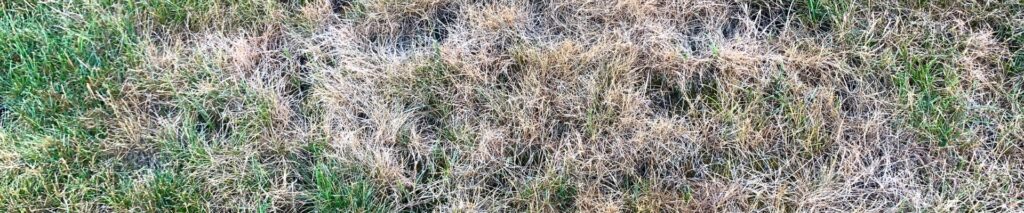
My lawn goes lawn brown and crunchy in summer every single August, and the first time it happened I thought I’d killed it. Turns out I hadn’t — and there’s a good chance yours is fine too. A crunchy brown lawn in August is almost always one of three things: summer dormancy, heat stress, or a watering problem. Here’s how to figure out which one you have and what to actually do about it.
Why Is Your Lawn Brown and Crunchy in Summer?
Cool-season grasses — tall fescue, Kentucky bluegrass, perennial ryegrass — are designed to go dormant in summer heat. When soil temperatures stay above 85–90°F for extended periods, these grasses shut down growth and redirect energy to keeping their crowns alive. The blades die back, turn brown, and feel crunchy underfoot. The grass isn’t dead. It’s sleeping.
How to Confirm It’s Dormancy (The Tug Test)
Grab a small handful of brown grass near the soil line and pull firmly. If the blades pull out easily and the crown — the white or tan tissue right at soil level — looks soft, dark, or mushy, you may have a real problem. If the crown is firm and pale and the blades resist, it’s dormant. That firm crown is alive and will green back up when temps drop.
How Long Can Dormant Grass Stay Brown?
Cool-season grasses can stay dormant for 4–6 weeks without permanent damage, as long as you do one thing: water about a half inch every 3–4 weeks to keep the crown tissue alive. Skip that completely for 6+ weeks in 95°F heat and you risk losing it for real. Source: Purdue Extension — Summer Lawn Care
Second Possibility: Heat Stress (Different From Dormancy)
Heat stress happens when the grass is trying to grow but doesn’t have enough water to keep up with heat and evaporation. It looks similar to dormancy but usually shows up in patches rather than the whole lawn, often in the sunniest or most exposed areas first. Stressed grass often has a blue-gray tint before it goes fully brown — dormant grass goes brown more uniformly.
Footprinting Test
Walk across the lawn and look back at your footprints. If the grass springs back up within a few minutes, it has adequate moisture. If your footprints stay visible and the grass stays flattened, it’s wilting from heat stress and needs water soon.
Third Possibility: A Watering Problem You Created
This one stings a little because I’ve done it myself. The two most common watering mistakes in summer are watering too shallow and watering at the wrong time of day.
Shallow Watering
Short, frequent watering keeps roots near the surface where soil temps are highest. Roots need to go 6–8 inches deep to find cooler, more stable moisture. If you’re running your sprinklers for 5 minutes every day, you’re likely doing more harm than good. Water deeply 2–3 times per week instead.
Watering at the Wrong Time
Watering in the afternoon means most of it evaporates before it reaches the roots. Watering at night leaves grass wet for hours and invites fungal disease. Morning is the only right answer — ideally between 5am and 9am.
Use our Lawn Watering Calculator to dial in exactly how long to run your zones based on your lawn size, grass type, and weekly rainfall — no more guessing.
Could It Be Something Else?
Grubs
If brown patches lift up like loose carpet when you tug them — the sod peels back with no resistance and the roots underneath are gone — you likely have grub damage. Grubs eat grass roots from below, and August is peak season. This looks different from dormancy: the patches are irregular, the grass pulls up in sheets, and you’ll see the white C-shaped larvae if you dig down 2–3 inches.
If you suspect grubs, check our guide on how to get rid of grubs in lawn for the right timing and treatment.
Lawn Disease
Fungal diseases like brown patch and dollar spot also cause brown areas in summer, but they usually show distinct patterns — circular rings, irregular blotches with darker borders, or orange powder on your shoes after walking across the lawn.
Our what’s wrong with my lawn diagnostic guide covers every common lawn disease with photos and treatment options.
What to Do Right Now
If It’s Dormancy
Leave it alone except for maintenance watering — about a half inch every 3–4 weeks. Don’t fertilize. Raise your mower deck if you’re still mowing. Plan to overseed any thin areas in September when cool-season grass actively wants to grow.
If It’s Heat Stress
Start deep watering immediately — 1.5 inches per week, split into 2–3 sessions, always in the morning. An oscillating or impact sprinkler is easier to move around than a fixed system if you’re hand-watering problem spots. Give it two weeks of consistent deep watering before you decide anything else is wrong.
If It’s Grubs or Disease
Treat the actual problem — watering more won’t fix root damage from grubs or spread from fungal disease. Get the diagnosis right first.
What to Expect in Fall
Here’s the reassuring part: if your cool-season lawn went dormant and you maintained it correctly, it will green back up on its own as soon as nighttime temps drop below 70°F and the fall rains start. Usually that’s late August to mid-September in most of the Midwest and Northeast. You don’t have to do anything special — just be patient and stop mowing short.
For any spots that don’t recover on their own, our guide on how to overseed a lawn covers the full fall repair process.
Frequently Asked Questions About Lawn Brown and Crunchy in Summer
Is brown crunchy grass dead or just dormant?
Usually dormant. Most cool-season grasses go dormant during sustained summer heat — it’s a survival mechanism, not death. The tug test tells you which one you’re dealing with: grab a handful of brown grass and pull. If the crowns at the base are firm and the grass resists pulling, it’s dormant and will recover. If it pulls out easily with no resistance and the crowns look dark or absent, that area has died and will need reseeding in fall.
How long can grass stay brown before it dies?
Most established cool-season grasses can stay dormant for four to six weeks without dying, as long as the crowns stay alive. The crowns need a minimum of about a quarter inch of water every two to three weeks during dormancy to survive — not enough to break dormancy, just enough to keep the plant alive. Extended drought beyond six weeks without any water can start killing crowns, particularly in heavy clay soil that dries out completely. A light watering every two to three weeks during an extended dry spell is insurance against permanent loss.
Should I water brown crunchy grass or let it stay dormant?
Pick one approach and stick to it. Either water consistently enough to keep the lawn actively growing (one to one and a half inches per week), or let it go fully dormant and give it just enough water every few weeks to keep the crowns alive. The worst thing you can do is water occasionally — just enough to stress the plant out of dormancy and then let it fall back in. Inconsistent watering during dormancy stresses the grass more than either consistent watering or true dormancy.
Why is my lawn brown even though I water it?
Several things cause this. The most common: watering too shallowly and too frequently, which keeps the surface wet but doesn’t penetrate deep enough to actually reach the root zone. Other causes include watering at the wrong time of day (evening watering causes fungal disease that looks like drought stress), compacted soil that prevents water from penetrating, or a grub infestation that has severed roots so the grass can’t absorb water even when it’s present. Check the soil moisture at six inches down — if it’s dry there, your watering isn’t penetrating. If it’s wet there and the grass is still brown, look for another cause.
When will my brown lawn turn green again?
For cool-season grasses in Indiana and the Midwest, the natural recovery window is late August through September when temperatures drop below 85°F consistently and fall rains arrive. The grass breaks dormancy on its own as conditions improve. You can accelerate recovery by overseeding thin areas in September and applying a light fertilizer application in early fall. Don’t try to force recovery during August heat — the grass will green up on its own schedule when conditions are right.